
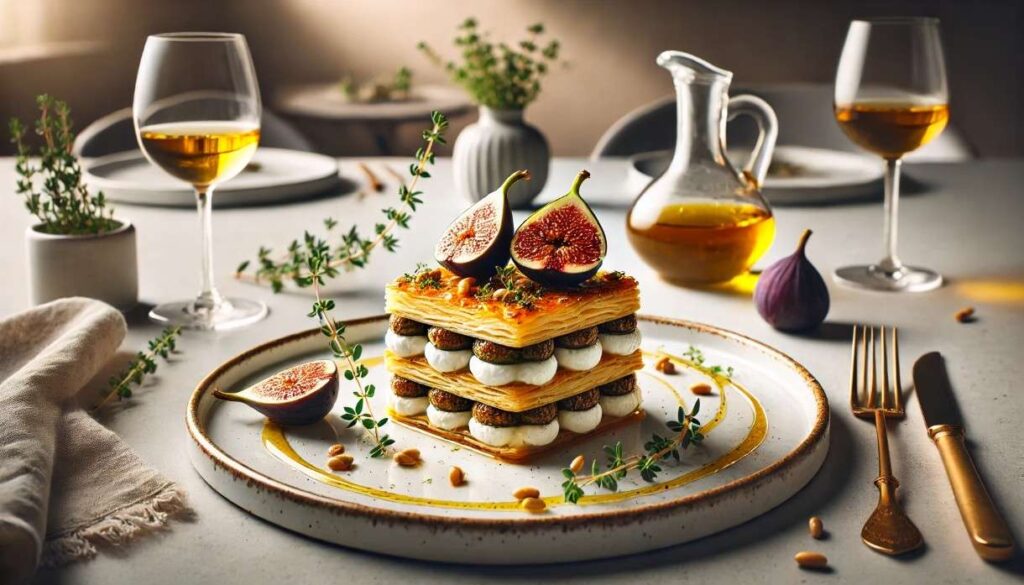
The Provence – a region that smells of lavender, rosemary and warm olive oil, stands for a cuisine full of freshness, aromas and authenticity. But tradition does not mean standing still. The modern cuisine of Provence takes classic ingredients and reinterprets them anew, playfully and elegantly. A perfect example is the millefeuille of goat cheese, figs and pine nuts with olive oil reduction – a refined reinterpretation of provençal flavors.
Provençal ingredients in a new form
In traditional Provençal cuisine, goat cheese (Chèvre) is a staple. Whether plain with a little honey, in savory tarts or gratinéed with herbs – its creamy texture and subtle acidity make it versatile. The fig, a symbol of Mediterranean abundance, brings sweet fruitiness and pairs perfectly with the salty cheese. Roasted pine nuts add a nutty crunch.
But instead of serving these ingredients classically on toasted baguette or in a rustic tart, we transform them into a delicate millefeuille, a stacked creation made of several layers of crispy pastry and creamy filling. The dish is finished with a gentle olive oil reduction, which ties the flavors together with a silky, fruity note.
The recipe: Millefeuille of goat cheese, figs and pine nuts with olive oil reduction
Ingredients (for 4 people)
For the millefeuille layers:
- 1 roll phyllo dough or puff pastry
- 50 g melted butter
- 1 tsp powdered sugar (optional, for a caramelized note)
For the filling:
- 200 g fresh goat cheese
- 4 fresh figs
- 50 g toasted pine nuts
- 1 tsp honey
- 1 tsp fresh thyme, chopped
- Salt & black pepper to taste
For the olive oil reduction:
- 100 ml high-quality extra virgin olive oil
- 1 tbsp lemon juice
- 1 tbsp honey
- 1 tsp Dijon mustard
- ½ tsp fine sea salt
- 1 tsp white balsamic (optional)
Preparation
1. Prepare crispy millefeuille layers
- Preheat the oven to 180 °C (fan: 160 °C).
- Place the filo or puff pastry on a floured work surface.
- Cut into small rectangles or circles (approx. 6 cm diameter).
- Place the pastry pieces on a baking sheet lined with parchment paper and brush with melted butter.
- Optionally dust with a little powdered sugar to achieve a light caramelization.
- Bake for about 8–10 minutes until the pastry layers are golden brown and crisp. Then let cool.
2. Prepare the filling
- Slice the figs thinly.
- Cream the goat cheese with honey, chopped thyme, salt and pepper.
- Toast the pine nuts in a pan without oil until golden brown.
3. Make the olive oil reduction
- Place the olive oil, lemon juice, honey, Dijon mustard, sea salt and balsamic in a small saucepan.
- Slowly reduce over low heat until a slightly thickened consistency is reached.
- Remove from heat and let cool slightly.
4. Assemble the Millefeuille
- Place one pastry sheet as a base on the plate.
- Spread a thin layer of goat cheese, place a few fig slices on top and sprinkle with toasted pine nuts.
- Place a second pastry sheet on top and repeat the process.
- Finish with a third pastry sheet.
- Carefully drizzle the olive oil reduction over the millefeuille with a spoon or pipette.
- Garnish as desired with additional figs, sprigs of thyme, or a pinch of sea salt.
The Result: An Elegant Provençal Delicacy
The millefeuille of goat cheese, figs and pine nuts is an homage to the flavors of Provence, presented in a modern, refined form. The crispy pastry layers meet the creaminess of the goat cheese, while the figs add a sweet fruitiness and the pine nuts provide a nutty contrast. The olive oil reduction gives the dish a subtle depth and harmoniously ties all the components together.
This dish is excellent as a starter for an elegant dinner or as the highlight of a modern Provençal menu. With its sophisticated presentation and the perfect balance between sweet, salty and nutty notes, it proves that Provençal cuisine continually finds new directions without losing its roots.
Conclusion: Tradition Meets Innovation
The Provence remains a source of inspiration for modern chefs. By bringing classic ingredients into new forms, dishes are created that impress both in taste and appearance. The millefeuille of goat cheese, figs and pine nuts shows how elegant and exciting Provençal cuisine can be in the 21st century – a real rediscovery for gourmets! 🍽✨