
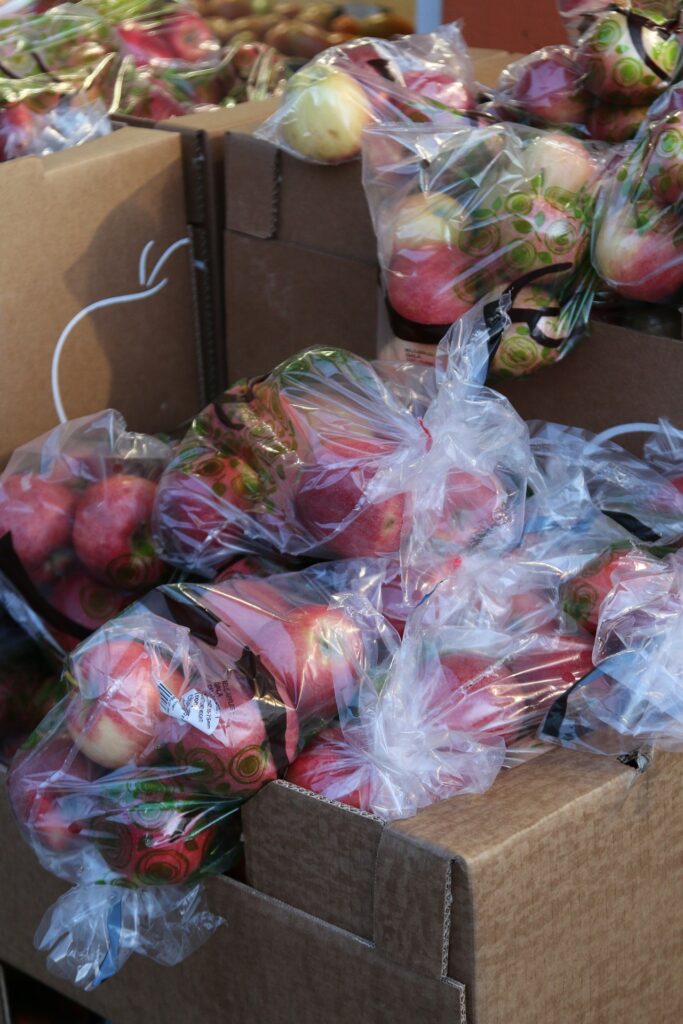
From January 1, 2022, fruits and vegetables may no longer be sold in plastic packaging. However, there are a number of exceptions and some products will still be packaged in plastic until 2026.
Three apples packed in plastic, raspberries in a transparent plastic box, bell peppers in a bag… All these non-ecological packaging should disappear from supermarket shelves. A decree banning plastic packaging for fruits and vegetables starting January 1, 2022, will be published on Tuesday, October 12, according to GE. It follows the 2020 Anti-Waste Law.
Which fruits and vegetables are affected?
The measure will apply from January 1, 2022, to leeks, zucchinis, eggplants, bell peppers, cucumbers, potatoes and carrots, round tomatoes, onions and beets, cabbage, cauliflower, pumpkins, parsnips, radishes, Jerusalem artichokes, and root vegetables. For fruits, plastic packaging must be gradually phased out for apples, pears, bananas, oranges, clementines, kiwis, mandarins, lemons, grapefruits, plums, melons, pineapples, mangoes, passion fruits, and persimmons.
Are there any exceptions?
For a whole range of fruits and vegetables that could be damaged if sold unpackaged, the application of the regulation is postponed until plastic-free packaging options are available.
Plastic packaging will still be permitted until June 30, 2023 for: ribbed and elongated tomatoes, new onions and beets, small round fruits (grapes), Brussels sprouts, green beans, peaches, nectarines, apricots.
Plastic packaging will still be permitted until December 31, 2024 for: cherries, cranberries, gooseberries, lettuce, lamb’s lettuce, leafy vegetables, herbs, spinach, sorrel, edible flowers, mung beans (soybeans), endives, asparagus, broccoli, mushrooms, early potatoes, as well as carrots and baby carrots.
Plastic packaging will still be permitted until June 30, 2026 for: raspberries, strawberries, blueberries, blackberries, currants, kiwis, blackcurrants, elderberries, currants, sprouts.
The ban also does not apply to fruits and vegetables sold in quantities of 1.5 kg or more.
How many plastic packages will be saved?
37% of fruits and vegetables are sold in packaging. These plastic packages account for 1 to 2 billion packages per year. By 2030, 20% of products in supermarkets will have to be sold without packaging, whereas today it is only 1 to 3%. Less plastic means less oil consumption and less waste.
Failure to comply with the decree published on Tuesday will be punished with fines of up to 15,000 euros and a daily fine of 1,500 euros.
Also read: