
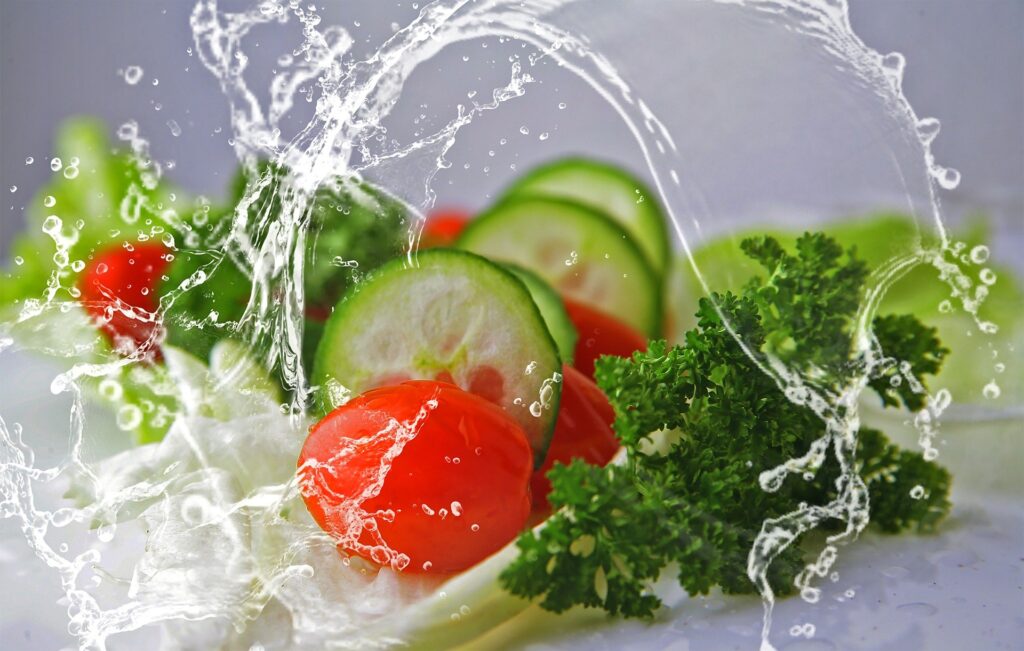
Hot weather can cause loss of appetite… However, the body still has the same nutrient needs. Experts recommend balanced meals and also do not forget the craving for freshness during these hot times.
In summer, when temperatures rise, it’s not about banning certain foods – rather about habits to adopt and foods to prefer.
Experts agree that it is necessary to drink appropriate amounts of water to avoid dehydration during intense heat: If you are in an air-conditioned room with a certain degree of thermal neutrality, without physical exertion, 1.5 liters of water may suffice… With hotter weather or more bodily strain, you should aim for 2 to 2.5 liters per day. Important: Don’t wait until you are thirsty to drink!
For some people, fluid intake is not necessarily a reflex. Some tricks can help ensure adequate hydration: Flavoring drinks. You can infuse water with fruits, mint, or citrus like lemons to add taste and escape the boredom of plain flat water. To stay properly hydrated, you can also treat yourself to iced tea or low-sodium sparkling water. When it’s really hot, always keep a water bottle nearby at home so you don’t have to go to the kitchen for every glass.
But caution! A hasty grab for very cold drinks is not a good solution and can even be dangerous. Indeed, although cool or ice-cold water initially gives a sensation of freshness, this does not mean the body is sufficiently hydrated. In fact, the opposite is true: the body must warm the too-cold water to prevent damage, and this requires energy that warms the entire body.
Water-rich foods are helpful
Providing the body with enough fluid means not only drinking enough water but also eating water-rich foods: You should prefer water-rich fruits and vegetables such as watermelons, melons, cucumbers, etc. But even then, you should not overdo it, as excessive consumption of these foods could lead to severe diarrhea or vomiting, which in turn could deplete the body of fluids.
For a healthy and balanced diet in hot weather, fruits and vegetables should also be accompanied by other vitamins: Making mixed salads is a good compromise that ensures you eat proteins, slow-release carbohydrates, as well as vegetables. The perfect combination could be, for example, a salad made of eggs, tuna, pasta or rice with tomatoes. Soups and gazpachos (cold soups) are also recommended; you can eat them even if you don’t feel very hungry, don’t have to exert yourself, and hydration is guaranteed!
Other drinks should be consumed in moderation
When the thermometer climbs, we are often tempted by cold drinks like fruit juice, lemonade, or cocktails. But beware, nothing can replace water when it comes to hydration. These drinks shouldn’t necessarily be avoided, but their consumption should be limited.
Fruit juices are much sweeter than we think. In these drinks, the fiber of the fruit is usually removed, which is important for the body’s absorption of water, so drinking fruit juice is not really a good way to hydrate. We like to drink interesting cocktails in the sun or at the beach. Unfortunately, the alcohol contained strongly promotes dehydration, so it makes sense to drink a glass of water between each cocktail. Coffee and tea are not drinks to avoid necessarily, although they are diuretics. They do reduce the body’s water balance, but when consumed in moderation they are not dangerous.
We should avoid salt and prefer raw foods
During periods of intense heat or heat waves, it is necessary to limit the consumption of excessively sweet or salty products as much as possible: Saturated fats, especially found in processed foods, strongly promote dehydration. You should eat raw foods that you can prepare yourself as often as possible.
Meat does not have to be completely avoided, but it is recommended to prefer white meat and fish to red meat.