
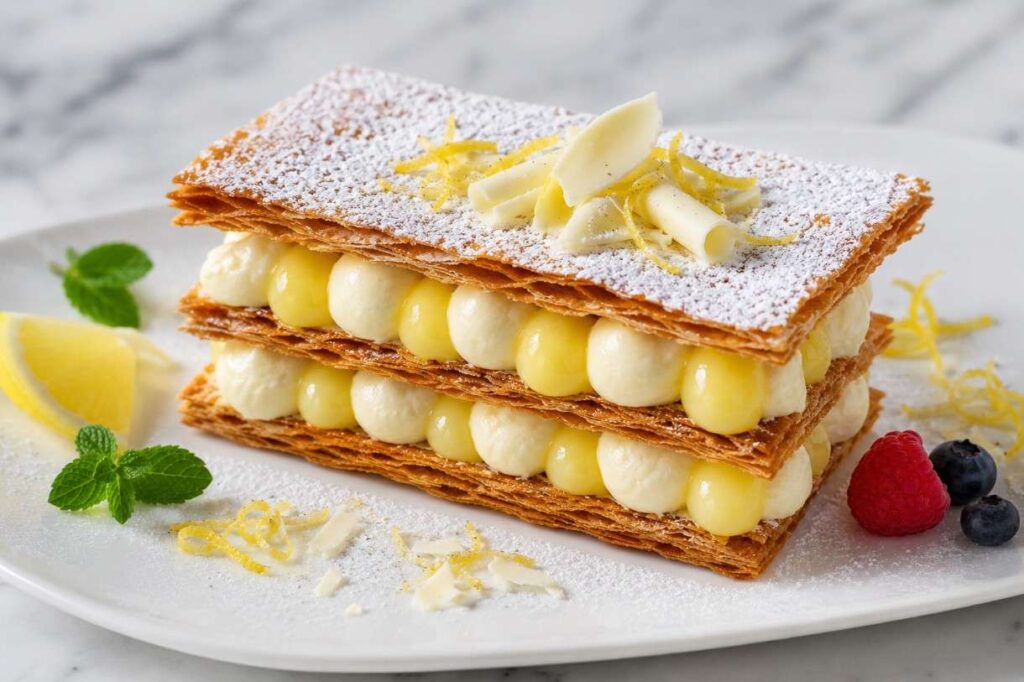
A modern French dessert balancing elegance and freshness
Millefeuille is one of the great classics of French pâtisserie. The name literally means “thousand leaves” and describes the fine, crispy layers of caramelized puff pastry, traditionally filled with vanilla cream. However, in modern French cuisine, this iconic dessert is increasingly reinterpreted: lighter, fresher and more aromatically nuanced.
A particularly elegant version is the lemon millefeuille with white chocolate. Here, the buttery crispness of the puff pastry meets a airy lemon cream and the gentle sweetness of white chocolate. The result is at once opulent and surprisingly light—a dessert that fits perfectly into spring and early summer and harmonizes especially well with festive occasions such as Pentecost, Easter, or a stylish dinner.
The combination of lemon and white chocolate is typical of modern French dessert artistry. While the lemon brings freshness, acidity, and lightness, the white chocolate provides creaminess and a soft, rounded flavor. The key is the right balance: sweetness should never overpower the freshness.
A good millefeuille also thrives on contrasts. The cream must be silky, the puff pastry crisp and flaky, the flavors precise and clear. Although the dessert appears very refined, it can be excellently prepared at home with some care.
Recipe: Lemon Millefeuille with White Chocolate
Ingredients for 6 servings
For the puff pastry
- 1 roll of high-quality butter puff pastry
- 40 g powdered sugar
For the lemon cream
- 250 ml milk
- 2 organic lemons
- 4 egg yolks
- 80 g sugar
- 30 g cornstarch
- 40 g butter
For the white chocolate cream
- 150 g white chocolate
- 250 ml cream
- 100 g mascarpone
For the garnish
- some powdered sugar
- lemon zest
- optional: fresh berries or edible flowers
The basics of the perfect millefeuille
Before beginning the actual preparation, it’s worthwhile to look at the three crucial components:
1. The puff pastry
The dough should be as crispy as possible and rise evenly. Professional pâtissiers often bake puff pastry between two baking sheets to keep it flat and allow neat layering.
The light caramelization with powdered sugar additionally adds flavor and stability.
2. The lemon cream
This forms the aromatic center of the dessert. It’s important to have an intense lemon note without aggressive acidity. Therefore, both juice and finely grated zest are used.
The cream should be completely smooth and firm after cooling.
3. The white chocolate cream
This serves not only as a sweet balance but also brings structure and richness. The combination of whipped cream and mascarpone makes the cream especially airy.
Preparation
Step 1: Bake the puff pastry
Preheat the oven to 200 °C (top/bottom heat).
Roll out the puff pastry and cut into even rectangles. Place on a baking sheet lined with parchment paper and prick several times with a fork.
Place a second sheet of parchment paper and another baking tray on top to keep the dough flat.
Bake for about 20 minutes until golden brown.
Then remove the top baking tray, dust the pastry with powdered sugar, and bake for another 5 minutes until the surface caramelizes lightly.
Let cool completely.
Step 2: Make the lemon cream
Pour the milk into a saucepan.
Finely grate the lemon zest and add it along with some lemon juice to the milk. Heat slowly.
Whisk the egg yolks, sugar, and cornstarch together in a bowl until creamy.
Slowly stir in the hot milk, then return everything to the saucepan.
Heat while stirring constantly until the cream thickens noticeably.
Remove from heat and stir in the butter.
Cover the cream directly with plastic wrap to prevent a skin from forming and chill completely.
Step 3: White chocolate cream
Gently melt the white chocolate and let it cool slightly.
Whip the cream until half-stiff.
Smooth the mascarpone and fold in the melted chocolate.
Then gently fold in the whipped cream.
Chill until ready to use.
Assembling the millefeuille
Place a piece of puff pastry on a work surface.
Using a piping bag, first pipe some white chocolate cream. Then add small dollops of lemon cream.
Cover with a second puff pastry layer and repeat the process.
Finally, lightly dust the top layer with powdered sugar.
Garnish with lemon zest and optionally fresh berries.
Chill for about 15 minutes before serving.
Why this dessert feels modern
The classic millefeuille used to be often heavy and very sweet. Modern French desserts focus more on freshness, texture, and balance.
In this version, that is achieved through:
- reduced sweetness,
- fresh citrus aromas,
- airy creams,
- clear presentation,
- light acidity as counterbalance.
As a result, despite butter, cream, and chocolate, the dessert appears surprisingly delicate and elegant.
Serving suggestions
The lemon millefeuille pairs wonderfully with:
- Champagne Brut,
- Crémant,
- a glass of Sauternes,
- lemon verbena tea,
- espresso or café noisette.
It is especially beautiful as the finale to a French spring menu with fish or light meat.
Tips for a perfect result
The puff pastry must be dry
Even slight residual moisture softens the millefeuille. Therefore, let the dough cool completely.
Cool creams well
The fillings should be firm enough to keep the layers stable.
Assemble only shortly before serving
This keeps the contrast between cream and crisp pastry intact.
Use high-quality white chocolate
Good white chocolate contains real cocoa butter and provides a noticeably finer flavor.
Variations
The basic recipe can be wonderfully varied:
With raspberries
Fresh raspberries bring additional acidity and color.
With yuzu
For an even more modern flavor profile, part of the lemon can be replaced with yuzu.
With herbs
Basil or lemon thyme complement the citrus aromas wonderfully.
As a dessert in a glass
The components can also be served layered—in a less classic but very elegant way.
Conclusion
The lemon millefeuille with white chocolate combines classic French pâtisserie with modern lightness. Crispy puff pastry, fresh lemon cream, and the gentle sweetness of white chocolate create a dessert that feels both refined and accessible.
Especially during festive spring occasions, this millefeuille unfolds its special character: elegant, fresh and full of fine contrasts—a dessert that perfectly reflects modern French cuisine.