
The European Parliament decided in June 2023 to ban the use of nitrites and nitrates in animal feed by 2025. Why has such a measure not yet been introduced for sausage products, even though their carcinogenic effects on our health have been known for several years?
Already on June 15, 2023, the European Parliament voted to ban nitrites and nitrates from dog and cat food, reported the newspaper Le Parisien on Monday, December 18.
Our four-legged friends, who are very often fed industrially produced products, are heavily exposed to such nitrite salts, which have been described as carcinogenic by the WHO since 2015. The use of these additives poses an increased risk to the health of the animals, as they are toxic in high doses. However, the ban will not take effect immediately. A transition period allows manufacturers who already have mixtures made with these additives in stock to sell their products until July 2025.
MEP Michèle Rivasi has submitted a similar but scaled-down proposal to the European Commission for human food. This proposal aims only to reduce the amount of nitrite salts in mass-consumption foods rather than to ban them outright.
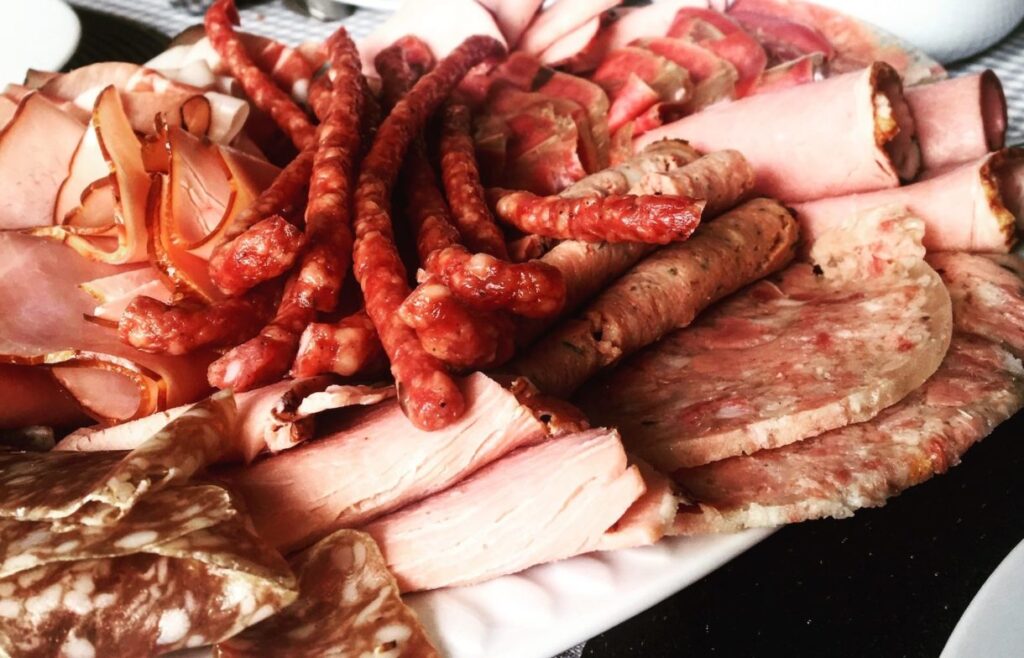
Nitrites (recognized by the labels E249 and E250) and nitrates (E251 and E252) are preservatives. In recent years, several studies have established a connection between their consumption and the occurrence of colorectal cancer. Many meat products contain these controversial additives: processed meats and various sausages produced by major brands and retailers. Incidentally, it is nitrate curing salt that gives ham its characteristic pink color.
Banning the use of nitrite curing salts completely is very difficult due to the lack of practical alternatives, as reported by the website 60 Millions de consommateurs. Nitrite curing salts help prevent the growth of pathogenic bacteria such as Listeria, Salmonella, or Clostridia in canned meat.
EU regulations recommend adding no more than 150 mg of nitrite per kilogram of sausage products. In France, the industry limits itself to using 120 mg/kg and intends to reduce this dose further in the coming months.
Nitrite-free products are also available on the market. For their production, food companies have changed their manufacturing processes. Sausage producers use salt and pepper as preservatives, but this process requires more time for production. Furthermore, such meat must be consumed more quickly. This means an additional cost of about 20% for the consumer.
The only current way to consume fewer nitro compounds is to reduce consumption and eat a more varied diet.