
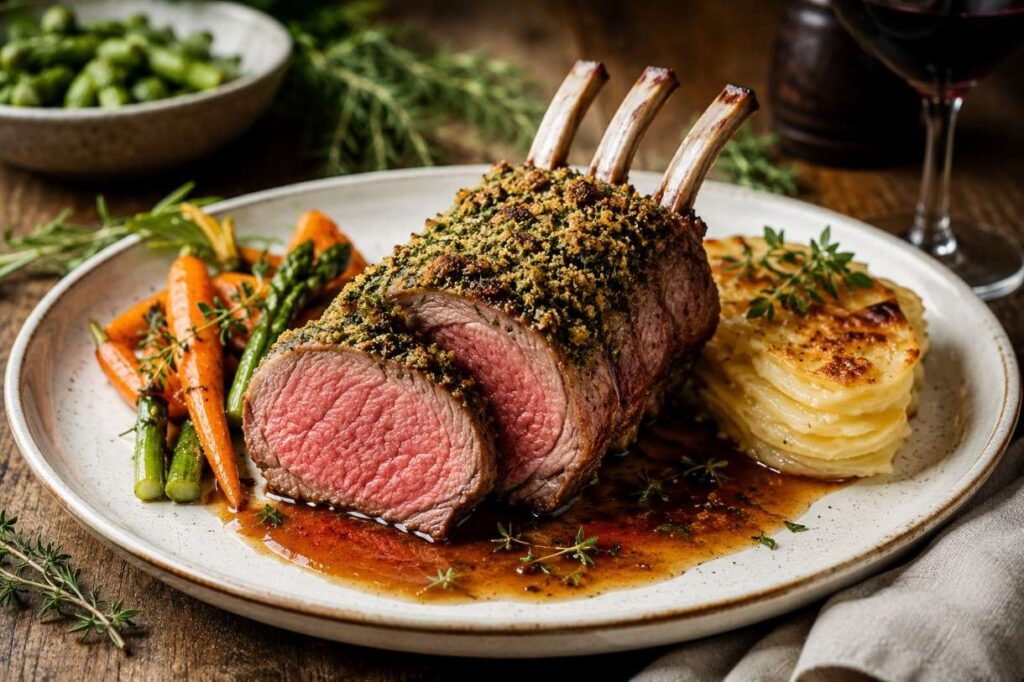
A modern French classic between elegance and aroma
The pink roasted lamb saddle with herb crust belongs to those dishes that perfectly embody modern French cuisine: precisely cooked meat, fresh herbs, elegant flavors, and a balance between rusticity and refinement. Especially in spring and on festive occasions such as Easter or Pentecost, lamb is traditionally the centerpiece of a well-prepared menu. In contemporary interpretations, however, the meat is served clearly lighter and more aromatic than in the heavy classical preparations of past decades.
The lamb saddle is one of the noblest cuts of the animal. Finely marbled, tender, and with a characteristic own flavor, it is excellently suited for short, sharp roasting. The herb crust brings freshness, texture, and Mediterranean notes to the dish. Typical accompaniments are rosemary, thyme, parsley, or tarragon, supplemented with mustard, garlic, and fine breadcrumbs. The result is a harmonious interplay of juicy meat and aromatic crust.
The focus of this dish is above all one thing: perfect doneness. Pink roasted means for lamb a core temperature of about 54 to 56 degrees. This keeps the meat juicy and develops its full aroma without becoming dry or harsh.
The significance of the lamb saddle in French cuisine
In France, lamb has a long culinary tradition. Especially well known is the “agneau de lait,” the milk lamb, as well as the salt meadow lamb from Normandy or Brittany. The lamb loin is regarded there as a noble alternative to beef or game and is often served in refined gastronomy.
Modern French cuisine today relies less on heavy sauces and long cooking times, emphasizing product quality, precision, and freshness. Herbs play a central role. They give dishes lightness and emphasize the natural flavor of the meat rather than overpowering it.
What matters in the preparation
A perfect lamb loin depends on few but decisive factors:
1. High-quality meat
Ideally, lamb meat comes from animal-friendly farming with a fine fat structure. The meat should be light red and firm. A thin layer of fat provides extra flavor during roasting.
2. Room temperature
The meat should be taken out of the refrigerator at least 30 minutes before roasting. This ensures more even cooking.
3. Searing with intensity
Searing sharply creates roasting aromas that give the dish depth.
4. Gentle roasting afterward
In the oven, the meat is gently brought to the desired core temperature.
5. Resting time
After cooking, the lamb loin should rest for a few minutes. This allows the meat juices to distribute evenly.
Recipe: Rosé roasted lamb loin with herb crust
Ingredients for 4 people
For the lamb loin
- 2 lamb loins approx. 350–400 g each
- 2 tbsp olive oil
- 1 tbsp butter
- 2 cloves of garlic
- 2 sprigs rosemary
- 2 sprigs thyme
- salt
- black pepper
For the herb crust
- 60 g fresh breadcrumbs or panko
- 1 small shallot
- 1 clove garlic
- 2 tbsp flat parsley
- 1 tbsp tarragon
- 1 tbsp thyme leaves
- 1 tsp Dijon mustard
- 40 g soft butter
- 2 tbsp Parmesan
- some lemon zest
- salt
- pepper
Optional for the sauce
- 150 ml lamb stock
- 100 ml red wine
- 1 shallot
- 1 tsp cold butter
Preparation
Step 1: Prepare herb crust
Finely chop the shallot and garlic. Also finely chop parsley, tarragon, and thyme. Mix everything with the breadcrumbs, Parmesan, butter, mustard, and some lemon zest. Season with salt and pepper.
The mixture should be kneadable but not too soft. Keep chilled until use.
Step 2: Prepare lamb loin
Pat the lamb loin dry and carefully trim if necessary. Remove excess tendons. Then season generously with salt and pepper.
Preheat the oven to 120 degrees Celsius with top and bottom heat.
Step 3: Sear the meat
Heat olive oil in a heavy pan. Sear the lamb loin all around until a golden-brown crust forms. Add butter, garlic, rosemary, and thyme, and baste the meat several times with the aromatic butter.
The intensive aromatizing during searing is typical of French cuisine and gives the meat depth and elegance.
Step 4: Apply herb crust
Let the seared tenderloin rest briefly. Then spread the herb mixture evenly over the top and press lightly.
Place the meat on an oven rack or baking tray.
Step 5: Cook rosé in the oven
Cook the tenderloins in the oven for about 12–18 minutes, depending on the thickness and desired doneness.
For rosé cooked lamb, a core temperature of is recommended:
- 54–56 °C → rosé
- 58–60 °C → medium
Shortly before the end of the cooking time, the grill mode can be turned on so that the herb crust becomes extra crispy.
Step 6: Resting time
Let the meat rest for about 5–7 minutes after cooking. Only then cut it.
When cut, the meat should be evenly rosé and juicy inside.
Optional: Red wine sauce
Fry the finely chopped shallot in the pan until translucent. Deglaze with red wine and reduce almost completely. Add the lamb stock and reduce again.
Finally, finish with cold butter. This makes the sauce glossy and smooth.
Classic and modern side dishes
The rosé roasted tenderloins are versatile to pair. Especially spring-like and Mediterranean components work harmoniously.
Classic French accompaniments
- Potato gratin with Comté
- Beans wrapped in bacon
- Ratatouille
- Glazed carrots
- Celeriac purée
Modern interpretations
- Pea spread with mint
- Confit fennel
- Roasted green asparagus
- Small potatoes with herb oil
- Aubergine cream with lemon thyme
Wine pairing
Lamb meat harmonizes excellently with elegant red wines that have enough structure without overpowering the delicate meat.
Particularly suited:
- Côtes du Rhône
- Châteauneuf-du-Pape
- Bordeaux with moderate oak aging
- Pinot Noir from Burgundy
- Syrah from the Languedoc
Those who prefer something lighter can also serve a powerful rosé from Provence.
Why this dish is so popular
The pink roasted lamb loins combine many qualities that characterize modern French cuisine:
- precise craftsmanship
- high-quality ingredients
- aromatic freshness
- elegant presentation
- balance instead of heaviness
In addition, the dish is suitable for both festive menus and refined dinners. Despite its sophisticated character, the preparation remains manageable if you observe a few basic techniques.
The combination of juicy meat and a crispy herb crust makes this dish timeless. It looks luxurious without being excessive and brings out the flavors of spring particularly beautifully.