
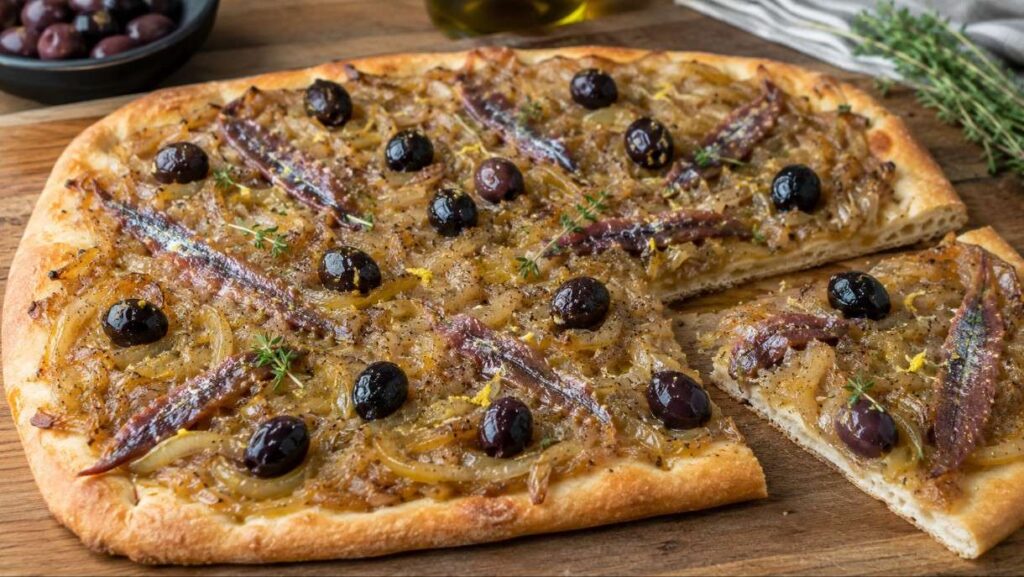
Pissaladière is one of the culinary treasures of southern France. Often called “Provence pizza,” it is actually an independent dish with a history stretching back hundreds of years. Its origin lies in Nice and the surrounding French Riviera area, where it is still widely found in local bakeries, markets, and home kitchens. Its unique flavor comes from slow-cooked onions, salty anchovies, and black olives, combined atop a thin layer of yeast dough.
The classic version is deeply influenced by its rustic origins, while modern cooking offers many contemporary expressions for pissaladière. High-quality ingredients, refined techniques, and a lighter texture bring new elegance to this traditional delicacy, without losing its Provençal roots.
The History of Pissaladière
Its name derives from the Provençal word “pissalat,” a time-honored seasoning paste made from fermented small fish, which once formed the base ingredient of pissaladière. Over time, anchovies became the preferred substitute due to easier accessibility.
Pissaladière developed in the port cities of Provence as an affordable and nutritious dish. All ingredients come from the local area: onions from inland, anchovies from the Mediterranean, and olives from sun-drenched groves. Unlike Italian pizza, it traditionally contains no cheese and rarely uses tomatoes.
Today, it represents authentic Mediterranean cuisine—simple, aromatic, and focused on the high quality of a few ingredients.
What Makes an Excellent Pissaladière?
The quality of a pissaladière depends primarily on three factors:
Onions
Onions are the heart of this dish. They are not browned by frying but slowly simmered for 45 to 60 minutes, allowing them to naturally release their sweetness, resulting in a jam-like consistency.
Anchovies
Anchovies not only bring saltiness but also provide deep umami and rich layers of flavor. High-quality anchovy fillets marinated in olive oil taste much more delicate than cheap mass-produced products.
Dough
The traditional dough is similar to bread or focaccia dough. Modern versions often use yeast dough with a longer fermentation time that is softer and more airy, making it lighter and easier to digest.
Modern Interpretation
In contemporary French bistro kitchens, pissaladière is often presented in a more refined and elegant form. Onions are flavored with a little white wine or absinthe, and the dough undergoes a longer fermentation, with fresh herbs added to enhance complex layers.
This style of pissaladière is suitable both as an appetizer and as a light summer meal.
Modern Pissaladière with Caramelized Onions, Thyme, and Lemon Zest
Ingredients for 4 servings
Dough Part
- 300 g wheat flour (type 550)
- 190 g water
- 5 g fresh yeast
- 6 g salt
- 15 g olive oil
Filling Part
- 800 g onions
- 3 tablespoons olive oil
- 2 tablespoons dry white wine
- 1 teaspoon fresh thyme leaves
- 1 bay leaf
- 8 to 10 anchovy fillets
- 16 black olives
- Zest of half an organic lemon
- Freshly ground black pepper to taste
For plating
- Some tender basil leaves
- High-quality extra virgin olive oil
Preparation Steps
1. Prepare the dough
Mix the flour, water, and yeast evenly. Then add salt and olive oil, knead for about ten minutes until smooth.
Cover the dough and place it in the refrigerator to ferment for at least eight hours. Long fermentation brings richer flavor and a particularly soft texture.
2. Slow-cook the onions
Cut the onions in half and slice them into thin strips.
Heat olive oil in a large skillet, add the onions, bay leaf, and thyme, and slowly cook over low heat for about 45 minutes.
When the onions become soft, add white wine and cook until all the alcohol evaporates.
The onions should be creamy, soft, and slightly sweet, but should not have any noticeable browning.
3. Shaping the Pissaladière
Stretch the dough into a rectangle and place it on a baking tray.
Spread the stewed onions evenly over the dough.
Arrange the anchovies in a traditional diamond pattern, placing olives in the gaps.
Finally, sprinkle a little lemon zest to enhance the aroma.
4. Baking
Preheat the oven to 250 degrees Celsius, with top and bottom heat.
Bake for about 12 to 15 minutes until the edges are golden and crispy.
5. Enhancing the Flavor
After baking, drizzle a few drops of high-quality olive oil and garnish with fresh basil leaves.
Why Lemon Zest Enhances the Flavor
Classic pissaladière features a rich combination of salty and sweet flavors, and a little lemon zest brings freshness and balance to the taste. The volatile oils in the lemon zest enhance the flavor of the anchovies, giving this traditional dish a modern lightness without compromising its classic character.
Recommended Pairings
Modern pissaladière pairs extremely well with the following foods:
- Dry rosé wine from Provence
- Mineral white wine from the Nice region
- Tomato herb salad
- Orange-marinated fennel
- Mediterranean roasted vegetables
Summary
Pissaladière is a classic example of how a few simple ingredients can create extraordinary flavors. It consists of sweet, slow-cooked onions, spicy anchovies, and rich olives, perfectly embodying the essence of Provençal cuisine. In modern interpretations, using long-fermented dough, fresh herbs, and a touch of lemon accentuation not only adds refinement to the classic but also preserves its unique Mediterranean heritage. Especially on warm early summer nights, pissaladière proves that timeless recipes are often the best choice.