
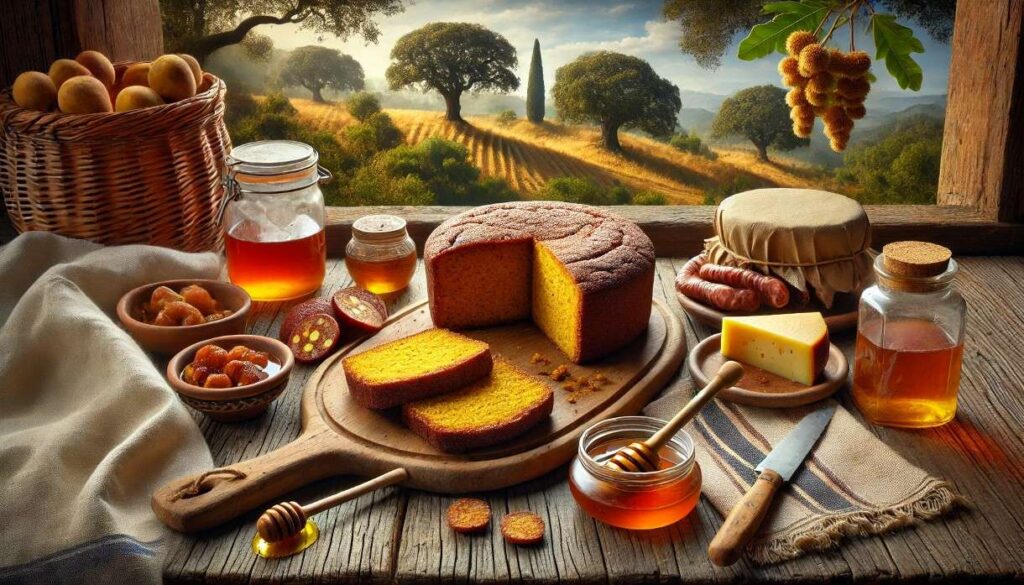
Pulenda is a traditional dish from Corsica, deeply rooted in the history and culture of the island. This simple yet delicious dish, made from chestnut flour, reflects the essence of Corsican cuisine – rustic, authentic, and closely connected to the natural resources of the region.
Historical Background
The chestnut has a long tradition in Corsica and is often referred to as the “bread tree” on the island, as it was a staple food for the island’s inhabitants for centuries. Chestnut forests, or “castagneti,” cover large parts of the island, especially in the higher regions. In the 18th century, the Genoese government introduced chestnut trees to the island and promoted their cultivation to improve food security. This led to a versatile use of chestnuts in Corsican cuisine, and Pulenda is one of the best-known preparations.
Ingredients and Preparation
Pulenda mainly consists of chestnut flour, water, and salt. Sometimes a bit of pork lard is added to enhance the flavor. Here is a traditional recipe:
Ingredients:
- 500 g chestnut flour
- 1 liter water
- 1 teaspoon salt
- Optional: 1-2 tablespoons pork lard or olive oil
Preparation:
- Bring the water to a boil in a large pot and add the salt.
- Gradually stir in the chestnut flour, continuously stirring with a wooden spoon to avoid lumps.
- Reduce the heat and let the mixture simmer for about 30-40 minutes, stirring continuously until the mixture is thick and smooth.
- Optional: Stir in pork lard or olive oil to make the Pulenda smoother.
- Pour the finished Pulenda onto a wooden board or marble slab and let it cool.
- Once cooled and firm, the Pulenda can be sliced and served.
Serving Recommendations
Traditionally, Pulenda is served with Brocciu, a fresh Corsican sheep cheese, or Figatellu, a spicy Corsican pork sausage. It can also be spread with honey or a sweet chestnut cream, showcasing its versatility. The texture of Pulenda is firm, almost cake-like, and its flavor is slightly sweet and nutty, making it a perfect side dish for both savory and sweet foods.
Culinary Significance and Modern Adaptations
Pulenda is more than just a dish; it is a symbol of Corsican identity and self-sufficiency. In times of hardship, chestnuts ensured the survival of many Corsicans, and this historical significance is still honored today.
In modern cuisine, traditional recipes like Pulenda are experiencing a renaissance. Gourmet chefs and food enthusiasts are rediscovering the simplicity and authenticity of chestnut-based dishes. Some modern adaptations include the addition of herbs, spices, or even grated cheese to enhance the flavor nuances.
Conclusion
Pulenda is a prime example of Corsican cuisine: down-to-earth, authentic, and closely connected to nature. This dish, made from only a few ingredients, offers a unique flavor and deep cultural significance. Whether as a simple side dish or part of a festive meal, Pulenda remains a timeless classic that reflects the rich culinary tradition of Corsica.
For everyone who wants to discover or experience Corsican cuisine anew, Pulenda is a perfect starting point – a dish that unites history, culture, and flavor in every slice.