
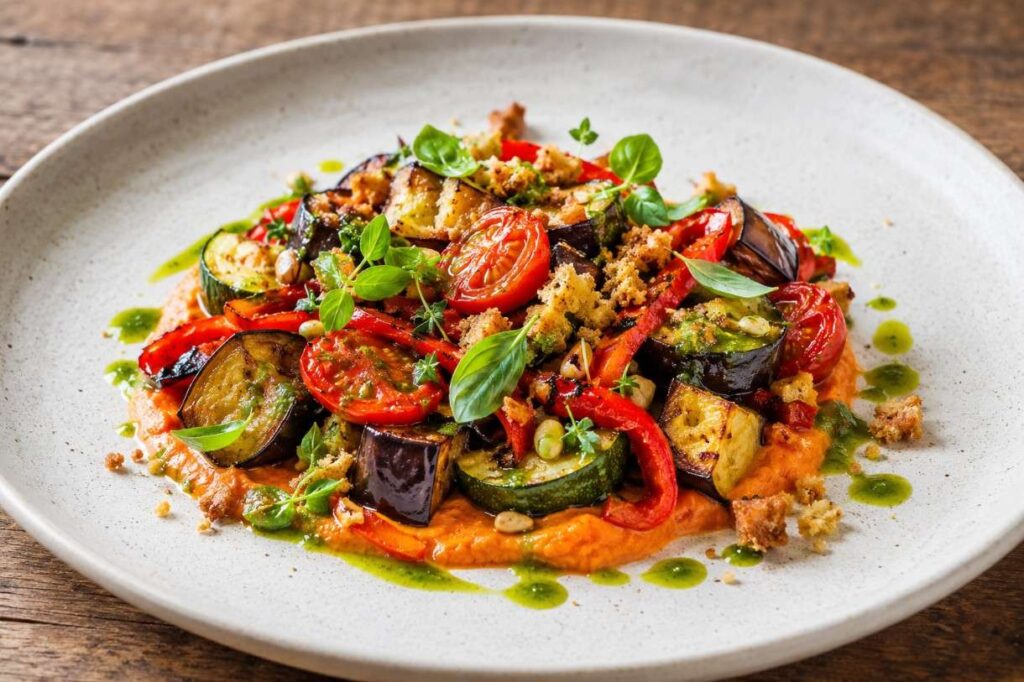
The Renaissance of a French Classic
Ratatouille is one of the most iconic dishes of Southern France. For decades, it stood for rustic country cooking: slowly braised eggplants, zucchini, peppers, and tomatoes, flavored with olive oil, garlic, and Provence herbs. A dish of simplicity, born from seasonal surpluses and Mediterranean modesty.
But modern cuisine today no longer necessarily means deconstruction or molecular experiments. Modern cuisine means precision, lightness, contrasts, and a new kind of elegance. This is precisely where the enormous potential of ratatouille lies.
The contemporary interpretation of this classic preserves its soul but alters structure, texture, and aroma. Vegetables are not cooked until soft but are treated individually. Temperatures are used precisely. Acidity, roasted notes, and freshness become more pronounced. The result is a dish that feels familiar and tastes completely new at the same time.
This modern ratatouille combines caramelized eggplant, confit tomatoes, lightly roasted zucchini, pepper cream, herb oil, and crunchy sourdough crumbs into a finely tuned plate between bistro, fine dining, and Mediterranean summer cuisine.
Modern Ratatouille with Pepper Cream, Herb Oil, and Sourdough Crunch
For 4 persons
For the Vegetables
- 2 small eggplants
- 2 zucchinis
- 2 red bell peppers
- 250 g cherry tomatoes
- 2 shallots
- 3 garlic cloves
- high-quality olive oil
- sea salt
- black pepper
For the Pepper Cream
- 2 red pointed peppers
- 1 small shallot
- 1 tsp white wine vinegar
- 1 tbsp olive oil
- salt
For the Herb Oil
- 1 bunch basil
- 1 small bunch parsley
- 100 ml mild olive oil
- some lemon zest
For the Sourdough Crunch
- 2 slices stale sourdough bread
- 1 tbsp olive oil
- some fleur de sel
- thyme leaves
Optional for Serving
- Burrata
- goat fresh cheese
- roasted pine nuts
- edible flowers
- fermented lemon
Why This Version Feels More Modern
The classic ratatouille is often completely braised together. In doing so, the individual vegetables lose their independence. Modern vegetable cuisine follows a different approach: each product receives its optimal cooking time and texture.
The eggplant should be creamy and almost meaty in texture.
The zucchini needs freshness and structure.
Tomatoes provide concentrated sweetness.
Pepper brings smokiness and depth.
Herbs not only provide aroma but also freshness and tension.
This way, the result is no vegetable stew but a composed plate.
Preparation
1. Confit Tomatoes
Preheat the oven to 140 degrees Celsius (top/bottom heat).
Cut the cherry tomatoes in half and mix with some olive oil, salt, and a slightly crushed garlic clove. Place on a baking tray and cook slowly for about 60 to 75 minutes.
The tomatoes lose moisture, concentrate their sweetness, and develop intense umami notes.
2. Make the Pepper Cream
Roast the pointed peppers directly under the grill or in a hot pan until the skin turns dark. Then cover and let rest for a few minutes.
Remove the skin and puree the flesh finely with shallot, vinegar, olive oil, and some salt.
The cream should be soft, slightly smoky, and pleasantly sweet.
3. Perfectly Cook Eggplants
Cut eggplants into large cubes and salt generously. After 20 minutes, pat dry.
Heat a heavy pan strongly. Slowly fry eggplants in olive oil until golden brown. Do not turn too early. The surface should caramelize deeply.
Add a little garlic and finely diced shallots only at the end.
This way, the eggplant is intensely roasted outside and almost creamy inside.
4. Roast Zucchini Separately
Cut zucchini into thin half-moons and roast briefly at high heat.
They should get color but keep their freshness. This contrast makes modern vegetable dishes exciting.
5. Mix Herb Oil
Blanch basil and parsley briefly and immediately shock in ice water.
Mix very finely with olive oil and some lemon zest, then strain through a fine sieve.
The oil brings freshness, color, and lightness to the plate.
6. Prepare Sourdough Crunch
Coarsely crumble the bread and roast in a pan with olive oil.
Season with fleur de sel and fresh thyme.
The crunch replaces classic bread sides and provides texture.
Plating
Spread the pepper cream as a base on the plate.
Loosely place eggplants, zucchini, and confit tomatoes on top. Avoid working too symmetrically — modern Mediterranean cuisine may appear organic.
Finally, drizzle herb oil over and finish with sourdough crunch.
Optionally, add burrata or goat fresh cheese.
Aromatic Balance
This dish works so well because it combines several culinary levels:
- Sweetness from confit tomatoes
- Roasted notes from eggplant and pepper
- Freshness from herb oil
- Creaminess from pepper cream
- Acidity from vinegar and lemon
- Crispiness from bread crunch
It is exactly this tension that makes modern cuisine interesting.
Wine Pairing
Ideal are fresh, mineral wines from Southern France:
- a light rosé from Provence
- a mineral white wine from Cassis
- an elegant Cinsault
- or a chilled Gamay
Non-alcoholic options also work excellently with the dish:
- homemade lemon verbena lemonade
- fermented herbal spritzer
- cold tomato water with basil
Why Ratatouille Is Relevant Again Today
Hardly any dish fits modern times as well as ratatouille. It is:
- seasonal
- plant-based
- sustainable
- versatile
- elegant
- healthy
The new vegetable cuisine puts products in the spotlight instead of producing side dishes. Ratatouille has always been surprisingly close to this idea — only today we interpret it more precisely and creatively.
Modern French cuisine nowadays means less richness in butter and more focus on the product. It is precisely for this reason that ratatouille is currently experiencing a quiet renaissance in bistros, natural wine bars, and urban fine dining concepts.
And perhaps therein lies its greatest strength:
A simple peasant dish can, if interpreted correctly, suddenly appear more contemporary than many culinary trends.