
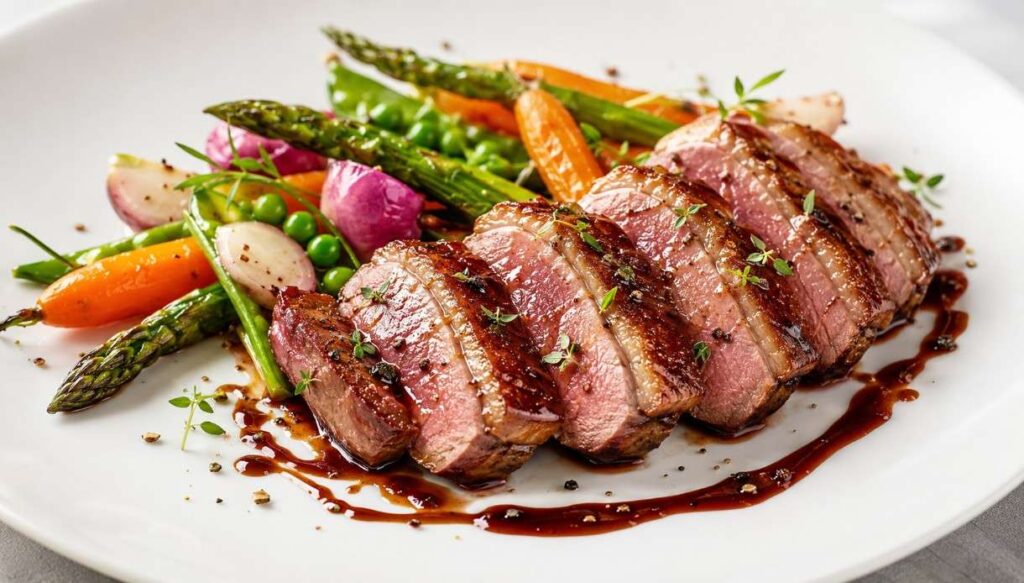
When the days grow longer and the market is filled with soft and fresh colors, one of the most beautiful seasons begins in the kitchen: spring. This time is a moment of lightness and clarity, and a return to fresh and pure flavors. With perfectly roasted Magret de canard and crispy spring vegetables paired with a delicately balanced balsamic reduction, you can capture this mood most elegantly.
This combination is typical of modern French cuisine: the classic ingredient of duck breast meets a sauce where seasonal freshness, sweetness, and acidity harmonize artistically. The result is a sophisticated yet approachable dish.
The Idea Behind the Dish
Magret de canard traditionally comes from the Barbary duck and is characterized by a strong flavor and a distinctive layer of fat that slowly melts during cooking, keeping the meat moist. In spring, this intense meat is intentionally combined with light green ingredients: asparagus, baby carrots, peas, or sugar snap peas add freshness and texture.
The balsamic reduction serves as a linking element. It highlights the natural sweetness of the vegetables and provides an elegant contrast to the savory duck breast.
Recipe: Magret de Canard with Spring Vegetables and Balsamic Reduction
Ingredients for 2 servings
Ingredients for the meat:
- 2 duck breasts (Magret de canard)
- Salt and freshly ground black pepper
Ingredients for the spring vegetables:
- A bunch of green asparagus
- Sugar snap peas 100g
- Baby carrots 100g
- Peas 80g (fresh or frozen)
- 1 shallot
- 1 tablespoon butter
- 1 teaspoon olive oil
- Salt, pepper
- Optional: fresh herbs (e.g. tarragon or chervil)
Ingredients for balsamic reduction:
- High-quality balsamic vinegar 100ml
- 1 teaspoon honey
- 1 small shallot, finely chopped
- 50ml poultry stock (optional, for deeper flavor)
Recipe
1. Prepare the meat
Score the skin of the duck breast in a diamond pattern without cutting into the meat. This allows the fat to render evenly and the skin to become crispy. Lightly salt the duck breast.
2. Cook the duck breast
Place the duck breast skin-side down in a cold pan and heat slowly over medium heat. This helps the fat to melt gently. Cook for about 6–8 minutes until the skin turns golden brown and crispy. Pour off any excess fat if necessary.
Then flip the duck breast and cook the meat side for another 3–4 minutes. Depending on your desired doneness, rest in a preheated oven at 160°C for about 5–7 minutes. Then be sure to let it rest for 5 minutes.
3. Prepare the balsamic reduction
Sauté the finely chopped shallot in a small pot until translucent. Add the balsamic vinegar and honey, then optionally mix in the poultry stock. Simmer over medium heat until it reaches a syrupy consistency. Season with salt and pepper.
4. Cooking Spring Vegetables
Cut the asparagus into bite-sized pieces and halve the carrots depending on their size. Heat butter and olive oil in a pan, first sauté the carrots, then add the asparagus and sugar snap peas. Finally, add the peas and cook everything until crisp-tender. Season with salt, pepper, and fresh herbs.
5. Plating
Slice the duck breast thinly. Place the spring vegetables on a plate and arrange the duck slices on or beside them, then drizzle with balsamic reduction.
Delicacy and Variation of the Dish
This dish lives in balance. To feel more of the spring spirit, try adding a little lemon zest or orange peel to the vegetables. A few roasted hazelnuts add an interesting texture and depth.
If you want a lighter version, slice the duck breast thinly and use plenty of herbs. To enhance the flavor, add a small piece of butter to the reduction at the end for a glossy and smoother taste.
A Plate as Beautiful as a Spring Day
This dish is not just a meal. It is a transition from the heavy winter to the light spring. Crispy and fragrant duck breast meets vibrant fresh vegetables, completed with a delicately balanced sauce.