
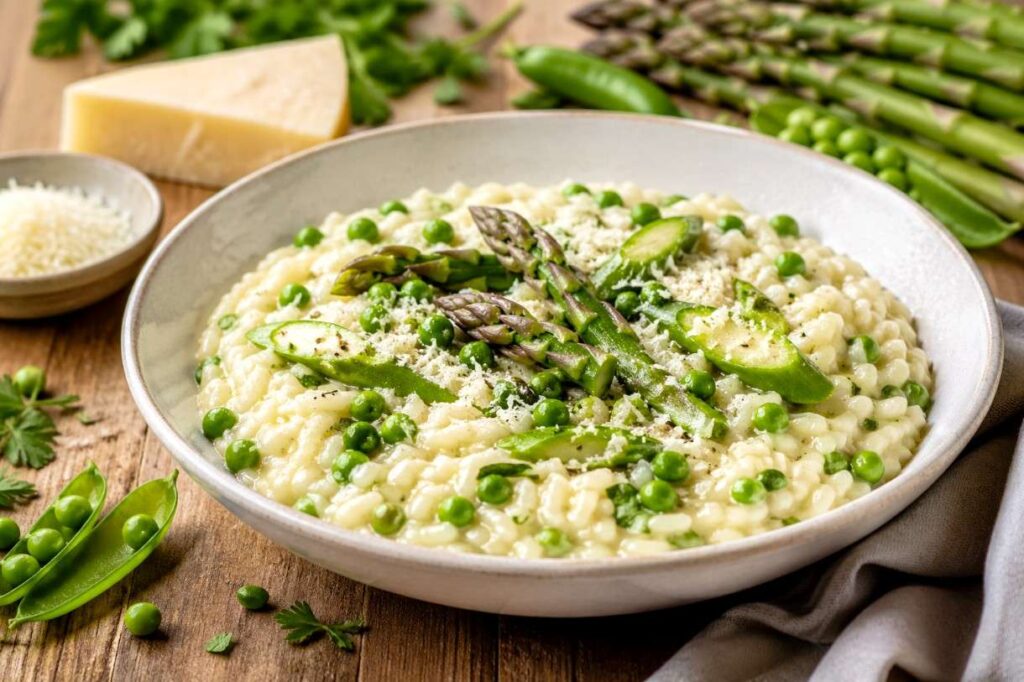
As winter slowly recedes and the first warm rays of sunshine fill the markets, a particularly fine time begins in French cuisine: spring. Tender vegetables, fresh herbs, and a new lightness characterize the dishes. Few recipes capture this mood as elegantly as a Risotto printanier – a creamy rice dish that captures the essence of the season with green peas, crisp asparagus, and flavorful parmesan.
This dish represents balance: the gentle sweetness of the peas, the slightly tart freshness of the asparagus, and the deep umami note of the aged cheese combine into a harmonious composition. Unlike heavy winter risottos, this version feels lively, almost playful – a culinary stroll through a spring garden.
The Philosophy Behind the Dish
Good risotto requires patience and attention. It is not a dish you cook on the side – rather, it is a dialogue between the cook and the ingredients. The rice is gradually supplied with broth, slowly stirred to the perfect consistency while absorbing all the flavors.
In spring, the focus is on freshness and texture: the vegetables should remain firm to the bite, the color bright, the taste clear. This is exactly where modern French cuisine shows itself – respecting classical technique but interpreting it lighter and more seasonally.
Recipe: Risotto Printanier with Peas, Asparagus & Parmesan
Ingredients (for 2–3 people):
- 180 g risotto rice (e.g., Arborio or Carnaroli)
- 1 bunch of green asparagus
- 100 g fresh or frozen peas
- 1 small shallot
- 1 garlic clove
- 700 ml hot vegetable broth
- 80 ml dry white wine
- 40 g freshly grated Parmesan
- 30 g butter
- 1–2 tbsp olive oil
- Salt and freshly ground pepper
- Optional: lemon zest and fresh herbs (e.g., mint or chives)
Preparation
1. Prepare the vegetables
Wash the asparagus, remove the woody ends, and cut into bite-sized pieces. Set the tips aside. Finely chop shallot and garlic.
2. Briefly pre-cook the asparagus
Blanch the asparagus pieces (without tips) in lightly salted water for 2–3 minutes, then cool quickly in cold water. This keeps their fresh color and slight crunch.
3. Base of the risotto
Heat olive oil in a pot, sauté shallot and garlic until translucent. Add the rice and stir briefly until slightly translucent.
4. Deglaze and build up
Deglaze with white wine and let it evaporate completely. Then gradually add hot broth – only enough to just cover the rice each time. Stir regularly.
5. Incorporate the vegetables
After about 10 minutes of cooking, fold in the peas and asparagus pieces (without tips). Continue adding broth and stirring.
6. Final phase
After about 18 minutes total cooking time, the rice grains should be creamy but still slightly firm. Now add the asparagus tips and cook for another 2–3 minutes.
7. Refine
Remove the pot from the heat. Stir in the butter and Parmesan. Season with salt, pepper, and optionally some lemon zest.
8. Serve
The risotto should be soft and flowing (“all’onda”). Plate and sprinkle with fresh herbs.
Tips for a Perfect Spring Risotto
- The broth must be hot to avoid interrupting the cooking process.
- Stirring is essential, but not frantic – steady movement is enough.
- Add Parmesan only at the end to control creaminess.
- A touch of lemon enhances the freshness of the dish especially well.
A Dish That Tells the Story of Spring
This risotto is more than just a meal – it is a snapshot of the season. It invites you to cook slowly, enjoy mindfully, and notice the little nuances: the snap of the asparagus, the sweetness of the peas, the gentle melting of the Parmesan.