
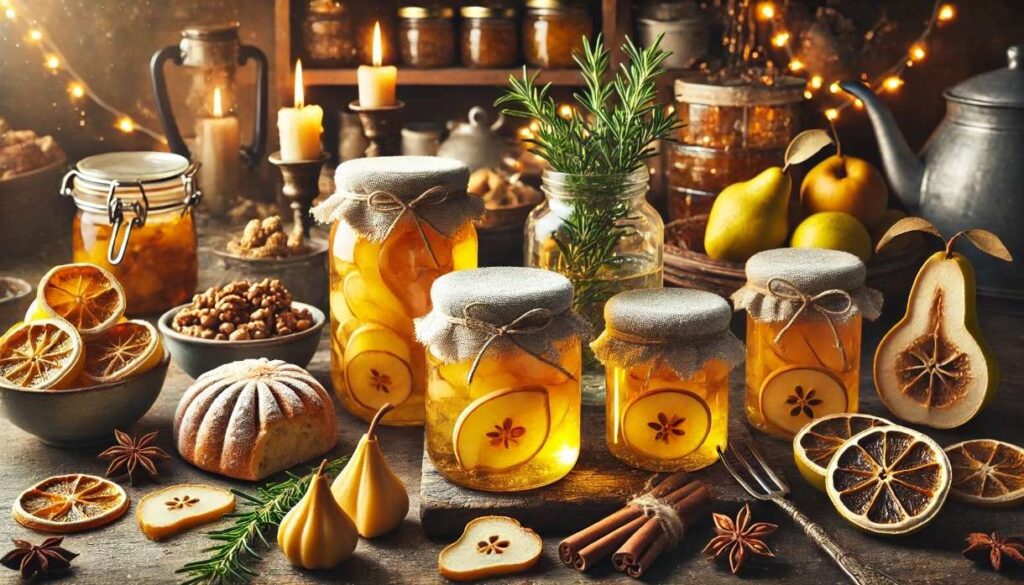
The 13 desserts of Provence are more than just a collection of sweet treats. They tell stories of community, spirituality, and local traditions. One often overlooked but still cherished member of this culinary collection is the quince jelly dessert. Its delicate sweetness, vibrant color, and silky texture make it a symbol of simplicity and elegance.
The significance of the quince in Provence
The quince, a golden-yellow relic of times past, is a fruit deeply rooted in the Mediterranean region. Its hard texture and tart taste make it barely edible raw, but in the kitchen it reveals its true potential. In Provence, it symbolizes transformation – from the tart fruit to a sweet, fragrant delicacy. This transformation stands for the hope and light that the Christmas season brings.
The quince is also a symbol of fertility and love, which made it a popular gift in many cultures. In Provence, it is particularly valued because it survives the harsh winters and is one of the last fruits of the season – perfect for creating a long-lasting jelly.
Quince jelly as part of the 13 desserts
Quince jelly is one of the sweet elements of the 13 desserts that celebrate the diversity of nature and craftsmanship in Provence. It represents the connection between tradition and creativity, as it is usually passed down from generation to generation using time-honored recipes. The golden, translucent color of the jelly reminds one of the Provence sun and brings a touch of warmth to the table – even in the coldest season.
The Recipe for Quince Jelly
Here is a traditional recipe to prepare this delicacy yourself:
Ingredients:
- 1 kg quinces
- 1 liter water
- Juice of one lemon
- 500–700 g sugar (depending on taste)
Preparation:
- Preparation of the quinces:
- Wash the quinces thoroughly to remove the fine fuzz on the skin.
- Cut the fruits into quarters, keeping the core and the skin intact – they contain the natural pectin needed for gelling.
- Cooking the quinces:
- Place the quince pieces in a large pot, cover with water, and add the lemon juice.
- Bring to a boil, then reduce the heat and let the quinces simmer for about 45 minutes until soft.
- Extracting the juice:
- Strain the contents of the pot through a clean cloth or fine sieve. Collect the liquid without pressing the quinces to keep the jelly clear.
- The remaining quince pulp can be processed into jam – no waste!
- Gelling process:
- Measure the collected juice and mix it with the same amount of sugar (e.g., 1 liter of juice = 1 kg of sugar).
- Bring to a boil in a pot while stirring and let simmer for 30–40 minutes until the mixture thickens. A gelling test on a cold plate helps to check if the jelly sets.
- Filling:
- Fill the hot jelly into sterilized jars, seal immediately, and turn the jars upside down to create a vacuum.
- After cooling, turn them back over and store in a cool, dark place.
Serving suggestions
Quince jelly is versatile and pairs perfectly with:
- Fresh baguette or brioche.
- Cheese platters, especially goat cheese or aged cheese.
- As a sweet accompaniment to meat dishes, e.g., duck or game.
The soul of the dessert
The quince jelly dessert in the tradition of the 13 desserts is a symbol of simplicity and the beauty of nature. Its bright, clear color illuminates the festive table and reminds us that the simplest things often carry the deepest meaning. With every spoonful, you feel the warmth of Provence, the love of tradition, and the touch of magic that makes the Christmas season so special.