
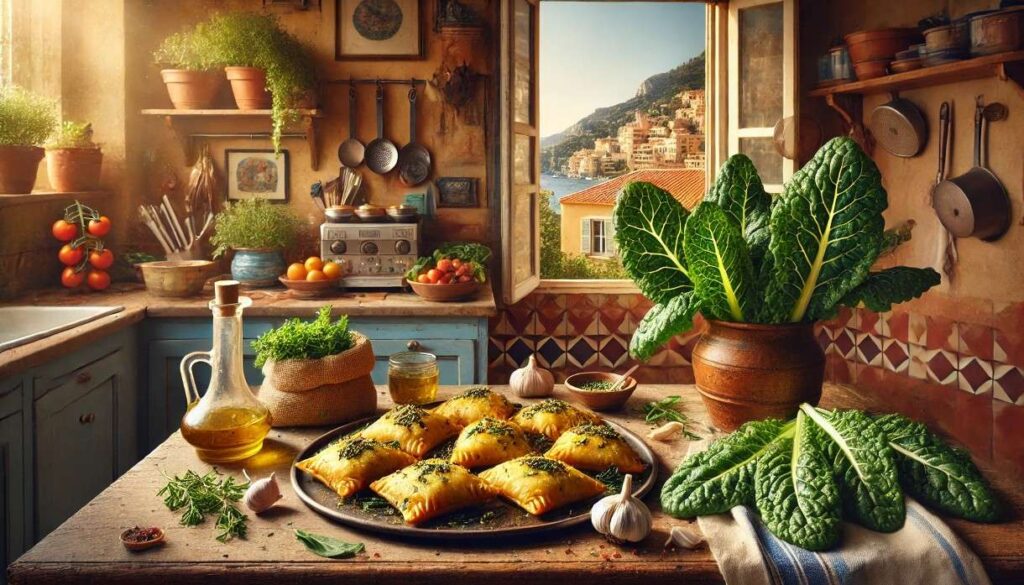
The Monegasque cuisine, often overshadowed by the proximity to France and Italy, has its own culinary treasures that impress with their simplicity, freshness, and authenticity. One of these dishes, popular both in the streets of Monaco and at festive tables, is Barbajuan. These small fried dumplings, filled with a delicious mixture of Swiss chard, rice, cheese, and herbs, are more than just a snack – they are a symbol of the regional cuisine and cultural history of Monaco.
The History of Barbajuan
Barbajuan, also known as “Uncle John” (translated from Ligurian), originated in Monaco and the surrounding regions of Liguria and the Côte d’Azur. There are various stories that explain the origin of this dish. A popular legend says that the recipe was developed by a monk named John who experimented with leftover ingredients and came across this tasty combination. He shared his recipe with the local population, who named the dumplings after him: “Barbajuan,” which means “Uncle John” in the Monegasque dialect.
Originally a humble dish made from simple and inexpensive ingredients, Barbajuan has evolved over the years into a staple of Monegasque cuisine. It is especially popular during Monaco’s National Day on November 19th, where it is served as a traditional snack at festivities. Although there are many variations of this dish, the base is always a savory vegetable filling, perfectly complemented by the crispy fried dough.
Barbajuan: More than Just a Pastry Pocket
The special thing about Barbajuan is its filling, which reflects regional ingredients and flavors. In the traditional version, chard or spinach dominates, combined with leek, rice, and cheese. Some variations also add ricotta or parmesan to give the filling more creaminess and depth. Herbs like thyme and marjoram, as well as garlic, provide the characteristic seasoning. The crispy dough that surrounds the filling is made from simple flour, water, and olive oil, then fried to a golden brown.
Although Barbajuan is considered a simple snack, it represents the spirit of Mediterranean cuisine: the ability to transform simple ingredients into a delicious and satisfying dish.
Recipe for Traditional Barbajuan
To enjoy the taste of Monaco at home, here is a classic recipe for Barbajuan.
Ingredients:
For the dough:
- 250 g flour
- 2 tbsp olive oil
- a pinch of salt
- 100 ml water
For the filling:
- 300 g chard (alternatively spinach)
- 1 small onion
- 1 leek stalk (white part only)
- 2 garlic cloves
- 100 g ricotta
- 50 g Parmesan, grated
- 2 tbsp cooked rice
- 1 egg
- 1 tbsp olive oil
- Salt and pepper to taste
- Fresh herbs (thyme, marjoram)
For frying:
- Vegetable oil (e.g. sunflower oil or peanut oil)
Preparation:
- Prepare the dough: Mix flour, olive oil, salt, and water in a bowl and knead into a smooth dough. Wrap the dough in plastic wrap and let it rest for about 30 minutes.
- Prepare the filling: Wash the Swiss chard and separate the leaves from the stems. Blanch the leaves briefly in boiling water, then drain and chop coarsely.
- Heat olive oil in a pan and sauté the finely chopped onion, leek, and garlic until translucent. Add the chopped Swiss chard and fry for a few minutes until the vegetables are cooked. Remove from heat and let cool.
- Stir ricotta, Parmesan, egg, cooked rice, and herbs into the cooled Swiss chard mixture. Season with salt and pepper.
- Shape the Barbajuan: Roll out the dough thinly on a floured surface and cut out circles (about 10 cm in diameter). Place a tablespoon of filling in the center of each dough circle. Brush the edges with a little water, fold over, and seal well.
- Fry: Heat the oil in a pot (about 180°C). Fry the Barbajuan in batches until golden brown and crispy. Drain on kitchen paper.
- Serving: Serve the Barbajuan hot, either as an appetizer, snack, or side dish.
Conclusion
Barbajuan is more than just a simple dish – it is a piece of history and culture deeply rooted in Mediterranean cuisine. The combination of fresh, regional ingredients and skillful preparation makes Barbajuan a culinary experience that is both traditional and timeless. These crispy, filled pastries are a perfect example of the simplicity and sophistication that characterize the cuisine of Monaco.