
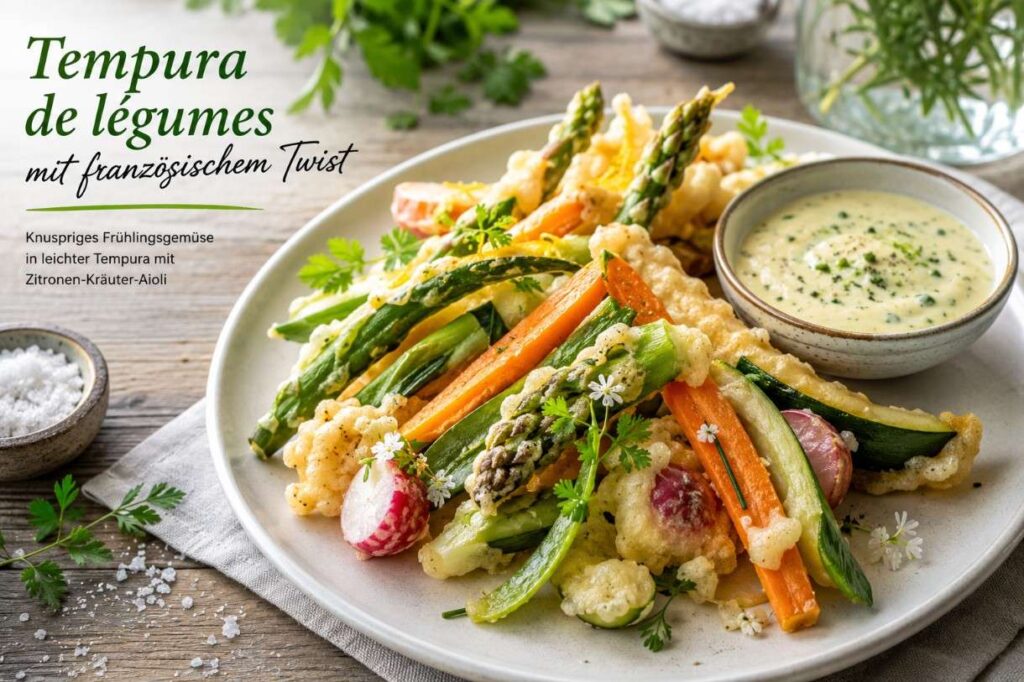
When spring arrives, the kitchen changes too: it becomes lighter, more colorful, and more aromatic. Delicate vegetables such as green asparagus, young carrots, zucchini, and radishes now take center stage. In this dish, the Japanese technique of tempura meets French sophistication – an exciting interplay of lightness, precision, and depth of flavor.
Tempura is originally a classic of Japanese cuisine: vegetables or fish fried very thinly, with a batter that is especially airy and crispy. The French twist, however, introduces new elements – such as a fine herbal aroma, an elegant sauce, and a careful selection of seasonal ingredients. The result is a dish that convinces both as an appetizer and as a light main course.
The Concept Behind the Dish
Spring provides an abundance of vegetables that are perfect for tempura: crisp, juicy, and delicately flavored. Unlike heavy breading, the tempura batter allows the vegetables themselves to remain in the spotlight.
The French interpretation complements this lightness with:
- fresh herbs like tarragon, chervil, or chives
- an elegant dipping sauce, for example based on a light lemon aioli or a vinaigrette
- a touch of acidity and freshness that balances the dish
This creates a culinary dialogue between two cuisines that both place great value on technique and quality.
Recipe: Vegetable Tempura with a French Twist
Ingredients (for 2–3 people)
For the vegetables:
- 6–8 green asparagus stalks
- 2 young carrots
- 1 small zucchini
- a handful of sugar snap peas
- 6–8 radishes (halved)
- optional: spring onions
For the tempura batter:
- 100 g wheat flour (Type 405)
- 40 g cornstarch
- 1 egg yolk
- 180 ml ice-cold mineral water
- a pinch of salt
For frying:
- neutral vegetable oil (e.g., sunflower oil)
For the French dip (lemon herb aioli):
- 1 egg yolk
- 1 tsp Dijon mustard
- 1 tsp lemon juice
- approx. 120 ml mild olive oil
- salt and white pepper
- finely chopped herbs (tarragon, chives, chervil)
Preparation
1. Prepare the vegetables
Wash the vegetables and cut into bite-sized pieces. Remove the asparagus ends, peel the carrots and cut lengthwise in half, slice the zucchini. It is important that all pieces are about the same size so they cook evenly.
2. Make the batter
The mineral water should be very cold – ideally from the refrigerator. Briefly stir the egg yolk with the water, then gently fold in the flour and starch. Small lumps are desired; a too smooth batter would be less crispy.
3. Heat the oil
Heat the oil in a pot or deep pan to about 170–180 °C. A wooden stick test helps: if small bubbles rise, the oil is ready.
4. Fry the tempura
Lightly dust the vegetables with flour, then dip in the batter and immediately place into the hot oil. Fry in small batches to keep the temperature stable. After 2–3 minutes, the pieces are golden-yellow and crispy. Let drain on kitchen paper.
5. Prepare the aioli
Stir the egg yolk, mustard, and lemon juice. Slowly drizzle in the oil in a thin stream until a creamy emulsion forms. Season with salt, pepper, and herbs.
Serving and Enhancing
The tempura should be served immediately while still hot and crispy. Arrange loosely on a plate, optionally sprinkle with a few fresh herbs. Serve the aioli separately.
Those who wish can further refine the dish:
- with a splash of lemon juice over the finished tempura
- with a light vinaigrette made from white wine vinegar and olive oil
- with a touch of fleur de sel just before serving
Culinary Classification
This dish embodies spring on several levels: the freshness of the ingredients, the lightness of preparation, and the elegance of presentation. The Japanese technique provides structure and crispiness, while the French elements add depth and refinement.
Vegetable tempura with a French twist is not a heavy dish but one that enlivens the palate and reflects the season’s variety. It is excellent for a light lunch, a stylish dinner, or as part of a multi-course menu.