
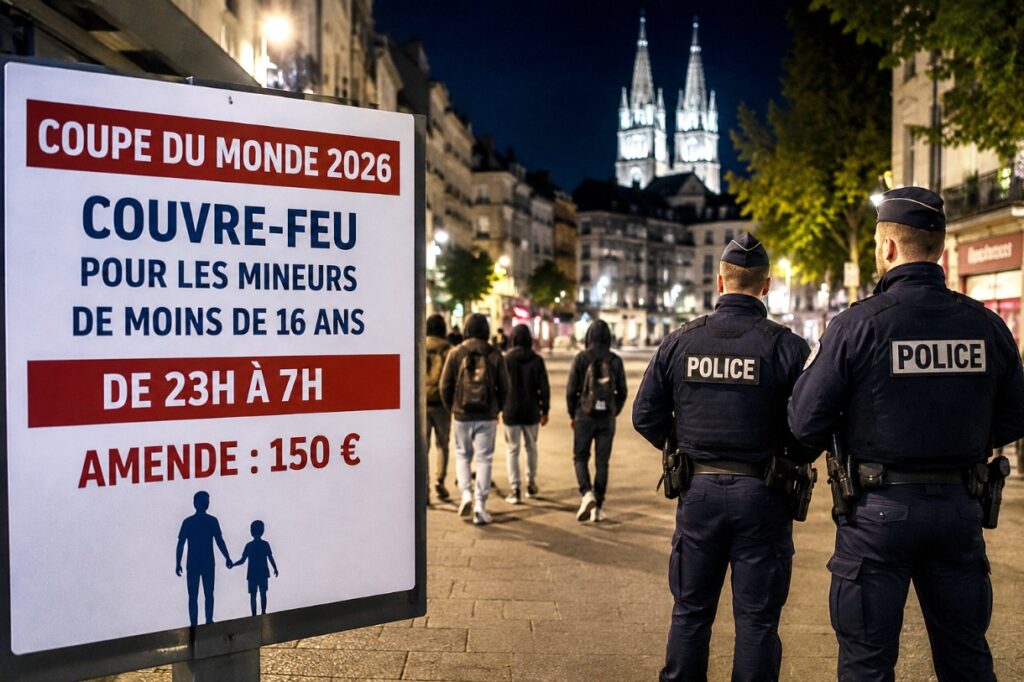
While anticipation for a Football World Cup grows elsewhere, flags hang from windows, and cities plan public fan zones, Clermont-Ferrand takes a remarkably different path. The capital of Auvergne is preparing for the tournament with a package of measures that above all signals: safety takes precedence over celebratory atmosphere.
The trigger for this unusually strict approach are the riots of recent weeks. After Paris Saint-Germain’s triumph in the Champions League, several French cities experienced violent scenes, property damage, and clashes with the police. Authorities also recorded unrest again in early June. Those memories run deep.
Against this backdrop, the city administration, prefecture, police, and judiciary developed a concept that ranks among the strictest measures in France concerning the 2026 Football World Cup.
Particularly striking is the nighttime curfew for minors under 16 years of age. In the extended city center, especially around Place de Jaude, young people are not allowed to be out between 11 p.m. and 7 a.m. during the tournament without adult supervision. Violators of this rule face a fine of 150 euros.
Mayor Julien Bony defends the decision with the protection of young people and the responsibility of parents. According to authorities’ assessments, minors played a significant role in the recent riots. The curfew is intended to prevent young people from getting involved in nighttime violence or participating themselves.
Equally noteworthy is the city’s stance on public broadcasts. While many places consider big screens and fan zones the heart of the tournament, Clermont-Ferrand completely refrains from offering such setups.
No fan zone. No large screens in public spaces.
Even a potential final qualification of the French national team would not change this decision.
Instead, TVs in bars and restaurants must be arranged so they can only be seen by patrons inside the establishments. Authorities want to avoid spontaneous large gatherings on streets and squares. Such crowds are considered by security forces as possible starting points for subsequent riots.
Additional restrictions include planned bans on larger crowds in sensitive areas and tightened rules for alcohol consumption in public. Fireworks and so-called mortar batteries are increasingly targeted by law enforcement. They played a central role in earlier unrest as well.
Another surprising topic at first glance is laughing gas. Originally known as a party gag, this intoxication agent was identified in several incidents and is therefore also a focus of authorities. Police and prosecutors announce particularly swift prosecution of possible offenses. Anyone who becomes violent during the World Cup is expected to be promptly brought to court.
The development shows how perceptions of major sporting events have changed. Only a few years ago, Football World Cups stood for exuberant celebrations, shared emotions, and public enthusiasm. Cities competed to offer the biggest fan zones and most spectacular viewing locations.
Today, a different question dominates in many places: How can security risks be controlled?
Clermont-Ferrand provides a clear answer. Those responsible rely on prevention, deterrence, and strict rules. Critics see this as a restriction of public life and festive atmosphere; supporters consider the measures a necessary consequence of the experiences of recent months.
Whether the tough course actually helps prevent riots will only become clear during the tournament. However, it is already certain: In Clermont-Ferrand, the Football World Cup is viewed less as a street party and more as a security policy challenge. Concern about new violent excesses currently outweighs anticipation for the world’s biggest football event.