
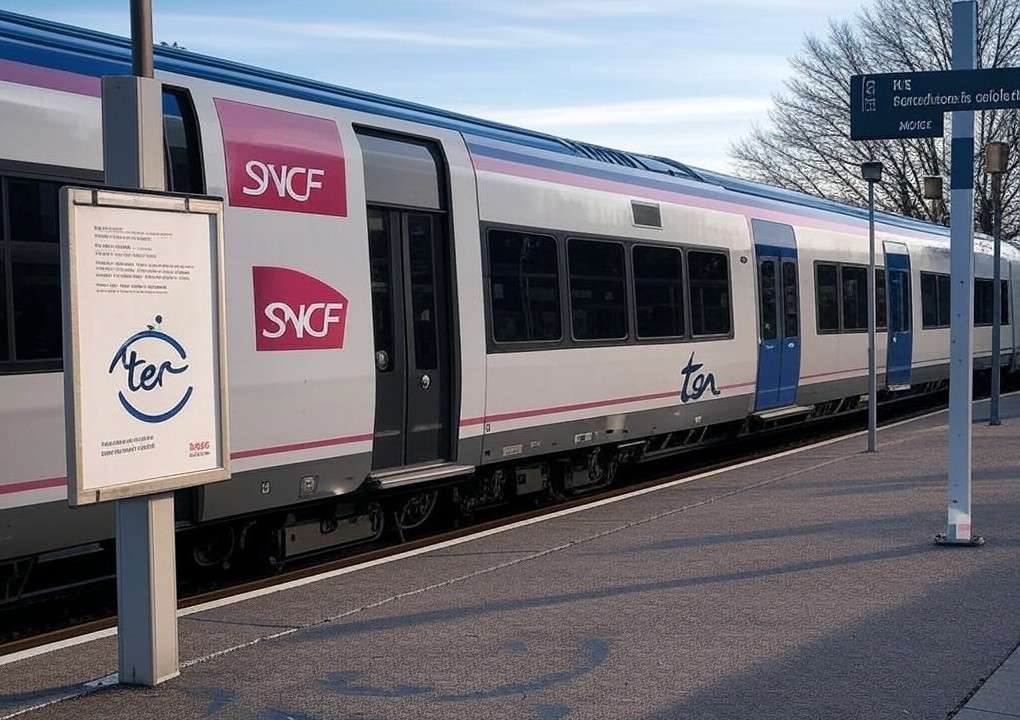
The French government announces another multi-billion euro modernization of the rail connection between Clermont-Ferrand and Paris. Transport Minister Philippe Tabarot announced additional investments of 450 million euros for the years 2028 to 2031. This aims to renovate a route that has long been a symbol of the structural weaknesses of the classic French railway network.
Already between 2018 and 2027, around 1.3 billion euros were invested in the connection. Nevertheless, the route repeatedly made headlines due to massive delays, technical failures, and last-minute train cancellations. In France, the line has long been referred to as the “ligne maudite” – the “cursed route.” Especially for the residents of the Massif Central, the railway connection became a political hot topic that extends far beyond regional transport policy.
The new funds are primarily intended for the fundamental renewal of the infrastructure. Planned measures include the replacement of old rails and overhead lines, modernization of signaling technology, as well as additional measures to secure level crossings. Problems with wild animals on the tracks, which repeatedly cause service interruptions, are also to be specifically reduced. SNCF Réseau thus aims to permanently increase the reliability of the route.
A central component of the modernization is also the introduction of the new “Oxygène” trains. The first commercial journeys of this new fleet are now scheduled for summer 2027. The vehicles are expected to offer more comfort, be more energy-efficient, and at the same time reduce the frequently criticized breakdown-proneness of the previous carriages. For the government, the project is therefore also a visible signal that the French state is investing more strongly again in the classic long-distance network.
Additionally, there is hope for shorter travel times. According to the Transport Ministry, the fastest connections could run about ten minutes faster between Clermont-Ferrand and Paris starting from the 2028 timetable change. However, user associations consider this insufficient. They are calling for a long-term travel time of around two and a half hours to better economically connect the region with the capital.
Politically, the route now holds high symbolic significance. While France focused for decades primarily on expanding the TGV network, many conventional long-distance routes outside the major metropolitan areas increasingly fell behind. The Clermont–Paris connection is emblematic of this imbalance. The current investments therefore also mark a change of course: Paris is visibly trying to gradually reduce the modernization backlog in the traditional rail network and to give regions outside the high-speed corridors new attention.
Author: P. Tiko