
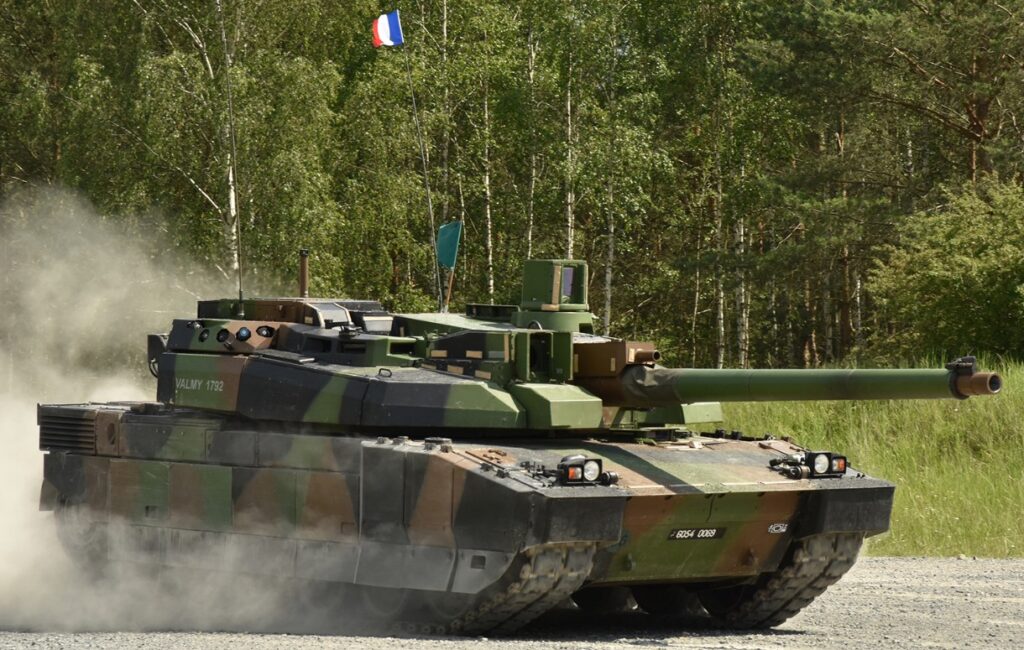
“On s’entraîne pour se préparer, c’est indispensable” – with this maxim the French army encapsulates its strategic shift. For decades, foreign deployments to combat terrorism were at the center of military training. Today the focus has returned to territorial and alliance defence. Russia’s war of aggression against Ukraine, increasing hybrid threats and growing tensions between the great powers have fundamentally changed Europe’s security environment. France is responding with a comprehensive modernization of its armed forces and significantly more intensive training for high-intensity conflict.
Return to traditional territorial defence
Since the end of the Cold War, the French armed forces have concentrated primarily on expeditionary operations. Whether in the Balkans, in Afghanistan or in the Sahel zone – the army was geared towards asymmetric conflicts against non-state opponents. Small, highly mobile units, air support and special forces shaped the operational profile.
These priorities have fundamentally changed within a few years. With the war in Ukraine, the possibility of a conventional war between technologically highly equipped states has returned to the centre of military planning. France is therefore preparing its forces again for engagements in which heavy formations, artillery, air defence, electronic warfare and logistical endurance are decisive.
French military planning through 2030 reflects this development. Billion-euro investments are intended not only to procure modern weapons systems but above all to increase the readiness and resilience of the entire army.
Realistic exercises instead of theoretical war games
Training today takes place under conditions as close as possible to an actual conflict. Exercises are no longer limited to individual units but include all service branches as well as civilian authorities and international partners.
This is particularly evident in the ORION exercise series, which is now considered the most important large-scale French manoeuvre since the end of the Cold War. While ORION 2023 already set new standards, ORION 2026 was expanded significantly. Around 12,500 servicemen and women from 24 nations trained together over several months on a scenario unmistakably reminiscent of the war in Ukraine.
It was not just about conventional battles. Political decision-making processes, strategic planning, amphibious landings, airborne operations, cyber attacks, space operations and the command of multinational forces were simulated. For the first time, the interaction between military and civilian institutions in the event of a large-scale conflict was also comprehensively tested.
Lessons from the war in Ukraine
Few military conflicts have influenced Western armed forces in recent decades as profoundly as the war in Ukraine. Numerous assumptions about modern warfare had to be revised.
Drones have evolved from supporting reconnaissance assets into central weapons systems. Electronic warfare can cripple communication and navigation systems within a very short time. Precision weapons increase the vulnerability of military infrastructure, while satellite reconnaissance and digital data processing make the battlefield almost transparent in near real time.
Equally clear, however, was the importance of seemingly classical factors. Large ammunition stocks, functioning supply lines, industrial production capacities and reliable transport logistics increasingly determine how long an army can remain resilient.
France is integrating these insights consistently into its training. Soldiers practise operating under GPS outages, disrupted communications networks and constant drone threat. At the same time, reservists are being more closely integrated and cooperation with the police, civil protection and other state institutions intensified.
Warfare in all dimensions
Modern conflicts are no longer confined to land, air and sea. Cyberspace and space are now considered independent operational domains.
Cyber attacks can significantly impair energy supplies, communication networks or military command structures. At the same time, satellites are indispensable for navigation, reconnaissance and data transmission. Accordingly, the French armed forces are increasingly training the coordinated interaction of all military capabilities.
This so-called multi-domain operations concept requires tight integration of all service branches. Decisions must be made within minutes while information from a wide variety of sources is processed almost in real time. The ability to coordinate these complex processes is now considered as important as the quality of individual weapons systems.
Cooperation with allies
France increasingly understands its defence as part of a common European and transatlantic security architecture. Large exercises are therefore regularly conducted together with NATO partners and other friendly states.
At the centre is so-called interoperability – the ability of different armed forces to operate together without delay in an emergency. This includes unified communication standards, compatible command procedures and coordinated logistical processes.
Multinational exercises therefore serve not only military purposes. They also send a political signal. Visible cooperation among allies is intended to make clear to potential adversaries that an attack on a European state would trigger significant joint countermeasures.
Deterrence as a guiding security policy principle
Increased training does not mean that France expects an imminent war. Rather, it follows the classic principle of credible deterrence.
Military strength has its greatest effect when it prevents a conflict. Well-trained soldiers, modern equipment and functioning command structures increase the credibility of a defence and are intended to deter potential aggressors from taking military risks in the first place.
This understanding now shapes French defence policy as well as the security strategies of many European states. Preparation is not seen as an expression of readiness for war, but as a prerequisite for preserving peace.
Europe is currently undergoing the deepest security-policy reorientation since the end of the Cold War. France plays a key role in this. As the only nuclear power in the European Union with global military capabilities, the country is investing heavily in modernizing its armed forces and adapting training, organisation and equipment to the changed threats.
The phrase “We train to be prepared” therefore stands for much more than a military motto. It describes a fundamental change in French security strategy. In future, the army should not only manage crises in distant regions of the world but, together with its partners, also be capable of defending Europe against a high-intensity military attack.
Author: Andreas M. Brucker