
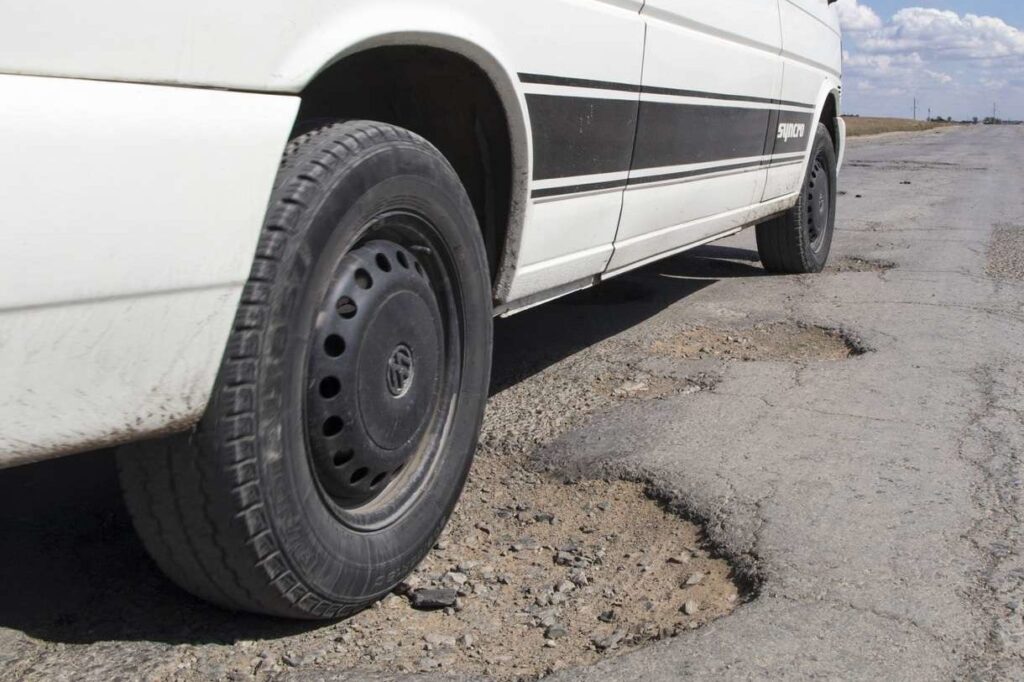
France’s municipal roads are groaning under the weight of neglect – and the local authorities are sounding the alarm. The Association des maires de France (AMF), the association of French mayors, urgently points to the precarious situation: thousands of kilometers of roads and countless bridges are dilapidated, and money for maintenance is lacking everywhere.
A misery that leaves not only potholes – but deep cracks in territorial justice and citizen safety.
717,000 Kilometers of Responsibility – and Hardly Any Money
Numbers that make your head spin: 717,000 kilometers of roads and over 120,000 bridges – all fall under the responsibility of French municipalities and inter-municipal groups. They thus handle more than 65 percent of the entire national road network.
A gigantic legacy – but with empty pockets.
The French state collects around 45 billion euros annually from road-related revenues: taxes on fuels, registration fees, toll charges, and fines. And how much of that flows back to the municipalities for maintaining their roads? Barely about one billion euros. A drop on the hot asphalt.
When the Asphalt Crumbles
The consequences of this financial imbalance are long visible – and noticeable. The roads are increasingly deteriorating. Potholes, crumbling bridges, cracked pavements. This endangers not only the safety of road users but also affects the daily lives of many people. Especially in rural areas, where the car is often the only means of transport.
And as if that were not enough, the climate increasingly works against the infrastructure. Heatwaves, floods, frost periods – extreme weather events take a heavy toll on the road network. A prime example of the pitfalls of climate change in everyday life.
New rules, old problems
Added to this are ever stricter regulations regarding safety and the environment. The requirements increase – but the budget remains meager. The municipalities are caught between a rock and a hard place: They are supposed to modernize, adapt, repair – but how without funds?
It is a vicious cycle.
AMF applies pressure: Time for a fair financing model
The mayors see a need for action – and urgently. AMF proposes concrete measures to cut the Gordian knot:
- More money for the municipalities: A portion of the road taxes currently collected by the state should flow directly to the municipalities. After all, they bear the main burden of maintenance.
- Users should contribute: Companies that use the road network – such as operators of electricity, gas, or telecommunications lines – could be financially involved.
- Use fines sensibly: The revenues from municipal parking tickets should be partially reinvested directly into road construction.
- Strengthen rural mobility: The so-called “Versement Mobilité” – a levy for public transport – needs to be revised so that it also reaches remote regions without additionally burdening small businesses.
- More say for local actors: In major transport projects such as metropolitan region fast connections, municipalities should be more involved.
Road over rail?
An often overlooked fact: Around 90 percent of all trips in France are made by car. As much as the expansion of public transport is demanded – the road remains the backbone of mobility. And what use are the most modern trains if the access roads to the station resemble a lunar landscape?
This reality must not be lost sight of in transport planning. The AMF therefore insists on a balanced concept that meets the needs of rural regions as well as those of cities.
A patchwork with a future?
The question remains: Will the municipal road network continue to crumble piece by piece while billions flow into high-tech transport projects in metropolitan areas? Or will it be possible to establish a balance – between city and country, between rail and road?
The mayors have made it clear: It can’t go on like this. The road is more than just a strip of asphalt – it connects people, regions, and ways of life. And without a stable foundation, this connection will eventually collapse.
No one seriously wants to risk that – or do they?
Catherine H.