
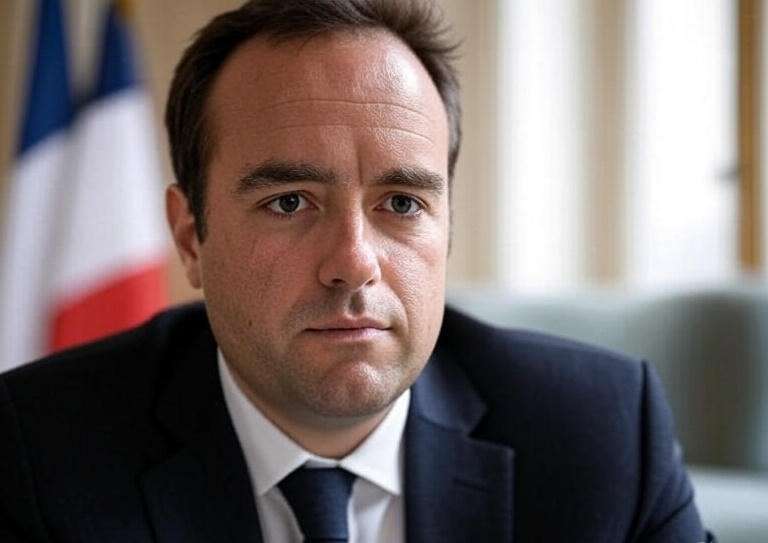
The French government is preparing for a new phase of strict budget discipline. The reason is not only the structural weakness of public finances, but increasingly also the economic shock effect of the war in the Middle East. In Paris, concern is growing that rising energy prices, higher financing costs, and a weaker economic environment could further destabilize the already tight state budget. According to information from government circles, up to six billion euros in additional savings may be necessary to still meet the deficit target for 2026 at all.
Thus, a geopolitical crisis is increasingly becoming a domestic tax test for France – potentially with far-reaching consequences for growth, social security, and political stability.
The Return of Energy Fear
The French government had originally based its budget planning on moderate energy prices and a gradual economic stabilization. But the escalation in the Middle East is drastically changing these assumptions. On the international markets, oil and gas prices are sensitive to any expansion of the conflict. For France, this means higher import costs, more expensive production costs, and renewed inflationary pressure.
France does indeed have a high share of nuclear energy compared to other European countries, but the economy remains strongly dependent on global energy prices – especially in the transport sector, industry, and agriculture. Even small price increases have direct effects on consumer prices and companies’ profit margins.
There is also a psychological factor: companies invest more cautiously, consumers limit their spending, banks recalculate risks. This mix of uncertainty and rising costs can further slow the already weak economic growth.
The French Ministry of Finance therefore fears a classic stagflation effect: low growth rates combined with high price pressure. For a state with chronically high expenditure and an already heavily burdened budget, this creates a particularly dangerous scenario.
The debt burden becomes the core problem
The biggest problem for the government is no longer so much energy demand, but especially the rapidly rising financing costs of the state. With a national debt now well above 110 percent of gross domestic product, France is one of the most heavily indebted countries in the eurozone.
For years, Paris was able to benefit from the low interest rate policy of the European Central Bank. That phase is over. Since the ECB’s monetary policy change, yields on French government bonds have risen noticeably. Every new geopolitical crisis also increases nervousness in the financial markets.
According to calculations around the Ministry of Finance, just the higher interest costs alone could burden the French state budget with approximately 3.6 billion euros extra. Thus, debt servicing is increasingly becoming one of the largest individual items in the budget.
The government of Prime Minister Lecornu is thus faced with a double dilemma: on the one hand, Brussels demands credible deficit reductions, on the other hand, too severe austerity measures could further weaken the already fragile economic situation.
Lecornu between financial markets and the street
The political situation is delicate. France has been in a phase of social and fiscal tensions for years. The pension reform, recurring protest movements, and high inflation have damaged the trust of many citizens in the state’s economic and political actions.
Lecornu is now trying to strike a balance. The government wants to maintain the deficit target of five percent of gross domestic product, while at the same time preventing new social explosions. This is precisely where the political difficulty lies: savings worth billions are hardly achievable without citizens being directly affected.
Currently, there is debate about frozen ministry budgets, postponed investment programs, and cuts to state loans and subsidies. The health and social sectors are also under supervision. Officially, the government emphasizes that insured persons and social security beneficiaries should be spared as much as possible, but in practice, interventions in these sectors are politically almost unavoidable.
A particular problem is the structural rigidity of the French budget. A large part of the expenditures is tied up for the long term – including pensions, social transfers, and personnel costs in the public service. The actual scope for short-term savings is therefore limited.
Opposition warns of “recessive policy”
The political opposition reacts sharply to this. Left-wing parties and trade unions accuse the government of using geopolitical crises as a pretext for a neoliberal austerity program. The chairman of the Finance Committee of the National Assembly, Éric Coquerel, spoke of a “recessive policy” that would further weaken growth and purchasing power.
The current discussion indeed recalls earlier European austerity phases after the financial and euro crises. At that time, it was shown that abrupt savings could stabilize deficits in the short term but at the same time burden demand, investments, and employment.
France, however, differs from Southern Europe during the euro crisis in one crucial point: the country still has a large industrial base, high private wealth, and relatively stable institutional structures. Despite the high debts, Paris is not yet considered a direct risk case in the financial markets.
But it is precisely this confidence that the government is now trying to defend. Losing control over public finances could further increase refinancing costs and thus cause a dangerous vicious circle.
France, however, differs from Southern Europe during the euro crisis in one crucial point: the country still has a large industrial base, high private wealth, and relatively stable institutional structures. Despite the high debts, Paris is not yet considered a direct risk case in the financial markets.
But it is precisely this confidence that the government is now trying to defend. Losing control over public finances could further increase refinancing costs and thus cause a dangerous vicious circle.
The second largest economy in Europe under pressure
The developments in France are also being closely monitored in Brussels. As the second largest economy in the eurozone, the country has a significant influence on the stability of the entire European monetary union.
If France fails to meet its deficit targets for an extended period, this could intensify the European debate over fiscal rules once again. Rating agencies are already following the development of French debt with increasing skepticism.
At the same time, the French example illustrates how strongly geopolitical conflicts now affect national budgets. The war in the Middle East not only impacts foreign and security policy but increasingly also inflation, energy supply, interest rate policy, and social stability within Europe.
For President Emmanuel Macron, this development comes at a very unfortunate time. His government has been trying for years to modernize France economically, while simultaneously maintaining social security. The new budgetary risks will considerably complicate this already difficult balancing act.
The fact is: the financial leeway of the French state is becoming tighter. And the longer the crisis in the Middle East lasts, the greater the pressure on Paris to choose between fiscal credibility and social peace. This is where the real political explosiveness of the current debate lies.
P.T.