
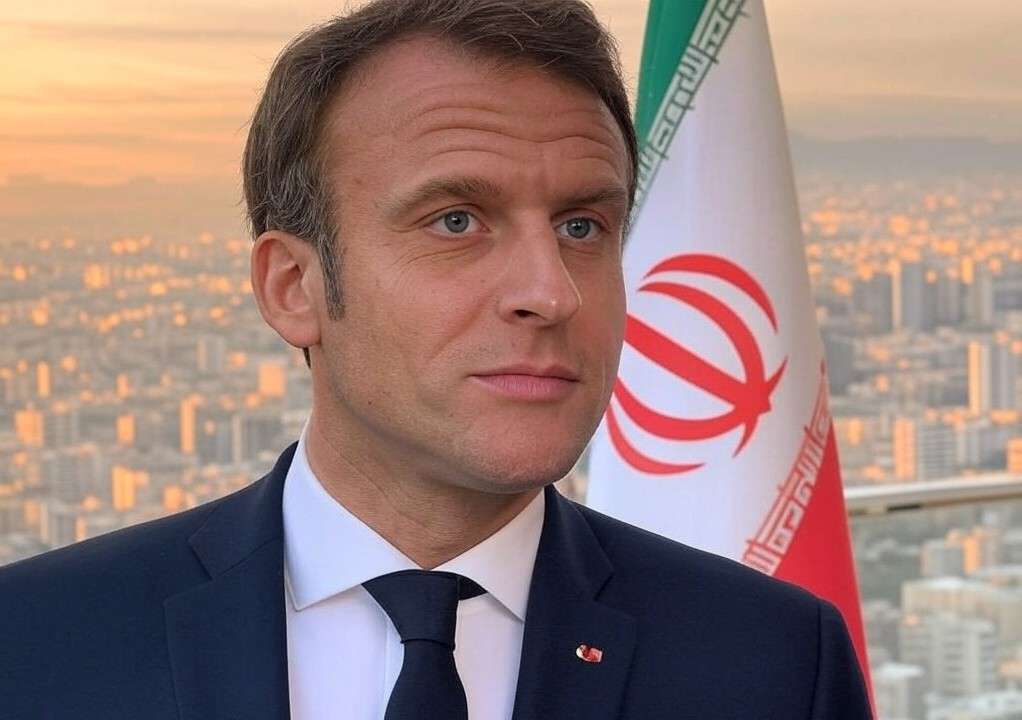
The rapid escalation of the situation in the Middle East is forcing European diplomacy to exercise increased vigilance. Against this backdrop, French President Emmanuel Macron has once again convened a Conseil de défense et de sécurité nationale – a step that underscores the urgency of the current geopolitical developments while also offering insight into the strategic thinking of the French leadership.
The meeting on March 24 in the late afternoon is already the second within a few days. It comes amid an escalating confrontation between Iran, Israel, and the United States – a constellation that has the potential to trigger a major regional crisis and extends far beyond the Middle East.
A Region on the Brink of a Conflagration
The latest military events underscore the fragility of the situation. Missile attacks on Israeli territory, allegedly directed from Iran, as well as retaliatory strikes against strategic facilities, mark a new level of confrontation. At the same time, drone and missile attacks were reported in several Gulf states.
This dynamic follows a familiar logic: asymmetric retaliation, indirect confrontation through proxies, and targeted pinpricks against critical infrastructure. Yet the density and simultaneity of the latest incidents suggest a dangerous acceleration.
Particular attention is being paid to the Strait of Hormuz, through which around one fifth of globally traded crude oil is transported. Any serious disruption of this bottleneck has immediate effects on the global economy. Energy markets have been reacting sensitively for days to every new report of escalation.
France’s balancing act between deterrence and diplomacy
In this situation, Paris is pursuing a two-track strategy. On the one hand, President Macron is relying on diplomatic de-escalation. In several statements, he has called for attacks on civilian and energy-related infrastructure to be suspended. Such targets are considered particularly prone to escalation, as they have not only military but also economic and humanitarian consequences.
On the other hand, France is strengthening its military presence in the region. Naval units are operating more intensively in the eastern Mediterranean, the Red Sea, and the Persian Gulf. Officially, this serves to protect French citizens and economic interests, as well as to secure international trade routes.
This combination of military preparedness and diplomatic initiative is typical of French foreign policy in recent years. It reflects the ambition to combine strategic autonomy with international responsibility—an approach that is reaching its limits in the current situation.
The Defense Council as the hub of power
The repeated convening of the Conseil de défense is not a routine procedure. This body, which meets behind closed doors, concentrates decision-making power in security and foreign policy crisis situations. Alongside the president, key ministers and senior military representatives take part.
In practice, this means a strong centralization of decision-making processes. Traditional ministerial coordination recedes into the background, while rapid, coordinated responses come to the fore. This is considered a decisive advantage, especially in situations of high uncertainty—such as currently in the Middle East.
At the same time, this form of decision-making raises questions about transparency and democratic oversight. In France, this debate is not new, but it gains additional urgency in times of multiple crises.
Strategic Uncertainty from Washington
Another factor of uncertainty lies in the stance of the United States. American policy toward Iran appears contradictory: on the one hand, military options are kept open and operations are threatened; on the other hand, possible diplomatic contacts are hinted at.
This ambivalence makes it difficult for European partners to develop a clear line. France, which traditionally cooperates closely with the United States but also insists on strategic autonomy, finds itself caught in a dilemma.
The question is: Is this a tactical ambiguity intended to put pressure on Tehran – or a sign of a lack of strategic coherence? For European capitals, this uncertainty is problematic, as it limits the predictability of their own measures.
Economic shockwaves and energy policy risks
The economic effects of the crisis are already clearly noticeable. Oil prices have temporarily exceeded the $100-per-barrel mark and continue to react volatilely to each new development. This poses a considerable risk for Europe.
This is compounded by the structural vulnerability of Europe’s energy supply. Despite diversification efforts, dependence on global fossil fuel supply chains remains high. An escalation in the Persian Gulf will once again drive up not only oil but also gas prices.
France itself is less exposed than other EU states due to its high share of nuclear energy. Nevertheless, the indirect effects – for example through markets and trading partners – would be considerable.
A geopolitical turning point is emerging
The current development points to more than a short-term crisis. Rather, it could be part of a broader geopolitical upheaval. The Middle East, long a scene of regional conflicts with limited global impact, is once again moving to the center of international power politics.
Great powers are directly or indirectly involved, economic interests are at stake, and the risks of an uncontrollable escalation are growing. In this context, every decision gains importance – including those made within the framework of a national security council.
France is trying to play an active role in this complex configuration without becoming militarily entangled. However, the room for manoeuvre is limited. Between transatlantic ties, European responsibility, and its own global political ambitions, Paris must repeatedly readjust its position.
The renewed meeting of the Defence Council is an expression of this balancing act. It signals a willingness to act without yet revealing concrete directional decisions. In a situation dominated by momentum and uncertainty, precisely this form of strategic caution becomes the decisive instrument of state leadership.
Author: P. Tiko