
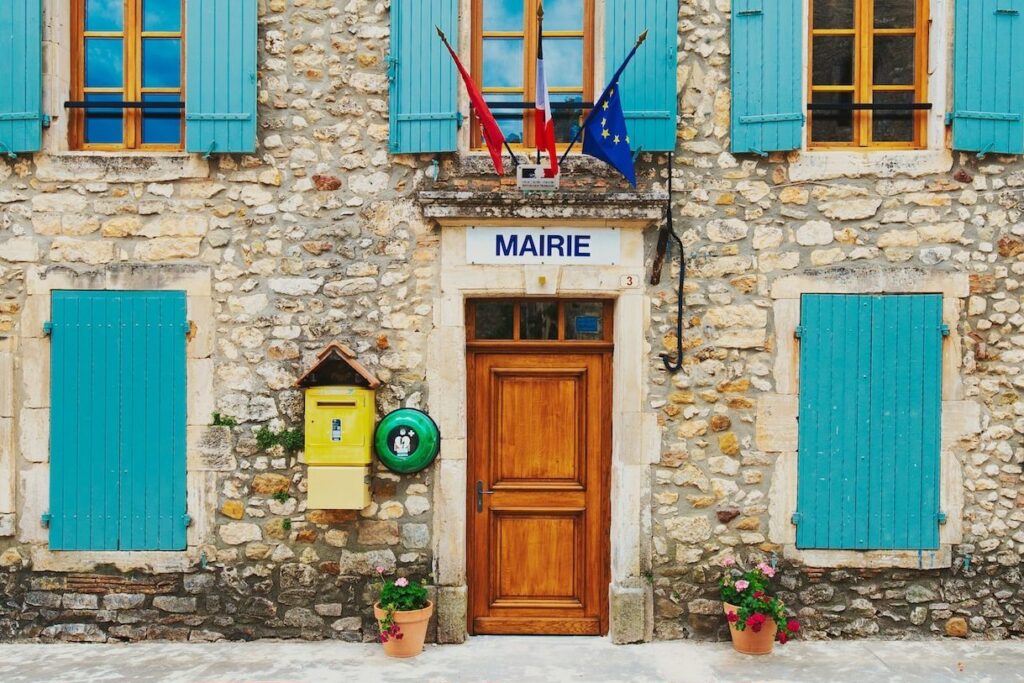
The warning does not come from the political sidelines but from the very heart of local power: The Vice President of the Association des maires de France, Florence Portelli, describes a development that goes far beyond episodic violence. Her diagnosis points to a structural change in the relationship between citizens and elected officials – and thus to a potential erosion of democratic foundations in France.
A development with a clear statistical signature
The increasing attacks on mayors can no longer be dismissed as isolated incidents. Rather, various surveys show a continuous worsening of the situation. Within a few years, the number of reported incidents against municipal officials has increased significantly, while the range of attacks has also expanded.
Particularly revealing is the combination of quantitative and qualitative indicators: On the one hand, the absolute number of incidents is rising, on the other hand, their nature is changing. Insults and threats, long trivialized as “accompanying phenomena” of political activity, are increasingly turning into open aggression and physical violence.
Added to this is the growing importance of digital spaces. Social networks function not only as platforms for verbal attacks but also as mobilization tools for real confrontations. The boundary between virtual and physical violence is blurring – a phenomenon that occupies both security authorities and political science alike.
The Mayor as a Projection Surface for Social Tensions
The particular vulnerability of mayors lies in their institutional position. Unlike national politicians, they are immediate contacts for the population. They embody the state in everyday life – visible, tangible, and approachable.
This closeness becomes a burden under changing social conditions. Mayors are increasingly confronted with conflicts that exceed their actual area of responsibility. Issues such as migration, energy prices, or public safety are dealt with at the local level, although their causes are often national or global.
The mayor thus becomes a projection surface for collective frustration. Where political solutions are lacking or perceived as insufficient, discontent is directed at the most visible authority on site. This dynamic explains why even in small communities aggressive scenes at town council meetings or personal threats are increasing.
Polarization and Loss of Trust
The escalation is closely linked to a broader social development: the increasing polarization of political discourse. France has been experiencing a fragmentation of the political spectrum for years, accompanied by growing distrust of institutions.
In this context, traditional authority structures lose their binding power. The mayor, once a respected figure of integration, is now more often perceived as part of an abstract “system” – and thus a legitimate target of criticism and attacks.
This development is reinforced by digital communication structures. Algorithms favor emotional and polarizing content, while nuanced debates lose visibility. For municipal officials, this means permanent exposure to intensified criticism and personal hostility.
Institutional asymmetries and structural weaknesses
Another central factor lies in the institutional design of the mayor’s office in France. Traditionally, the role is highly personalized: mayors possess considerable symbolic authority and local scope for action.
At the same time, their protection remains limited. Security measures, legal safeguards, and administrative support are often not adapted to the increased risks. This discrepancy between responsibility and protection creates structural vulnerability.
This becomes particularly clear in smaller municipalities, where mayors often work on a voluntary basis or with limited resources. Here, high expectations meet low institutional safeguards – a tension that increasingly calls into question the attractiveness of the office.
Psychological burden and political consequences
The cumulative effect of these developments is evident not least in the psychological stress experienced by officeholders. Reports of stress, exhaustion, and burnout are increasing. For many mayors, the office becomes a permanent stress test.
This individual level has immediate political consequences. Even today, a decline in candidacies in local elections is becoming apparent. Incumbents are increasingly refraining from running again, while potential successors hesitate in view of the risks.
This puts a central element of democratic stability under pressure. The municipal level forms the foundation of the political system: political participation arises here, and trust in state institutions becomes tangibly experienced here.
If this level erodes, the consequences are far-reaching. A weakening of local democracy can, in the long term, undermine the legitimacy of the entire political system.
Between Security Issue and System Crisis
The debate about violence against mayors is often framed as a security problem. However, it is actually about more: the functionality of democratic institutions under changed social conditions.
The challenge is to combine short-term protective measures with long-term structural reforms. This includes improved security concepts as well as strengthening institutional support and a reassessment of the role of municipal officeholders.
At the same time, the fundamental question arises about the state of political trust. The increasing attacks on mayors are a symptom of a deeper problem: a growing distance between citizens and political institutions.
Overcoming this distance requires more than administrative measures. It requires a political culture that resolves conflicts without questioning the legitimacy of those involved.
The development in France could serve as an early indicator for other European democracies. Where local officials become the target of social tensions, it becomes particularly clear how fragile the balance between closeness and authority in the democratic system has become.
Author: P. Tiko