
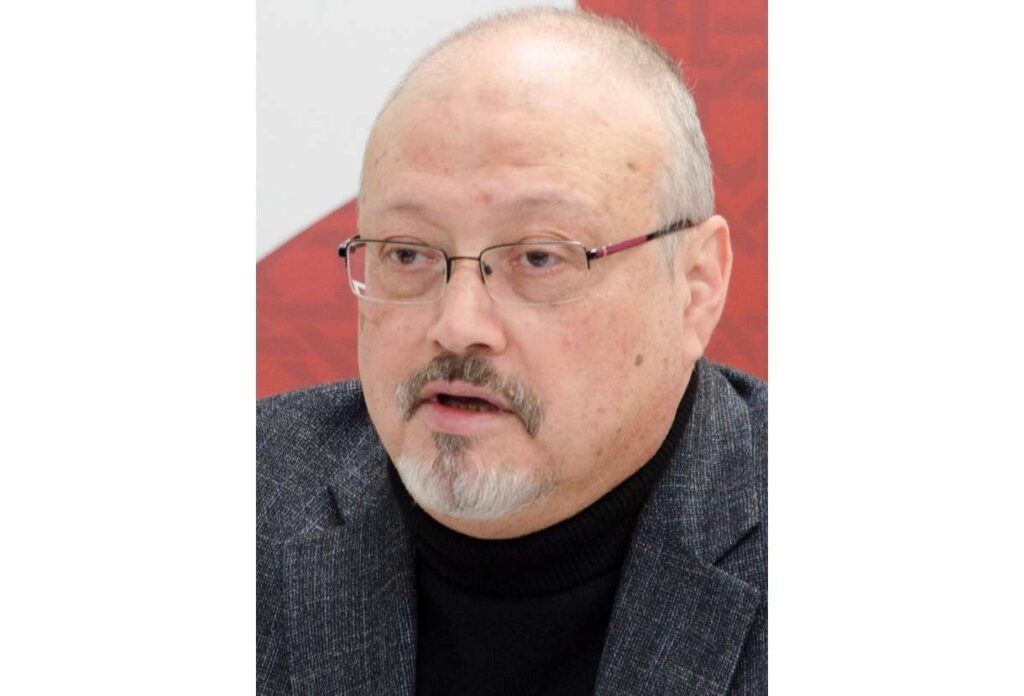
The decision by the French judiciary to open a judicial investigation into the murder of Saudi journalist Jamal Khashoggi is much more than a routine legal procedure. Eight years after the killing of the regime critic in the Saudi consulate in Istanbul, one of the most consequential political criminal cases of recent times is gaining new momentum – this time in Europe. That an investigating judge in Paris is now tasked with examining possible responsibilities up to the highest levels of the Saudi power apparatus gives the case a new political and diplomatic dimension.
The move comes at a time when Saudi Arabia seems largely rehabilitated internationally. Crown Prince Mohammed bin Salman, long isolated because of the Khashoggi case, is once again treated as a central geopolitical actor – whether in the context of energy policy, regional security issues, or billion-dollar investment projects. It is precisely for this reason that the French decision carries considerable symbolic weight.
A Murder That Shook the World
For years, Jamal Khashoggi was considered a loyal insider of the Saudi establishment. Only with the rise of Mohammed bin Salman did the journalist increasingly become a critic of the increasingly authoritarian system. In columns for the Washington Post, he warned of repression against dissidents, the elimination of internal power centers, and the concentration of political control around the crown prince.
On October 2, 2018, Khashoggi entered the Saudi consulate in Istanbul to collect documents for his planned wedding. He never left the building again. Turkish investigators later concluded that a squad flown in specifically from Saudi Arabia murdered the journalist in the consulate, dismembered him, and made his body disappear. To this day, the body has not been found.
The brutality of the crime caused worldwide outrage. Particularly explosive was the question of political responsibility. Already in 2021, American intelligence agencies assessed that the operation had been “approved” at the highest level. Riyadh always denied direct involvement by the crown prince but admitted that Saudi agents were responsible.
The Role of the French Judiciary
The current move in France is based on several criminal complaints filed by human rights organizations since 2022. Among them are Reporters without Borders (RSF), Trial International, and Democracy for the Arab World Now – the organization Khashoggi himself had helped found shortly before his death.
The plaintiffs invoke the principle of universal jurisdiction. This allows national courts, under certain conditions, to prosecute serious international crimes regardless of where they were committed or the nationality of those involved. In France, this particularly concerns offenses such as torture, enforced disappearances, or crimes against humanity.
Particularly remarkable is the legal reasoning of the Paris Court of Appeal judges. They stated that it could not be excluded that the murder was part of a systematic repression policy against Saudi opponents. This theoretically opens the door to classification as a crime against humanity – a step with considerable political implications.
The Difficult Question of Immunity
Whether there will ever be a trial remains open. The legal hurdles are enormous. Central to this is the question of immunity for high-ranking state officials. Mohammed bin Salman is effectively the most powerful man in Saudi Arabia and de facto head of government of the kingdom. International courts and national judicial systems traditionally find it difficult to prosecute sitting heads of state criminally.
Already in 2022, the American government declared that Mohammed bin Salman enjoys immunity from US courts as head of government. This decision caused international criticism at the time, because President Joe Biden had announced during his election campaign that he wanted to make Saudi Arabia a “pariah” over the Khashoggi case.
France is also likely to face considerable diplomatic pressure. Paris maintains close economic and strategic relations with Saudi Arabia. Both countries cooperate on energy issues, investments, and security policy dossiers concerning the Middle East. French arms manufacturers have also been important suppliers to the kingdom for years.
Europe’s Balance Between Values and Interests
The case once again reveals a structural dilemma of Western democracies: the conflict between human rights rhetoric and geopolitical interests. After Khashoggi’s murder, numerous Western governments initially responded with sharp criticism. Businesses boycotted investor conferences in Riyadh, politicians demonstratively avoided contact with the Saudi crown prince.
But this situation did not last long. By the time of the global energy crisis following Russia’s attack on Ukraine, Saudi Arabia regained importance as a strategic partner. Added to this is Riyadh’s central role in regional conflicts as well as in international investment and technology projects.
The international comeback of Mohammed bin Salman was therefore remarkably swift. Heads of state and government received him officially again; economic delegations returned, and even previously critical countries intensified cooperation. Since then, human rights organizations have accused Western governments of putting economic interests above the principles of the rule of law.
Against this background, the French decision carries significant weight. It at least signals that parts of the Western rule of law are still willing to legally examine the political responsibility of authoritarian regimes – even if it is diplomatically uncomfortable.
A Precedent with Limited Reach
The practical effect of the proceedings could ultimately remain limited. Even if French investigators produce incriminating results, actual prosecution of the Saudi crown prince would be politically and legally extremely difficult. It is more likely that the proceedings will primarily serve a symbolic purpose.
But symbols play a central role in international law. The Pinochet case in the late 1990s already showed that national courts invoking universal jurisdiction can at least temporarily shake international power structures. At that time, the notion that a former head of state could be prosecuted abroad was long considered almost unthinkable.
In the Khashoggi case, the French investigation could primarily help keep the memory of the crime politically alive. For authoritarian regimes, the real danger often lies less in an immediate conviction than in sustained international delegitimization.
Therefore, the decision from Paris may not mark a legal breakthrough but certainly a political boundary setting. It serves as a reminder that even geopolitical power and economic interests cannot completely overshadow the question of individual responsibility. Especially in a time when authoritarian states are gaining influence worldwide, this message has considerable significance.