
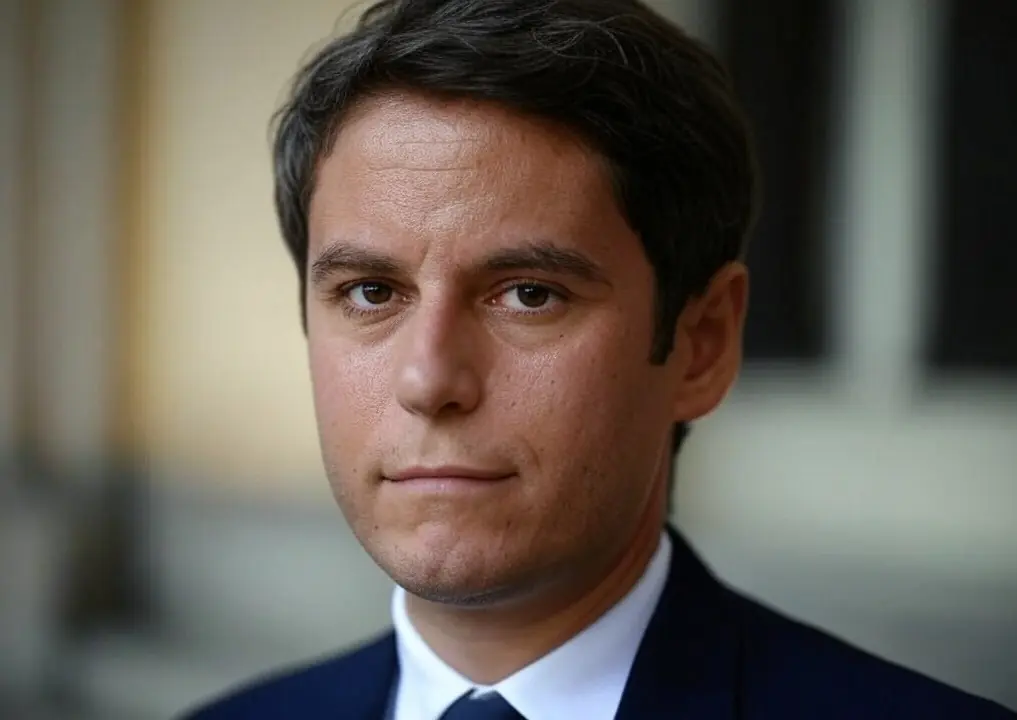
With a single sentence, Gabriel Attal is currently trying to redefine the political center of France: France must “accept fewer people in order to accept better.” The formulation seems sober, almost bureaucratic. In fact, it marks a profound shift in the political self-understanding of the Macron camp — and possibly the beginning of a new phase in French domestic politics.
Attal’s message exemplifies a development that has become apparent over several years: the migration issue in France has moved from being a fringe topic of the far right to a central test of state authority. Anyone seriously aiming to become president in 2027 must now provide answers to questions about control, integration, and national identity.
The Strategic Restructuring of Macronism
Gabriel Attal is clearly trying to reposition the political space between Emmanuel Macron and the traditional right. While early Macronism strongly focused on economic modernization, European integration, and social openness, Attal shifts the emphasis toward law and order policies, regulation, and integration capacity.
This is no coincidence. France’s political center has been under pressure for years. On one hand, competition is growing due to Marine Le Pen’s Rassemblement National, which consistently links migration with security and identity issues. On the other hand, the liberal center is increasingly losing voters from the lower and middle middle class, who feel the state has underestimated questions of integration, crime, and social cohesion for too long.
Attal responds with a dual strategy: economically liberal but more restrictive regarding migration and security. His demand for “regulated” or “chosen” immigration deliberately models itself on the Canadian system. This means stronger selection based on qualifications, language skills, and labor market needs. Family reunification and uncontrolled migration, however, are to be more severely limited.
The political core of this position lies less in specific measures than in the symbolism of state control. Attal signals that the state actively decides again who is allowed to come — and under what conditions.
Migration as a New Question of Authority
What is particularly remarkable is how much the political discourse in France has changed. Ten years ago many of today’s demands would primarily have been assigned to the conservative or right-wing camp. Now, terms like “control,” “limitation,” or “integration capacity” are part of the standard vocabulary of almost all relevant political forces.
This shift has several causes.
First, the terrorist attacks in recent years continue to resonate. The assaults in Paris, Nice, and Saint-Denis have permanently changed many French people’s relationship to immigration and integration issues. Since then, migration has been more strongly linked to internal security.
Second, social tensions in the banlieues intensify political debate. High youth unemployment, parallel societies, and recurring unrest fuel among some parts of the population the impression that the state has lost control.
Third, France faces pressures similar to many other European countries: rising asylum numbers, illegal migration across the Mediterranean, and increasing polarization on social identity questions.
The political consequence is a kind of rhetorical shift to the right across the entire party system. Interior Minister Gérald Darmanin now openly calls for the temporary suspension of legal migration. Conservative politicians like Bruno Retailleau speak of an “overload” in the country’s integration capacity. Even social-democratic and liberal politicians now almost entirely avoid any language of unlimited openness.
The Economic Dilemma
Here, however, the contradiction in Attal’s position becomes clear.
France already struggles with significant labor shortages. Particularly affected sectors include healthcare, construction, gastronomy, agriculture, and transportation. Many of these sectors increasingly rely on foreign workers.
Added to this is demographic change. France is aging more slowly than Germany or Italy, but pressure on pension systems, healthcare, and the labor market is rising there too. Without additional working individuals, financing the welfare state will likely become more difficult in the long run.
Many economists therefore warn against treating migration exclusively as a security or cultural issue. In a globalized economy, states compete increasingly for qualified labor. Countries like Canada or Australia have long actively pursued regulated immigration policies to secure growth and innovation capacity.
Attal attempts precisely this balancing act: less uncontrolled migration, at the same time targeted recruitment of qualified professionals. Politically this sounds plausible. In practice, implementation remains complicated.
Because the reality of the French economy only partially corresponds to the ideal of highly qualified immigration. Many open positions are precisely in physically demanding and poorly paid areas. These jobs are often taken by migrants who do not fit the image of “highly qualified immigration.”
This creates a political tension: France wants to limit migration but remains economically dependent on it.
The Presidential Election Campaign Has Begun
Attal’s positioning must be understood primarily with an eye toward 2027. Emmanuel Macron may not run again after two terms. The political center is already searching for a successor figure with national reach.
Attal has several advantages for this: he is young, media-effective, rhetorically strong, and regarded as a modern representative of technocratic liberalism. At the same time, he now tries to correct the central deficit of Macronism — the accusation of lacking authority on security and migration issues.
However, therein also lies the danger of his strategy.
On the one hand, there is the threat of competition with the original. Voters primarily desiring tough migration policies might still prefer Marine Le Pen or other right-wing candidates. On the other hand, Attal risks alienating previous liberal supporters who voted for Macronism precisely because of its social openness.
Added to this is a credibility problem. Attal himself was part of the government that for years followed a comparatively liberal line. For some observers, his new rhetoric thus appears more tactical than ideologically consistent.
Nonetheless, his course correction shows above all one thing: Migration will dominate French politics until 2027. No longer as an isolated issue, but as a projection surface for questions of identity, social cohesion, state authority, and economic viability.
The real change, therefore, is less that a politician adopts harder positions. Rather, it is crucial that restrictive migration policy is now becoming the consensus in the political center. France is thus experiencing a reorganization of its ideological coordinate system — and possibly the end of the liberal exception that early Macronism once embodied.
Author: Andreas M. Brucker