
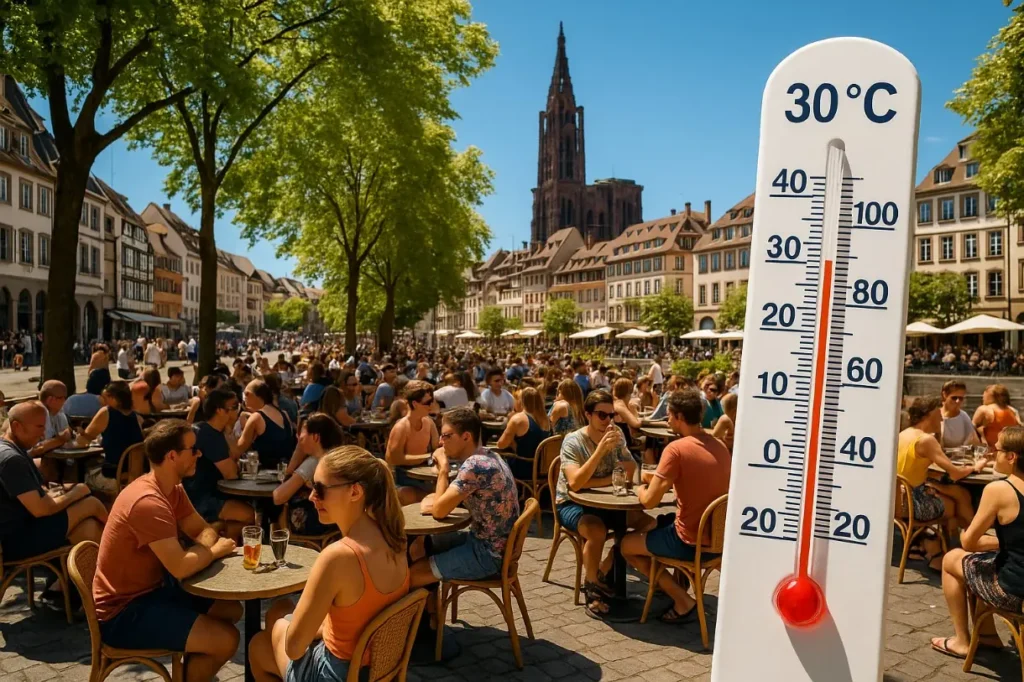
France is experiencing a weather situation at the end of May that normally occurs later in the height of summer. A powerful so-called “heat dome” is currently settling over large parts of the country and causing temperatures to be well above 30 degrees in many places. Regions in the west, around Paris, and parts of the southwest and the Rhône valley are particularly affected.
Meteorologists speak of an exceptional situation. The heat dome acts like a huge lid in the sky: a stable high-pressure system traps the warm air, which has previously flowed from North Africa via Spain to France. The heat essentially accumulates over the country. At night, it hardly cools down – precisely this makes such weather situations so taxing on the human body.
In some regions, temperatures rise to as much as 35 or even 36 degrees. Such values are extremely rare at the end of May. Many French people are already reaching for fans, closed shutters, and the classic water bottles in the fridge. In the street cafés of Bordeaux or Lyon, guests desperately seek out the few shaded spots. “This feels more like July,” is what you hear nowadays in many places.
Particularly remarkable: since the introduction of the French heat warning system in 2004, such an alarm level has never been set so early in the year. The weather authority Météo-France has meanwhile put numerous departments on increased alert. These include parts of Brittany, the metropolitan region of Paris, and regions along the Atlantic coast.
Health authorities warn to be cautious. Especially the elderly, children, and people who work outdoors are considered vulnerable. All yellow warning levels indicate a real health risk. Doctors recommend avoiding physical exertion during the hottest hours, drinking enough water, and keeping homes as cool as possible. Sounds obvious – but these simple rules are often not followed in everyday life.
At the same time, the discussion about climate change flares up again. Climate scientists have observed for years that early and intense heat waves occur more frequently in Europe. What used to be considered an exception is gradually becoming the new reality. France is among the European countries that have repeatedly suffered from extreme summers in recent years.
The memory of the devastating heatwave of 2003 runs deep to this day. Thousands of people died as a result of extreme temperatures back then. Since then, the state has become much more sensitive to early warning signs. Schools, hospitals, and care facilities are now under special observation as soon as temperatures remain high for several days.
Officially, there is not yet a nationwide heat crisis. But many French people already suspect: the summer of 2026 could very well have started very early. And with full force.
By C. Hatty