
France loves grandeur. The lavender fields of Provence unfold like stage scenery, the Atlantic coast strikes a pose with rugged elegance, and Paris sells its boulevards as an eternal promise. And places like Grande Brière—those unassuming landscapes. They simply exist quietly, moist, dark, silent. Almost stubbornly inconspicuous. It is precisely because of this that they hold great appeal.
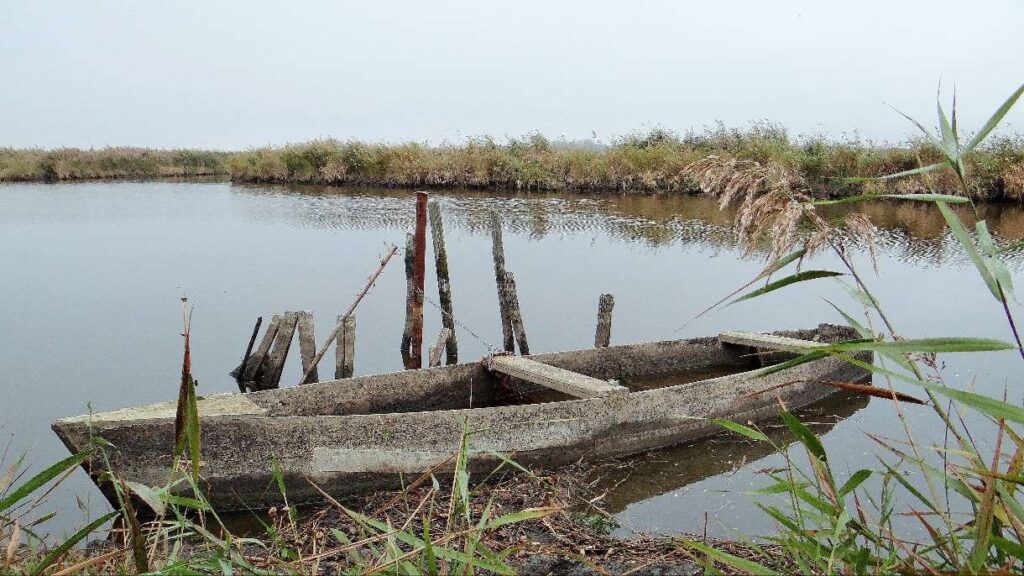
West of Saint-Nazaire is a world more like a forgotten chapter of Europe than a typical tourist destination. Early in the morning, passing through the canals of the Grande Brière marshes, at first almost nothing is visible. The mist hangs over the water like an old curtain, reeds rustle softly, and birds issue warnings somewhere. Suddenly, a flat black boat glides silently, almost ghost-like, out of the fog.
One can’t help but wonder: how many such landscapes still exist in Europe?
Grande Brière is one of France’s largest wetlands, but numbers don’t help much here. It’s all about the feeling. That unique floating sensation between water and land, the intertwining of reality and past. This region carries a primal aura, as if modern civilization merely brushes lightly past its edges.
For centuries, locals lived almost entirely off the yields the marsh provided. Fish, peat, wild birds, and reeds. Life was tough—more like a permanent contract with wind, moisture, and patience. Peat was used for heating, reeds covered roofs, and canals replaced roads. Even today, many houses still hang under thick thatched roofs, as if trying to minimize exposure to the Atlantic winds.
Some villages seem like accidental survivors from another era.
Saint Joachim especially possesses this unique quiet atmosphere. This is neither a picturesque museum village nor a carefully manicured open-air countryside. Rather, it feels more like a place where the past naturally continues without showiness. Boats are placed in front of houses instead of garden gnomes. The elderly mend fishing nets. The curtains hanging behind the windows may have been used since their grandmother’s time. It sounds more romantic than reality in earlier years. Brière means hard labor. Moisture seeps into bones and walls.
However, it is precisely from this that a stubborn culture is born.
The same goes for the cuisine.
For example, eel here almost holds a mythical status. “Anguille en persillade” — eel prepared with parsley and garlic — remains a local specialty to this day. Rustic, strong, oily, not suited for light sipping diners. Eel runs throughout the entire history of Brière. Fishermen catch eel in narrow canals at night during harsh weather, sometimes lasting for hours. What they capture is not just food, but a sense of security.
Today, small restaurants pair these ancient recipes with white wines from the Loire Valley. It is somewhat like a culinary journey through time, and also seems to be a rebellion against the singular style of modern cuisine.
But the real secret is hidden deeper.
Underneath the marshes lie remnants of ancient forests. Peat gatherers often unearth black oak tree trunks, preserved for thousands of years by the oxygen-poor soil. These black giant trees seem almost unreal, like relics from a sunken world. Standing beside them, you suddenly sense the scale of time. Not the hurried time on a smartphone, but geological time — slow, heavy, merciless.
Archaeologists have discovered tools, settlement remains, and signs of very early human use in the area. Brière therefore also narrates the climate history. Nowadays, the waters sparkle and the reed beds flourish where there once was forest. The marshes have become a natural memory bank for Europe.
No wonder scientists pay more attention here now. Wetlands store large amounts of carbon, regulate the water cycle, and protect biodiversity. In the past, marshes were often seen as useless or dangerous. Today, they have suddenly become ecological treasures. Alas, sometimes humans need centuries to realize the wealth right before their eyes.
The animal world of Grande Brière reinforces this impression further. The grey herons stroll through the shallow waters like bored aristocrats. Marsh harriers circle above the reed beds. Cormorants spread their wings while standing on piling posts, like grim priests of some water cult. In spring, the marsh bursts with sounds — frogs croaking, insects buzzing, birds clamoring in chorus. Sometimes this scene feels more like the Amazon than western France.
This is exactly where its beauty lies.
Grande Brière resists quick browsing. You cannot just drive through in a hurry or check off a quick visit. This land requires slowing down, silence, and focus. If you are always chasing the next photo spot, you might miss its true essence.
Perhaps this is why the area is relatively little known. It does not fit the logic of modern tourist lists. There are no grand festivals, no magnificent castles, and no “Instagram influencer” hotspots with long photo queues. There is only mist, water, wind, and time.
Is that enough?
Surprisingly: it is enough.
Because Grande Brière reminds us of something rare in Europe – it is a sense of untamed landscape, a place that retains its mysteries. Beyond all explanations, signs, and commercialization found elsewhere, a hint of mystery remains here.
Perhaps, this is its greatest luxury.
Article author: M. Legrand