
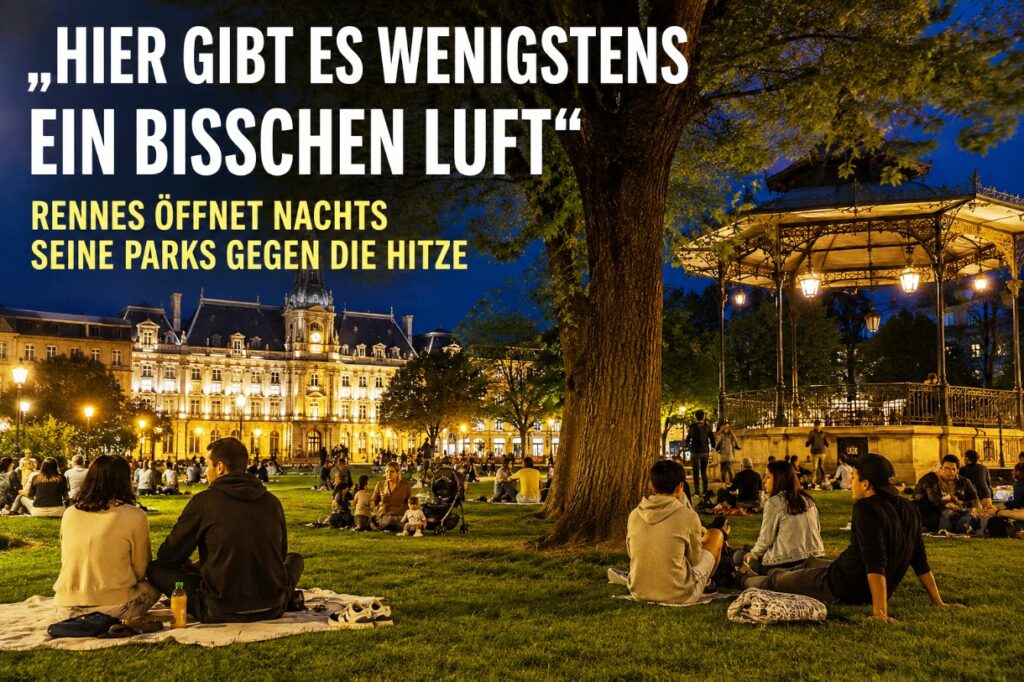
When the sun sets, a second urban life currently begins in Rennes.
While the streets sparkle under the heat during the day and the facades of the Breton capital accumulate like hot plates, hundreds of people head to the parks in the evening. Families spread blankets on the lawns, teenagers laugh under the old chestnut trees, older residents enjoy every cooler breeze. Some stay well past midnight. Not out of romanticism, but because it is almost impossible to bear the temperature inside apartments.
Rennes is experiencing exceptionally early temperatures in the year, usually expected in the middle of summer: up to 36 degrees during the day, tropical nights with temperatures that hardly drop – a worrying phenomenon even for many French people. In Brittany, it is even more striking. There, intense sweating used to be more of a vacation problem in the South.
The city now reacts with a measure that seems simple but says a lot about this new reality: public parks and gardens remain open at night.
The Thabor Park, usually closed in the evening, is particularly popular. Now, people stay there sitting until late at night, on benches or directly on the grass. “It’s royal,” says a visitor about these open green spaces. Others put it more soberly: “Here, there is at least a bit of air.”
That is exactly the essence.
Indeed, modern cities store heat like a sponge holds water. Asphalt, concrete, and densely built streets release heat with a several-hour delay. Those living on upper floors or under roofs know this feeling: the apartment feels like an oven with the door ajar at night. Sleep? Impossible.
It is especially the elderly, children, pregnant women, and people living alone who quickly reach their physical limits with such temperatures. Authorities have therefore long considered the nighttime opening of parks not just a nice summer idea but a health protection measure.
Rennes is not alone in facing this problem. In many French cities, climate change is now altering everyday life. Public drinking water points, extended pool opening hours, misting systems in public squares, or new shading concepts are already part of the standard municipal equipment against heat waves. This may seem technical but has direct consequences on residents’ daily lives.
And suddenly, parks are no longer just pretty green areas between blocks of houses but become vital refuges.
The city is therefore continuing to develop its so-called “cool islands” network. Places where trees, bodies of water, and vegetation noticeably lower the ambient temperature. Anyone walking through Rennes on a warm evening often feels the difference after just a few meters. Between the heated urban canyons, a shaded park almost feels like a different climate zone.
A few years ago, no one would have believed that people would seek refuge at night in Breton parks in late May. Today, this image suddenly has become part of everyday life.
And honestly: it frightens more French people than any weather app.
By C. Hatty