
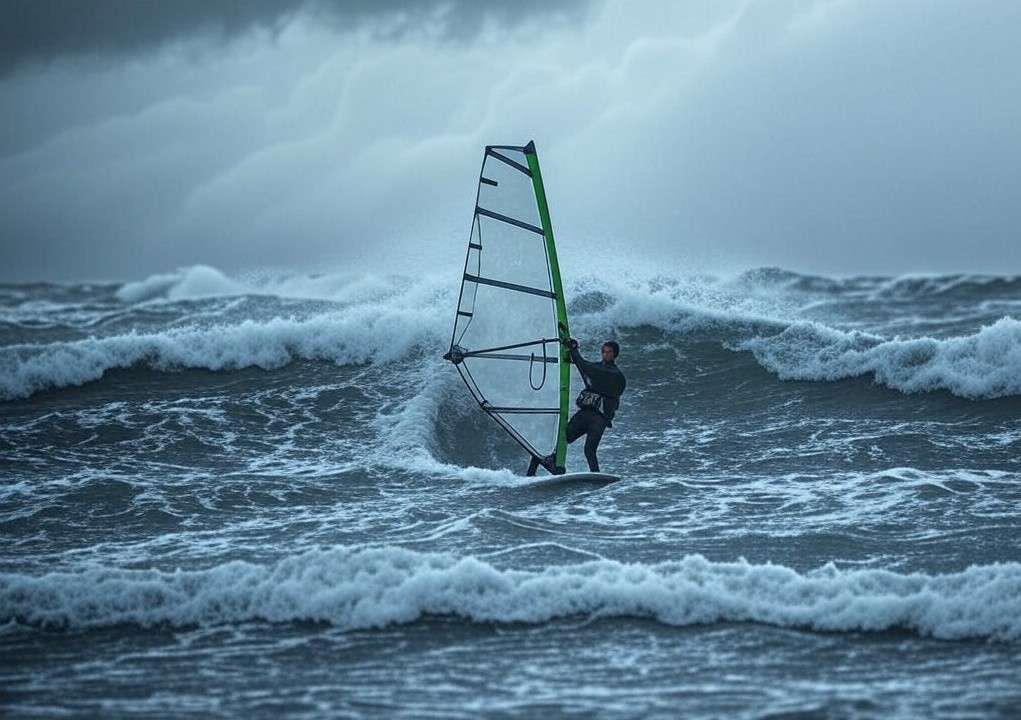
Surfing? Most people instinctively think of Biarritz, Hossegor or the endless sandy beaches of the Landes. But those who look a little further north will discover a region that has quietly yet impressively risen to the forefront of French surf culture: Brittany. Between rugged cliffs, the mystical atmosphere of the Atlantic and a deeply rooted maritime culture, a paradise for wave riders has emerged here – and not just in summer.
13 degrees, wetsuits and adrenaline
November in Plouharnel, in southern Morbihan. The thermometer barely climbs above ten degrees, and the water is bitterly cold. Yet the surf is crowded. Men, women, children – bundled up in thick wetsuits – wait for the perfect wave. Elliot, 13 years old and a student at the Plouharnel surf school, puts it succinctly: “It’s not too big, not too small – it just works.” And that is exactly what makes winter here so special. Fewer tourists, more space, more reliable waves. It is no wonder that some die-hard surfers prefer the cold season.
A stretch of coast that sets standards
With over 5,570 kilometres of coastline, Brittany is France’s largest maritime region. What may initially sound like numbers quickly becomes tangible when looking at the map: rocky coves, wide beaches, hidden reefs – and wind that can blow from almost every direction. This diversity makes the region a true playground for wave riders. Surfing in Brittany has been booming since the coronavirus pandemic at the latest, when many city dwellers moved their leisure activities to the sea. “It used to get quiet in the off-season. Today, we also see full line-ups in autumn and spring – as soon as the sun comes out,” says Guillaume Barbier, head of the surf school in Plouharnel.
The wave as cultural heritage
What is a sport elsewhere has long been more than that in Brittany: a way of life, a cultural heritage. This is demonstrated not only by the many surf clubs and festivals, but also by a unique ecological project: France’s first “wave reserve” in Saint-Pierre-Quiberon. It was founded to protect the natural dynamics of the waves from construction interventions. Erwan Simon, co-founder of the reserve, describes the approach as follows: “The wave is not just a toy for surfers. It is an ecological engine – it stirs up the sand, brings shellfish to the surface, feeds fish and seals, and ensures a vibrant ecosystem.” An idea that goes far beyond traditional nature conservation – and symbolises the Breton view of the sea.
Between solitude and community
Perhaps it is this unique connection between people and nature that makes surfing in Brittany so special. Anyone who enters the water here quickly realizes: it is not about a cool image or Instagram-worthy photos. It is about genuine dedication, about playing with the elements. And about community. Because although in winter there are often only three people in the water, the scene is closely connected, warm and open. Newcomers are welcome, and long-time locals are happy to share their tips.
Surfing as an opportunity – for everyone
Around 80,000 people now regularly ride Brittany’s waves – all year round. Many are locals, others have moved there, and some are former city dwellers who relocated to Brittany to live closer to the Atlantic. And surfing here has long been more than just a hobby; it is also an economic factor: surf schools, accommodation, cafés, surf shops – they all benefit from the steadily growing interest in this special stretch of coastline.
Only one question remains: How long will Brittany remain an insider tip – and when will it become the top destination for surfers in France?
By C. Hatty