
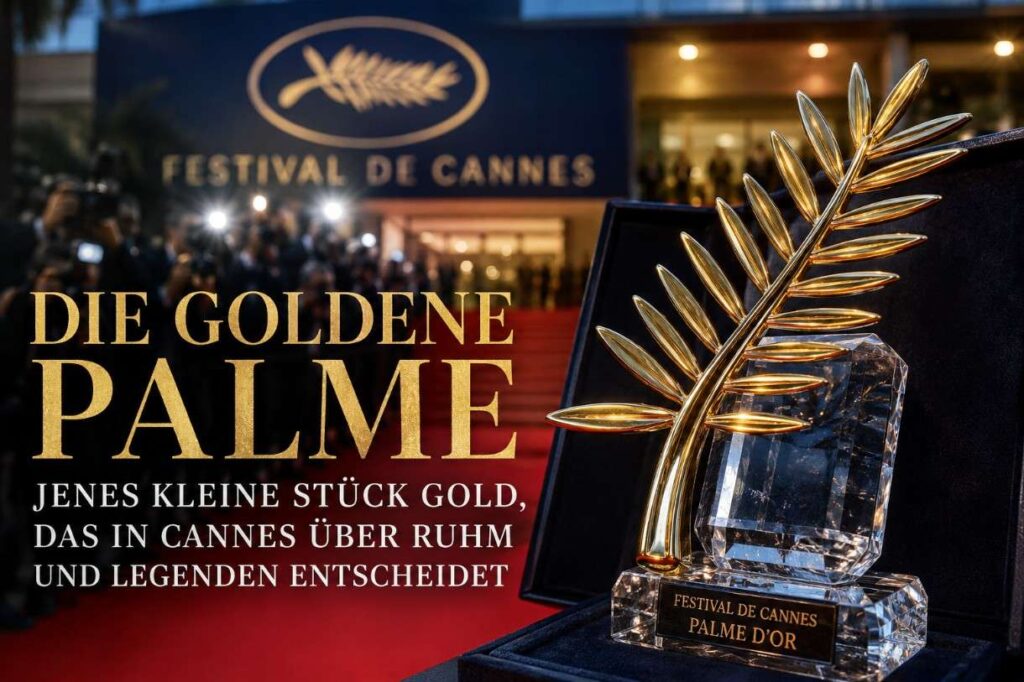
There was a different atmosphere on the Croisette this year. Less champagne fizz, less calculated glamour, less of that old Cannes magic, when stars step out of black limousines and photographers fire away like machine guns. Instead, the 79th Film Festival often felt like a major reflection on a world that has gone off the rails.
And in the middle of it all: Cristian Mungiu.
The Romanian director received the Palme d’Or for his film Fjord — for the second time after his triumphant victory in 2007 with 4 Months, 3 Weeks and 2 Days. A moment that not only made cinema history, but also fit surprisingly well with this strange festival. Because Mungiu’s cinema is never interested in simple truths. His characters stumble through moral gray areas, social tensions and ideological minefields. That is precisely where Europe seems to find itself today.
Fjord tells the story of a Romanian-Norwegian family, deeply religious, isolated and full of internal tensions. When Norwegian social services intervene, a conflict begins that goes far beyond family matters. Who protects whom? And where does care end and paternalistic cultural guardianship begin?
Mungiu stages these questions with the quiet precision that is his trademark. No grand explosions. No moral hammer. Instead, looks, silences, small gestures — like cracks in the ice of a fjord, which seem harmless but suddenly shift entire landscapes.
The audience in Cannes reacted almost reverently. During the screening, one could sense that rare festival silence in which no one coughs, no one whispers, no one looks at their phone. Cinema as a collective experience of concentration. Are there still many places like that?
Meanwhile, the entire awards ceremony seemed like a mirror of the present. Numerous films dealt with war, identity, migration, or political violence. Almost every second film in competition seemed permeated by a deep social anxiety. Cinema today does not look away. It penetrates deeply.
This became particularly clear in the case of Russian director Andrey Zvyagintsev. When he received the Grand Prix for Minotaur, he made an open appeal to Vladimir Putin calling for an end to the war in Ukraine. For a moment, the hall no longer seemed like a festival palace, but a political forum. Some applauded hesitantly, others immediately. Some stood up.
Cannes suddenly recalled those decades when film festivals were still seen as arenas of intellectual struggle — somewhat chaotic, somewhat megalomaniacal, but full of commitment.
The other prizes also fit into this picture. Valeska Grisebach received the jury prize for The Dreamed Adventure. Her film about migration and crime at Europe’s external borders tells of people who do not truly belong anywhere. The directing prizes were shared between Paweł Pawlikowski and the Spanish duo Los Javis. For the acting awards, too, the jury favored community over the classic star cult.
It was almost as if Cannes consciously wanted to scale back the principle of the solitary genius. Moving away from the myth of the all-powerful director, toward the ensemble, toward collective storytelling. Perhaps also a sign of the times.
Of course, there were still iconic moments: Barbra Streisand on the red carpet, Peter Jackson with a slightly tousled beard, flashes everywhere on the Croisette. But these scenes, too, had a melancholy undertone this time. As if the festival sensed that the world outside the cinema has now become louder than any red carpet.
And that is precisely why Mungiu’s victory seems so fitting.
Because Fjord does not offer simple answers. The film stubbornly refuses to present clear perpetrators and victims. Instead, it portrays modern democracies as fragile structures full of contradictions. Tolerance turns into arrogance. Protection becomes control. Freedom conflicts with moral expectations.
It sounds theoretical. But with Mungiu, it becomes frighteningly concrete.
One scene remains particularly memorable: a Norwegian official sitting silently at the family’s kitchen table, while hail falls outside and snow beats against the windows. No one shouts. No one erupts. And yet there is more threat in that silence than in many action films. Well, only great auteur cinema can create moments like this.
Perhaps that is precisely what explains the success of Fjord. The film is not only about Norway or Romania. It tells of a Europe that no longer fully understands itself. Of societies that constantly talk about values and often forget how complicated people are.
For this reason, Cannes this year showed less escapism and more desire — a desire for orientation, for empathy, for a language beyond ideological trenches.
Can cinema really play this role?
Perhaps not on its own. But for a few hours in the darkened theater, it manages to do something that often eludes political debate: it forces people to truly look at others.
An article by M. Legrand