
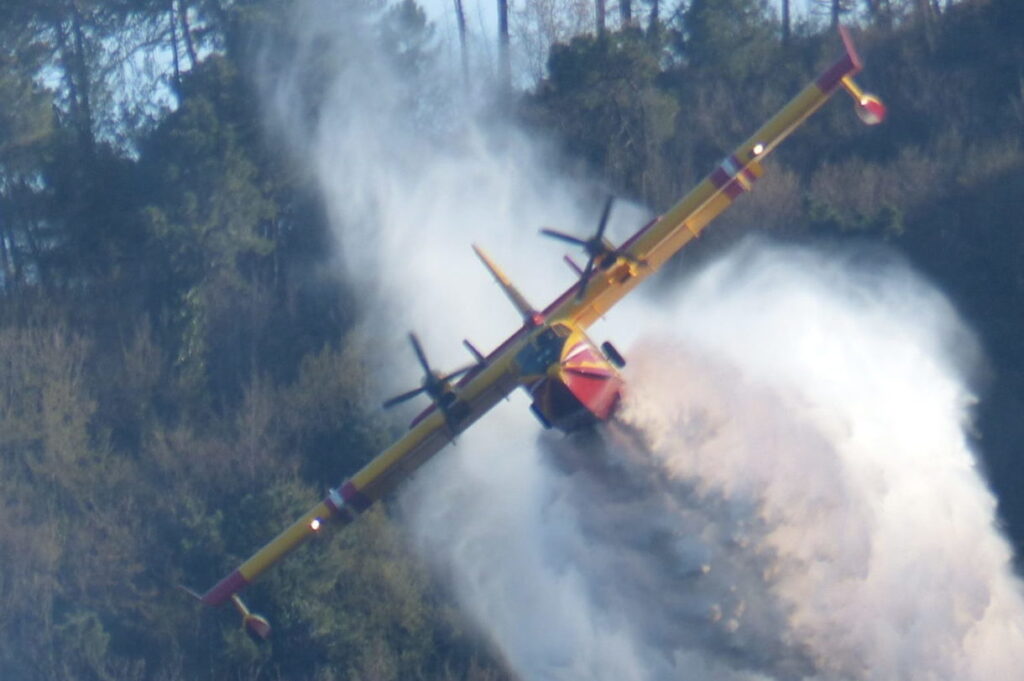
As soon as the first plumes of smoke rise over the forests of southern France in summer, one of the most demanding tasks begins for the crews of the Canadair firefighting aircraft. The distinctive yellow-and-red machines have been a symbol for decades in the fight against devastating wildfires. But the 2026 wildfire season once again shows that deployments are starting earlier and that the challenges increase year by year.
Since early July numerous fires have broken out in several regions of France. The Pyrénées-Orientales, Gard, Drôme and Hérault are particularly affected. Prolonged dryness, extreme heat and strong winds such as the Tramontane and Mistral drive the flames forward at times with astonishing speed. In many cases the firefighting aircraft arrive at the seat of the fire first, buying valuable time for the ground crews.
There is no routine in this work. Every water drop demands the utmost concentration and millimetre-precise accuracy. Pilots often fly at less than fifty metres above rough terrain. Thick smoke can reduce visibility within moments, while rising hot air generates strong turbulence. Add suddenly changing wind directions and the immediate proximity of the flames. Every mission requires experience, quick decisions and absolute trust in the whole team.
Particularly spectacular is the so-called water scooping. The Canadairs skim at high speed over the surface of a lake or the sea and fill their tanks within seconds. From the outside this manoeuvre looks almost effortless, yet it is one of the most difficult phases of flight. Even an unexpected wave, a boat on the water or a small misjudgement can have serious consequences.
On especially busy days the crews carry out several dozen flights. After each water drop they head for the next suitable lake or stretch of coast, take on new water and return immediately to the fire. If multiple fires break out at the same time, the available aircraft must be allocated strategically. Then every minute decides which fire is fought first.
At the same time the French fleet of firefighting aircraft is reaching its limits. Officially twelve Canadairs are available, but not all machines are ready for action at any time. Regular maintenance and necessary repairs reduce the number available. Some aircraft are already approaching their third decade in service. Thousands of take-offs, water pickups and drops leave visible traces on systems and structure. In particular, the salty sea water takes a heavy toll on the machines.
France has therefore decided on the gradual replacement of the fleet. New Canadair DHC-515s are to replace the ageing aircraft. However, the first examples are not due to be delivered until 2028, with further aircraft arriving only at the start of the next decade. Until then the existing fleet remains the backbone of aerial firefighting.
The Canadairs never operate alone anyway. Together with Dash firefighting aircraft, firefighting helicopters, reconnaissance planes and the fire services on the ground they form a closely coordinated response system. Only this cooperation makes it possible to contain fires early and effectively protect towns and villages.
Climate change is noticeably altering the conditions. Longer dry spells and more frequent heat waves increase the risk of large-scale wildfires. For the crews this means more missions, longer strains and rising risks. Behind every flight are women and men who put their lives on the line daily to save forests, villages and people from the flames. Their commitment makes clear that the fight against wildfires is not decided on the ground alone, but also high above the fires.
By Andreas M. Brucker