
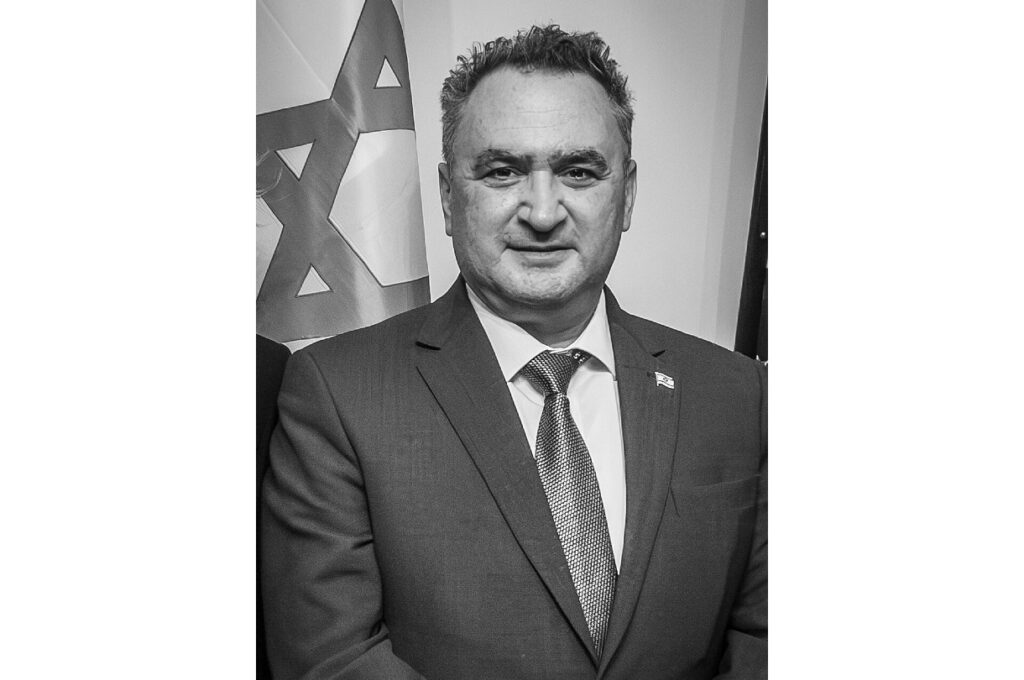
The statement by Israel’s ambassador to France, Joshua Zarka, has sparked a political controversy that goes far beyond the figure of Jean-Luc Mélenchon. In a television interview, Zarka said he would prefer to see “anyone over Jean-Luc Mélenchon” in the Élysée Palace in the 2027 French presidential election. The left-populist party La France insoumise (LFI) responded immediately and called on the French government to officially summon the ambassador. The debate touches on a sensitive question: How far are diplomats of foreign states allowed to go when commenting on internal political matters of their host country?
A Diplomatic Taboo Broken?
Diplomats represent the interests of their countries but operate within clear rules. The Vienna Convention on Diplomatic Relations obliges them to respect the laws and political institutions of the host country and not to interfere in its internal affairs. While ambassadors regularly provide assessments of political developments, openly expressing support for or against particular candidates is considered especially delicate.
Against this background, Zarka’s remarks were viewed by many observers as a boundary crossing. The criticism is not limited to Mélenchon’s camp. Politicians from other parties also expressed doubts as to whether a foreign ambassador should publicly express preferences for the outcome of a future French presidential election. The accusation is not that a diplomat may not have a political opinion, but that publicly articulating it calls into question the neutrality of their office.
The Background: Gaza and the Polarization of the Debate
The sharpness of reactions can also be explained by the political context. Since the Hamas attack on Israel on October 7, 2023, and the subsequent war in the Gaza Strip, relations between the French left and the Israeli government have worsened significantly. Mélenchon and parts of LFI are among the harshest critics of Israel’s actions in Gaza. Conversely, Israeli representatives accuse the party of insufficient sensitivity toward antisemitic tendencies.
In this tense atmosphere, every statement quickly becomes a symbol of a larger political confrontation. The controversy surrounding Zarka is therefore not only a debate about diplomatic etiquette but also an expression of the deep societal division around the Middle East conflict. Issues of antisemitism, solidarity with the Palestinians, and France’s role in the Middle East have long since become part of the domestic political dispute.
Between Freedom of Expression and National Interest
The case highlights a fundamental dilemma of modern diplomacy. Ambassadors today appear much more frequently in the media and on social networks than a few decades ago. Expectations for transparency and public communication have risen. At the same time, the traditional rules of diplomatic restraint remain in place.
Whether the French government will actually officially summon the Israeli ambassador remains open. Regardless, the affair has already sparked a debate that goes beyond party political interests. It concerns the question of how democratic states protect their political sovereignty without restricting the openness of public debates. In times of increasing international tensions, this discussion is likely to gain further importance in the future.
Author: P. Tiko