
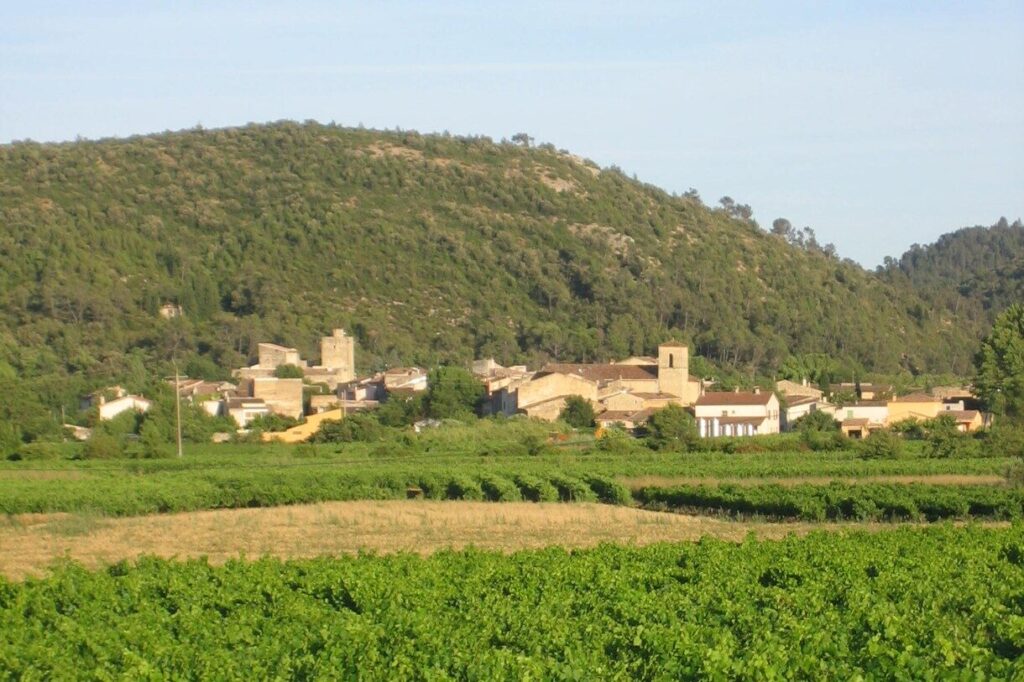
In the heart of Provence, between vineyards, olive groves, and the gentle hills of the Var department, lies a village that has been following a special path for decades: Correns. At first glance, the place looks like many other Provençal towns. Natural stone houses, narrow alleys, shady squares, and the leisurely life of the South characterize the scene.
But behind this idyllic backdrop hides a story that has made Correns known far beyond the region’s borders. The village is considered the first organic village in France. What sounds like a modern marketing concept today originated already in the 1990s from a pragmatic decision by the local winemakers. They recognized early that sustainable agriculture not only benefits nature but also opens up economic opportunities.
From the initiative of a few farmers, a movement developed that embraced the entire village. Today, the ecological mindset shapes not only agriculture but also tourism, crafts, and social life. Correns impressively shows how tradition and innovation can harmonize.
Those who want to get to know Provence off the beaten tourist paths will find here a place that remarkably combines authenticity and quality of life.
Worthseeing Places and Landscapes
The Historic Village Center
The walk through Correns is best started in the old town center. The narrow alleys wind between centuries-old stone houses and immediately give the feeling of stepping into another time.
Visitors discover lovingly restored details on many facades. Flower-adorned shutters, small fountains, and shady squares invite lingering. Unlike some tourist hotspots in Provence, here nothing feels artificial or staged. The village lives its everyday life quite naturally.
From the small squares, numerous paths lead through the winding streets. Around every corner, a new photo motif opens up.
The Church Notre Dame de Nazareth
Just a few minutes’ walk from the village center rises the church Notre Dame de Nazareth. It is one of the most important historical buildings of the place.
Its origins go back to the Middle Ages. Over the centuries, several renovations were made, yet the building retained its original character. The simple architecture fits perfectly with the quiet atmosphere of the village.
Inside, the subdued light and historic elements create a special mood. Here, one can literally feel the long history of the place.
The Argens River
From the church, small paths lead to the Argens, which runs through Correns and has shaped the landscape for centuries.
The riverbank is excellent for relaxed walks. Under shady trees, the water flows leisurely. In summer, locals seek cooling here while hikers and cyclists enjoy the tranquility.
The Argens also forms a natural lifeline for the surrounding agriculture. Without it, the region could hardly have developed so successfully.
The Vineyards around Correns
Following the paths out of the village, one reaches the extensive vineyards within a few minutes. They form the economic heart of the community.
The vines stretch over the gentle hills and shape the landscape in all directions. Especially in late summer, a unique atmosphere arises when the grapes are nearly ready for harvest and the sun bathes the landscape in warm light.
Those who walk through the vineyards quickly notice the differences to many conventionally managed areas. Wildflowers and herbs grow between the vines. Insects buzz through the fields, giving the landscape a remarkable liveliness.
The Hillscapes of Provence Verte
From the vineyards, numerous hiking trails lead into the surrounding hills. The Provence Verte region is considered one of the most original landscapes in southern France.
Pine forests alternate with olive groves and open areas. Repeatedly, spectacular views open up over the village and the surrounding valleys.
Those who are out early in the morning experience Provence at perhaps its most beautiful side. Mist drifts through the hollows, bird songs fill the air, and the first rays of the sun bathe the landscape in golden light.
One inevitably asks oneself: Does a vacation actually have to be complicated?
The History of the Organic Village
The development of Correns began with viticulture. In the 1990s, many winemakers faced economic challenges. At the same time, awareness of environmental issues was growing.
Rather than relying solely on short-term solutions, the local winemaking cooperative decided on a bold step. It completely converted its production to organic cultivation.
At that time, this decision was considered unusual. Many observers met the project with skepticism. Would the yields be sufficient? Would customers accept the higher production costs?
The answer came sooner than expected.
The quality of the wines convinced. At the same time, the village gained increasing attention for its innovative approach. More businesses joined in. Gradually, organic beekeeping, vegetable farms, and olive producers emerged.
Thus, from an agricultural decision, a comprehensive village project developed.
Today, sustainable management is part of Correns’ identity.
Cultural Highlights
The culture of Correns is not created by large museums or monumental buildings. It lives through its people, their traditions, and their close connection to nature.
Especially in summer, numerous events take place. Markets, concerts, and village festivals bring residents and visitors together.
A highlight is the annual Organic and Nature Fair. Producers from the region present their products, craftsmen show traditional techniques, and artists exhibit their works.
The atmosphere resembles more a big neighborhood get-together than a commercial event.
That is exactly what makes its special charm.
Many visitors later report that here they have not only gotten to know a region but also a philosophy of life.
Culinary Highlights
The cuisine of Correns reflects the landscape.
Fresh ingredients, short supply chains, and traditional recipes define the gastronomic offerings. Many products come directly from the village or the immediate surroundings.
Of course, the wines play a central role. The winemakers produce characterful white wines, rosés, and reds that harmonize excellently with the regional dishes.
Along with them come high-quality olive oils, aromatic honey, and fresh vegetables.
Typical specialties include:
- Ratatouille with seasonal vegetables
- Tapenade made from black olives
- Goat cheese from regional producers
- Provencal herb dishes
- Homemade terrines
- Fruity rosé wines of the region
In the restaurants, the atmosphere is often familial. One sits under plane trees, hears the clinking of glasses, and enjoys the relaxed mood.
Honestly – that’s exactly how one imagines an evening in Provence.
A Village Between Tradition and Future
Correns is neither an open-air museum nor an idealized eco-world. The residents face the same challenges as many other rural communities in France. Climate change, economic competition, and societal changes do not stop here either.
Nevertheless, the village shows that sustainable development does not have to remain a theory. Over many years, a model has emerged that combines economic success with ecological responsibility.
Correns does not rely on grand gestures. The place convinces through consistency, community spirit, and a clear vision.
Perhaps that is exactly its greatest strength.
While elsewhere sustainability is only discussed, it has been lived here for decades.
Recommendations for Visitors
Those who want to experience authentic Provence should definitely include Correns in their travel plans. The village is ideal for day trips but unfolds its special charm during a longer stay.
Spring and autumn offer ideal conditions for hiking and cycling tours. The temperatures are pleasant, and the landscape presents itself at its best.
Gourmets as well as nature lovers will find something to enjoy. Wine tastings, walks along the Argens, and excursions through the hills provide varied vacation days.
Those seeking tranquility will find it.
Those wanting to experience regional culture, as well.
And those who want to know how a small village became a role model for sustainable development will discover in Correns a story that holds significance far beyond the borders of Provence.
A travel report by V.O.Yager