
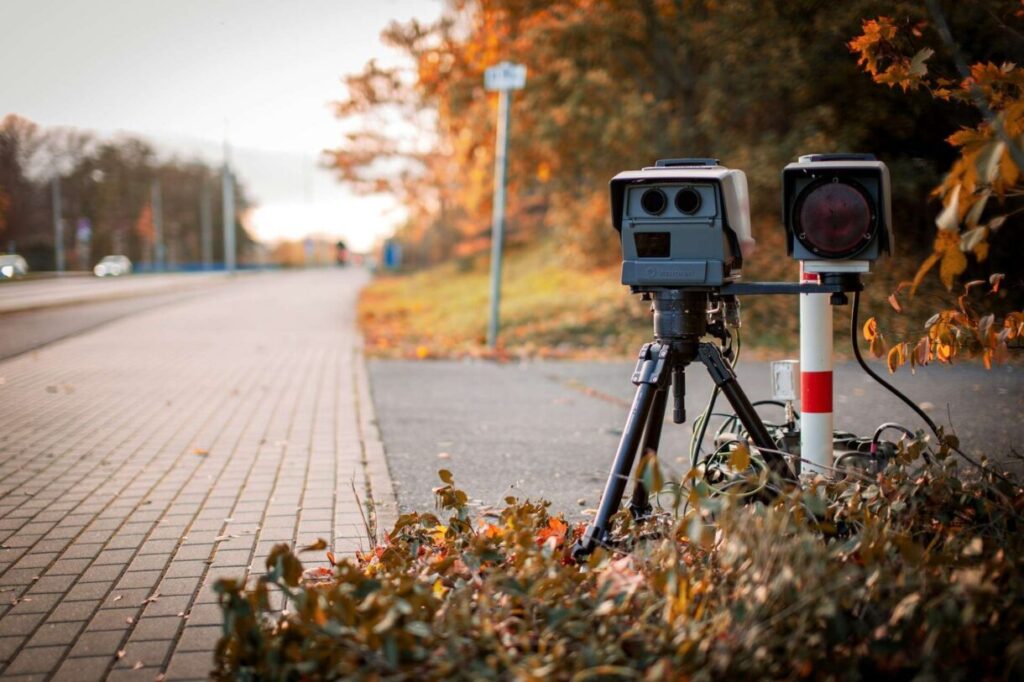
The French government is planning to expand traffic controls using artificial intelligence (AI) and intelligent radar technology. Starting as early as 2025, new violations such as disregarding the safety distance, failure to comply with seatbelt requirements, and using a phone while driving could be automatically detected and sanctioned. This proposal, included in the draft budget plan for 2025, aims to increase road safety – but also sparks strong criticism from motorists’ associations.
The planned monitoring goes beyond conventional speed measurement and is intended to detect other safety-relevant violations using AI-supported radar devices. The government has allocated a budget of 46.3 million euros to cover the expansion and maintenance of existing systems. Overall, a slight increase in the number of radars to 4,160 devices is planned, with “several hundred” of these devices set to receive the new functions. A precise start date has not yet been determined.
AI and Radar – a New Era of Traffic Monitoring?
The planned AI-supported radar devices are intended to be capable of assessing more complex situations through image recognition and data analysis. Whether a driver maintains a sufficiently large distance to the vehicle ahead, has properly fastened their seatbelt, or is holding a mobile phone could in the future be automatically detected by these “smart” radar systems. The use of innovative technologies such as AI and “Data Science” is considered necessary to increase the efficiency of traffic control and to combat the rising number of traffic violations.
But while the technology is making rapid progress, concerns among drivers are also growing. The French drivers’ association “40 millions d’automobilistes” describes the measures as “bureaucratic frenzy” and criticizes the automated issuance of fines. The association fears a “flood of penalty notices” that could not only lead to massive cost increases for mailing the warnings but also endanger the public’s trust in the proportionality of the penalties.
A controversial path to greater safety?
What at first glance appears to be a consistent measure to increase traffic safety raises questions: Will this focus on automated penalties ultimately have the desired effect? According to the association “40 million d’automobilistes,” this expansion of controls primarily achieves one thing – the financial burden for drivers increases. Each of these new violations could be punished with a fine of 135 euros and a deduction of three points on the driver’s license.
The association’s criticism is therefore directed not only at the technologies themselves but at the underlying control concept. The accusation is that increased surveillance is mainly intended to lead to a rise in fine revenue without bringing a noticeable safety benefit. The government, on the other hand, emphasizes the need to pursue new ways to prevent accidents – given the fact that distraction at the wheel and disregard of seat belt obligations pose significant accident risks.
Where is the personal leeway?
The introduction of AI-based radar surveillance could also spark a new discussion about privacy and personal responsibility in road traffic. Many drivers might feel monitored and restricted if radar devices not only measure speed but also peer through the windshield to assess the behavior of the occupants. With constant surveillance, the question remains to what extent the driver’s personal responsibility and common sense still matter – or whether driving behavior increasingly adapts to automated regulations and penalties.
The fundamental question therefore remains: Does the use of AI in road traffic actually create the desired safety, or does it mainly increase the feeling of being constantly watched?
On a Collision Course – Citizens and the State
This expansion of traffic surveillance could put the relationship between drivers and authorities in France to a new stress test. The 40 million drivers speak of a loss of public trust in the fairness of government measures. Many drivers perceive the expansion of the radar surveillance system as a one-sided control measure that further restricts the scope of action in road traffic and ultimately fills the state’s fine budget.
The project also has another aspect: The implementation of these technologies and the subsequent maintenance cause high costs. A significant part of the budget is allocated for the “printing and mailing costs of fine notices” – an expense that suggests the government is expecting a significant increase in fine notices. This approach is critically questioned by the motorists’ lobby and considered potentially disproportionate.
A balancing act for the future of road traffic
Although many support the modernization of traffic safety, the topic remains highly controversial. The introduction of AI in radar technology could make France’s roads safer – or, from the critics’ perspective, lead to a drastic increase in fines, further shaking the public’s trust in the system.
It is clear: The transition to a system that increasingly relies on AI and automation is a balancing act between efficiency and citizen proximity.