
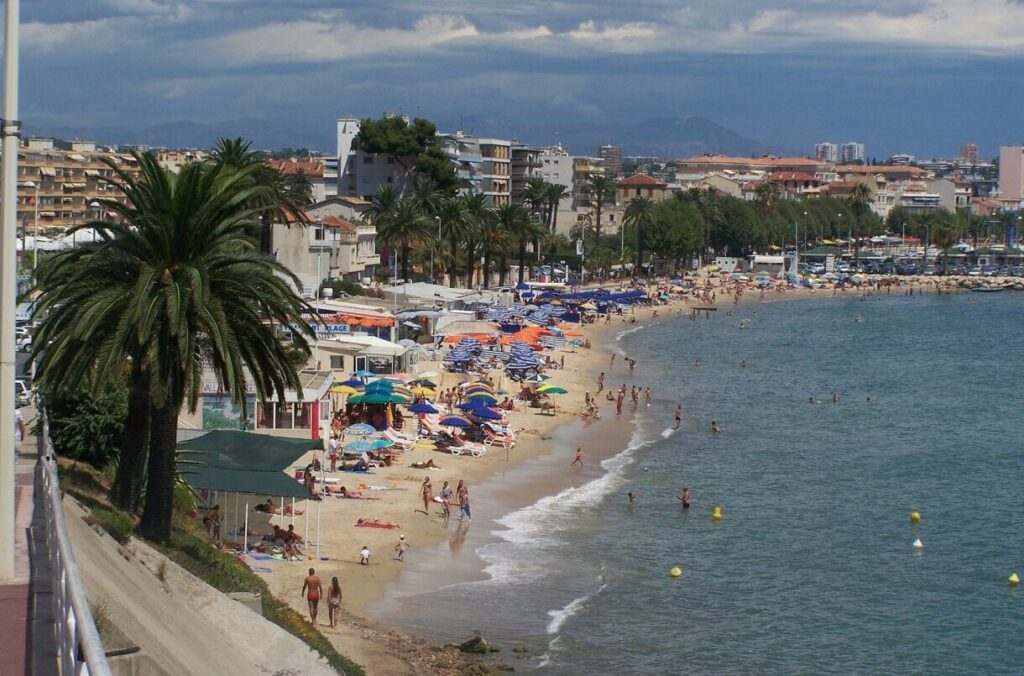
The Old Port of Golfe Juan will fly the Blue Flag for the first time in 2026. Sounds like a minor piece of news from the world of marinas? Not quite. Behind this award lies much more than a fluttering symbol in the wind of the Côte d’Azur. The traditional port between Cannes and Antibes suddenly assumes a new role: from a charming fishing and leisure spot to a visible example of sustainable tourism on the French Mediterranean coast.
And honestly — who thinks first of waste separation, water quality, or ecological port management when they hear Côte d’Azur? Many associate the region more with luxury yachts, seaside promenades, and rosé-colored sunsets. That’s exactly why the award for Golfe Juan feels almost like a small change of course.
Overview of Golfe Juan and the Old Port
Golfe Juan is part of the municipality of Vallauris in the Alpes Maritimes department. The coastal town is pleasantly centrally located between the glamorous streets of Cannes and the historic alleys of Antibes. Despite this prominent neighborhood, the town maintains a relaxed atmosphere. No over-the-top glamour, no permanent red carpet feeling. Instead, fishing boats, small cafés by the water, and walking paths along the harbor pier.
The Vieux Port, or Old Port, has shaped this character for decades. In the past, mostly fishing boats came and went here. Today, sailors, leisure captains, and excursion boats share berths. In the mornings, the air between the masts smells of salt, coffee, and sometimes freshly varnished wood. Such a harbor tells stories without being loud.
With the Blue Flag, the location now gains international attention. This environmental label recognizes beaches and ports that meet specific ecological standards. These include clean water, sustainable waste management concepts, environmental education, and responsible facility management. Across France, a total of 485 sites received this recognition in 2026 — including beaches, marinas, and even a tourist ship.
Golfe Juan thus joins a list of places that want to not only sell tourism but also shape it more consciously.
The Port Between History and Modernity
Anyone walking along the Old Port quickly feels the contrast between past and present. On one side stand traditional house façades with green shutters, on the other modern sailboats with solar panels on deck. It is precisely this blend that makes the place appealing.
Historically, Golfe Juan holds a special place on the Côte d’Azur. Napoleon Bonaparte landed here in 1815 after his return from Elba. The so-called “Route Napoléon” practically begins right on this coast. Many visitors unknowingly stroll past this historical site—until they suddenly come across signs and monuments.
The port itself developed over decades into the economic heart of the town. Fishing families lived off the sea, craftsmen repaired nets and boats directly on the quay edge. Today, restaurants, small boutiques, and water sports providers dominate the scene, but the maritime soul remains preserved.
This makes the new environmental certification particularly exciting. Sustainable tourism often feels like a balancing act in historic harbor facilities. How does one modernize infrastructure without losing the original character? How do you protect the sea when more and more visitors arrive?
Golfe Juan apparently tries to master precisely this balancing act.
Why the Blue Flag Means More Than Good Advertising
Many holidaymakers see the Blue Flag only as a pretty symbol at the beach entrance. But behind it lies a rather strict list of criteria. Ports must implement concrete measures and undergo regular inspections.
These include:
- Water quality monitoring
- Effective waste separation
- Environmentally friendly sanitary facilities
- Raising visitor awareness
- Protection of the marine environment
- Sustainable port management
Especially interesting: the award is not permanent. The criteria must be met anew every year. So a port cannot just rest on a title.
On the Côte d’Azur, this carries extra weight. The region has been struggling for years with problems such as overcrowding, environmental pollution, and increasing pressure on coastal ecosystems. Marinas in particular are increasingly coming under scrutiny. Oil residues in the water, plastic waste, or overloaded infrastructure regularly spark discussions.
In this context, the award for Golfe Juan almost appears like a public commitment. Visitors should not only see pretty scenery but also experience concrete improvements.
And precisely this is what travelers are paying more attention to today than ten years ago. Many want to enjoy their holidays without feeling like part of an environmental problem.
Noteworthy Places Around the Harbor
Of course, Golfe Juan does not live solely from the port label. The town itself offers some appealing corners that often stand in the shadow of its more famous neighbors.
Right along the promenade, small restaurants entice with views of the sea. Instead of overpriced luxury venues, you often find down-to-earth Mediterranean cuisine here. Fresh fish, mussels, aioli, and a glass of white wine — sometimes you really need nothing more for a successful evening.
A few minutes’ walk away begins the center of Vallauris. The town has a long tradition of ceramic art. Pablo Picasso himself worked here for a time and left clear traces. Museums, workshops, and small galleries still recall that to this day.
Walking westward leads to the beaches of Juan les Pins. The atmosphere changes suddenly there. More music, more bars, more hustle and bustle. Golfe Juan remains pleasantly calm. Almost as if the town deliberately shifts down a gear.
To the east, the coastal road leads to Antibes. The drive itself feels like a postcard on wheels — palm trees, small bays, and the deep blue Mediterranean accompany every curve.
Cultural Highlights of the Côte d’Azur
The region around Golfe Juan has surprisingly deep cultural layers. Of course, luxury and celebrity often dominate the headlines. Yet behind the elegant façades lies a turbulent history.
Antibes impresses with its old town and ancient fortress walls right by the sea. In Cannes, it’s not all about the film festival. Away from the Croisette, visitors discover markets, narrow streets, and traditional Provençal quarters.
Particularly fascinating remains Vallauris with its heritage in ceramics. Many studios open their doors to visitors. Handmade pieces are still produced here today, often using techniques dating back centuries. The scent of clay and fired earth practically lingers in the air.
And then there’s this Mediterranean way of life.
People sit outside late into the evening, loudly discuss football or politics, and enjoy life with enviable ease. Anyone who embraces this quickly realizes: The Côte d’Azur consists of far more than luxury yachts and beach clubs.
Culinary Highlights Around Golfe Juan
The region’s cuisine fits perfectly with the harbor atmosphere. Fresh, straightforward, and full of Mediterranean flavors.
In the restaurants around the Old Port, you will often find gilt-head bream, sea bass, or mussels on the menu. Many ingredients come directly from the surroundings. Olive oil from Provence, herbs from the hills behind the coast, and vegetables from local markets shape the dishes.
Typical for the area are:
- Bouillabaisse
- Socca made from chickpea flour
- Ratatouille
- Pissaladière with onions and anchovies
- Fresh seafood
Especially in the morning, a visit to the small bakeries is worthwhile. The smell of croissants and warm baguettes drifts through the streets — dangerously delicious, honestly.
Those who stay longer quickly discover the relaxed dining culture of the region. Nobody rushes through a dinner. Conversations often last longer than the meal itself. That’s exactly what makes the charm.
A Harbor as a Symbol of Change
The Blue Flag for the Old Port of Golfe Juan ultimately acts as a symbol for a larger shift on the French Mediterranean coast. Tourism should function more beautifully, cleaner, and responsibly — at least that’s the idea behind it.
Of course, an environmental label does not automatically solve all problems. But visible measures often also change visitor behavior. Those who see clean facilities usually pay more attention themselves to the surroundings. Those who read information about marine protection might think twice about plastic waste.
Golfe Juan shows an interesting direction: preserving tradition and acting more modernly at the same time.
Maybe that is exactly the future of many coastal towns.
Because what use is the most beautiful Mediterranean scenery if the environment and quality of life suffer? And what remains of a port if its maritime soul eventually becomes nothing more than a backdrop for selfies?
Golfe Juan is currently trying to bring both together — history and sustainability. This feels sympathetic, down-to-earth, and surprisingly contemporary.
A travel report by V.O.Yager