
Spring in Corsica has its own unique rhythm – especially around Easter. While in Central Europe gray late winter days often still dominate, the Mediterranean island is already blooming: the macchia smells fragrantly, the birds are in turmoil, and in the villages there is preparation, celebration, remembrance. Those who spend Easter in Corsica experience not just an extended weekend – but an impressive journey between mystical past, culinary enjoyment, and spectacular landscape.
Solemn Traditions: Corsica’s Good Friday is no ordinary holiday
Holy Week is observed on the island with an intensity that touches the soul. In the small town of Sartène, for example, which calls itself “the most Corsican of all Corsican towns,” the Catenacciu moves through the streets on Good Friday. A masked penitent drags – barefoot and with heavy chains – a wooden cross through the night. No one knows his identity. The residents hold their breath, tourists fall silent. The moment is archaic – and genuine.
In Bonifacio, five brotherhoods celebrate their ancient rituals. The old town becomes a stage for centuries-old religious dramaturgy when relics are carried through the narrow alleys. It smells of incense, you hear Corsican polyphonic chants – almost eerily beautiful.
And then there is Cargèse. A village with Greek roots that celebrates its Orthodox heritage on Easter Monday. Two churches – one Latin Catholic, one Greek Orthodox – stand opposite each other like old relatives. Their masses? Parallel and yet connected. A piece of lived history in peaceful coexistence.
Between mountains and sea: Corsica’s most beautiful places in spring
Anyone traveling to Corsica at Easter has to make a choice – but can never go wrong. Because whether coast or mountain, north or south: the island plays all its cards.
Bonifacio, for example. The town clings to white limestone cliffs as if a giant had glued it there. Below, turquoise sea; above, a medieval maze of alleys, arches, viewpoints. And that view – all the way to Sardinia on clear days. Magical.
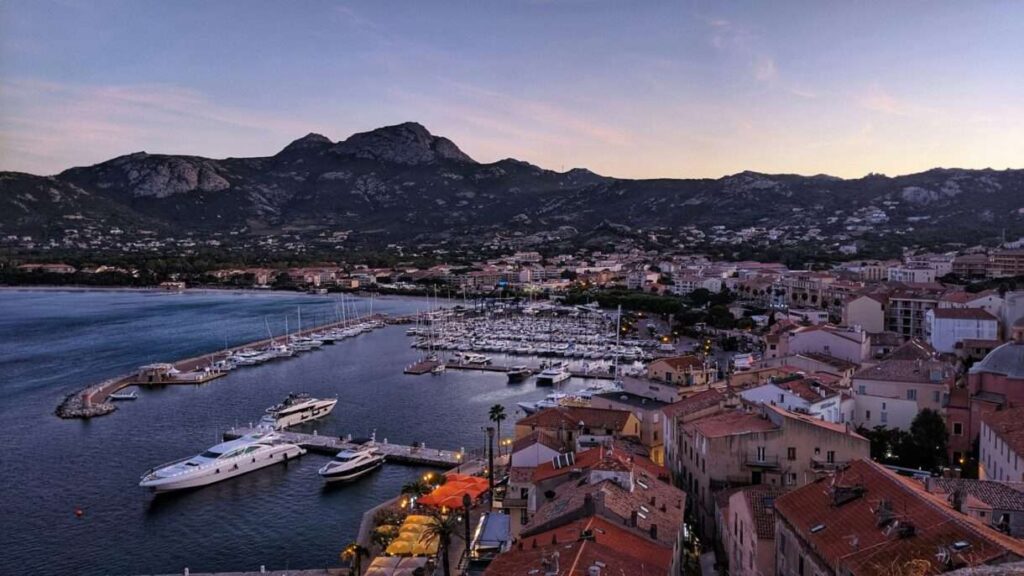
Or Calvi with its massive citadel towering above the harbor. The climb through the maze of cobblestones is worth it just for the panorama. Sailboats sway in the harbor while cafés by the water are already serving the first rosé.
Cap Corse shows a more original side. The finger-shaped peninsula in the north is an adventure in itself. Switchbacks wind along dramatic cliffs. In tiny fishing villages like Centuri, time seems to have stood still. Suddenly a few goats on the road – that’s Corsica.
Even more impressive? The Calanche de Piana. A landscape like something out of a fantasy film. Rust-red rocks shaped like animals, towers, faces. When the evening sun shines on them, you briefly think: This can’t be real. But it is.
And if you like it more mountainous, head to the Bavella Massif. The so-called “Bavella Needles” shoot dramatically into the sky, surrounded by pine forests and wild mountain streams. A hike here is like a springtime fairy tale – with an adventure guarantee.
Cultural Gems: History with Goosebump Moments
Corsica tells stories at every turn. There are the Genoese towers, which stand like sentinels along the coast – silent, massive, admonishing. They remind one of a time when pirate attacks were part of everyday life.
Or the old citadels, especially those of Calvi and Bonifacio. Thick walls, cannons, narrow battlements – you can almost feel how history was once made here. But instead of dry museum dust, there is life, music, cafés. History you can touch.
And then there is the music. Corsican polyphony sounds like nothing else you know – three men, no instruments, only voices. Melancholic, rough, overwhelming. Often heard during Easter processions, but also in churches or at small village concerts.
Moments of Enjoyment: What’s on the Table at Easter
Easter tastes different in Corsica – and that’s a good thing. Already at breakfast, the “Cacavellu” awaits, a sweet, yeast-rich bread with a baked-in egg in the middle. A symbol of life, the new, spring.
In other regions, the “Canistrellu” comes to the plate: crumbly cookies with anise, lemon, or rosemary – perfect with espresso. In general: drinking coffee here is a ritual. You sit, watch, chat. Rush? Not on this island.
And that’s just the beginning. Because Corsican cuisine is a wild mix of sea and mountains. The markets lure with hearty hams, air-dried Figatellu, spicy wild boar salami. Along with the typical cheese Brocciu – fresh, creamy, slightly lemony. As filling for ravioli, in an omelet, or simply pure with fig jam. A poem.
Of course, fish plays a big role. Especially on the coast, everything the sea provides is served: sea bream, lobsters, squid. And with that a glass of Corsican white wine – spring can come.
Is an Easter vacation in Corsica worth it?
Well, of course! Because when else can you hike on an island with snow-covered mountain peaks, picnic on the beach at noon, and be part of processions in the evening that look like they are from another time? The mix makes it – and exactly this contrast is what makes Corsica so special at Easter.
Tip on the side: book a rental car. The most beautiful places are only reachable with your own vehicle. And don’t worry – even if it gets curvy sometimes, every route is worth it.
Corsica at Easter – this is not a holiday like any other. It is a journey straight into the heart of an island that is proud, wild, and full of secrets. Those who have been here once usually come back. Maybe not next year – but certainly sometime.
A travel report by V.O.Yager