
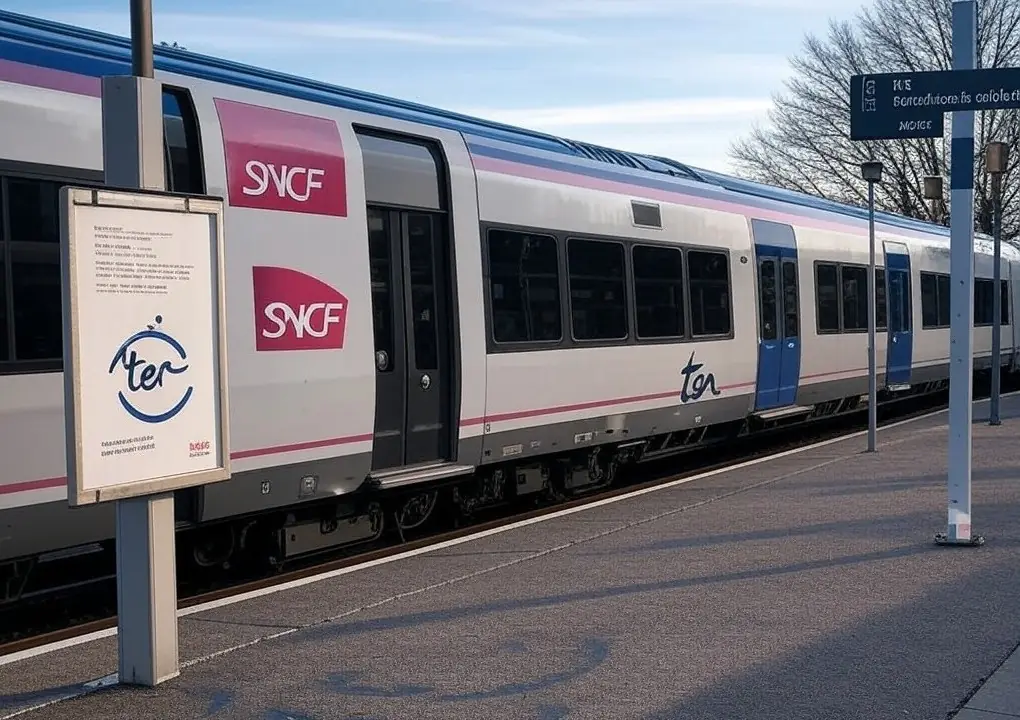
France will face a nationwide rail strike on June 10, significantly disrupting travel across the country. Rarely has the union front been so united: For the first time since late 2024, all four major railway unions have jointly called for a strike. For millions of travelers, this means a day full of uncertainties, delays, and train cancellations.
The strike hits long-distance traffic particularly hard. On the high-speed lines, only about two out of three TGV trains will run on average. This means roughly every third connection is canceled. Not only the classic TGV InOui trains are affected, but also the cheaper Ouigo services as well as international high-speed trains towards Switzerland and other European neighboring countries.
Those traveling this Wednesday will need patience. Even on operating routes, many places are expected to be crowded. The SNCF is attempting to distribute the available trains as evenly as possible across the entire network, but full platforms and overcrowded trains are hard to avoid.
The situation is even more difficult for Intercités trains. Only about half of these traditional long-distance connections are expected to operate. On routes without TGV service, significant restrictions are looming. For many cities and regions, Intercités trains represent an essential connection. If every second train is canceled, travel plans quickly become precarious.
The biggest challenge, however, awaits many commuters in regional traffic. TER trains, the backbone of local transport in the French regions, will operate with many limitations in various areas. The extent of the impact depends on the region. Replacement buses are expected in some areas, but their capacity often only covers a fraction of the usual passenger numbers.
The strike is likely to be particularly noticeable around major metropolitan areas. In the Greater Paris area, transport experts anticipate especially difficult conditions. Numerous Transilien lines will run with limitations, and several RER routes are also affected. For many commuters, the day will start much earlier than usual. Anyone hoping to secure a seat must expect long waits and overcrowded platforms.
The effects reach far beyond France. International connections to Germany, Belgium, Spain, Italy, and Switzerland will generally remain operational but also with reduced services. Since many routes involve cooperation between several rail companies, the situation varies depending on the connection. Travelers are advised to check the current status of their train before departure.
SNCF has announced extensive goodwill measures for affected passengers. Tickets can often be rebooked or refunded free of charge. Additionally, the company informs travelers directly via SMS or email about changes to their connections. Nevertheless, many still face uncertainty about whether their planned trip can proceed as scheduled.
Several conflict issues lie behind the strike. The unions criticize wage developments, oppose the ongoing opening of the rail market to competitors, and reject the outsourcing of certain company sectors. The fact that all representative unions are mobilizing together adds extra weight to the protest.
For France, June 10 marks one of the most challenging travel days of the year. Especially in regional traffic and the Greater Paris area, significant disruptions are expected. Anyone relying on the train on this day should bring strong nerves—and preferably have a Plan B at hand.