
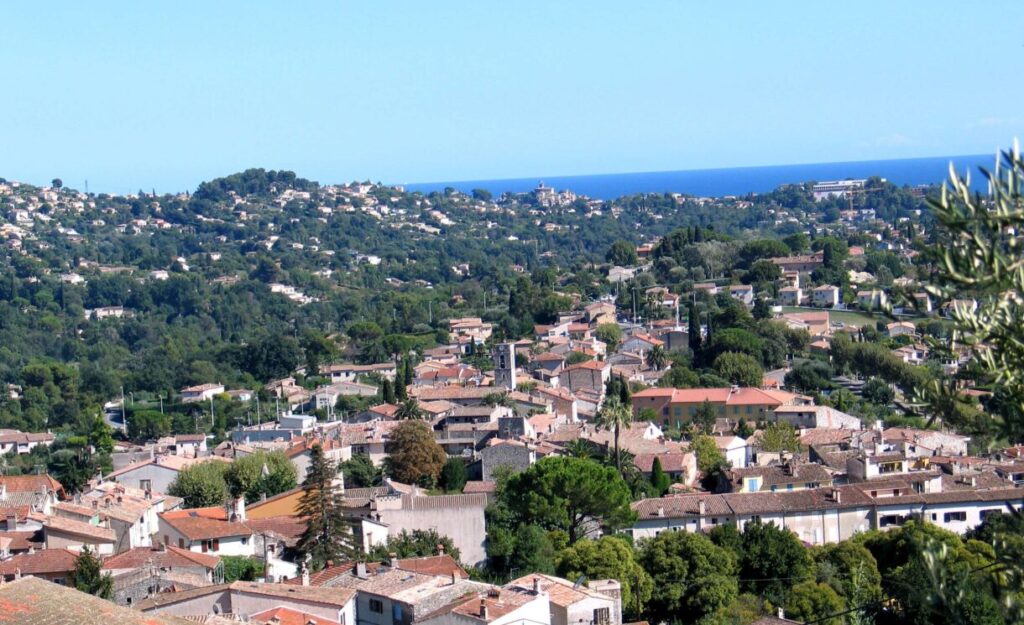
There are places in Provence that smell of lavender. Others smell of pine, sea, or warm stone. And then there is La Colle-sur-Loup – a village near Grasse that smells of roses in May.
Not just any rose. But the Centifolia, that legendary “Rose de Mai,” whose petals have been used for centuries in the great perfumes of southern France. Anyone strolling through the narrow streets of the village in mid-May immediately understood why this flower is almost like a patron saint here.
On May 17, 2026, the municipality celebrated its event “Autour de la Rose – Artistic Blooming.” A festival between memory, craft, and art that transformed the village center for one day into a fragrant open-air atelier. Everywhere were rose stands, floral installations, music, local products, and people wandering between old stone facades. Not an over-stylized tourist program, but rather a loving return to their own roots.
Because La Colle-sur-Loup was once a stronghold of rose cultivation.
Early in the morning, women and families headed to the fields to pick the delicate blossoms before the sun changed their scent. The work was considered arduous, almost meditative. Baskets full of roses were then brought to the village cooperative, which was founded as early as 1908. There, the petals were weighed, sorted, distilled, or sold to the perfume houses of Grasse. For decades, part of the region lived from this cycle of harvest, scent, and manual labor.
Today, the cooperative no longer exists. It closed its doors permanently in 1995. Yet, the history still lingers in the air – quite literally.
That is precisely what makes this rose festival remarkable. Many places in Provence now sell a polished image of lavender fields, glasses of rosé, and sunsets. Pretty, clear. But often a bit like a shop window display. La Colle-sur-Loup tells a different story of Provence. One that smells of work.
The rose here was not decoration. It meant income, community, and economic survival. Behind every bottle of luxury perfume were hands full of thorn scratches and days that began long before sunrise.
Perhaps that is why the festival seems so authentic. It does not completely romanticize the past but makes it tangible. Children watch the distillation of rose water, visitors talk with local producers, musicians play on small squares, while above it all floats that sweet, almost heavy scent that settles in the warm spring air.
And suddenly you understand why the people here don’t just celebrate a flower festival.
They celebrate a piece of identity.
Author: C.H.