
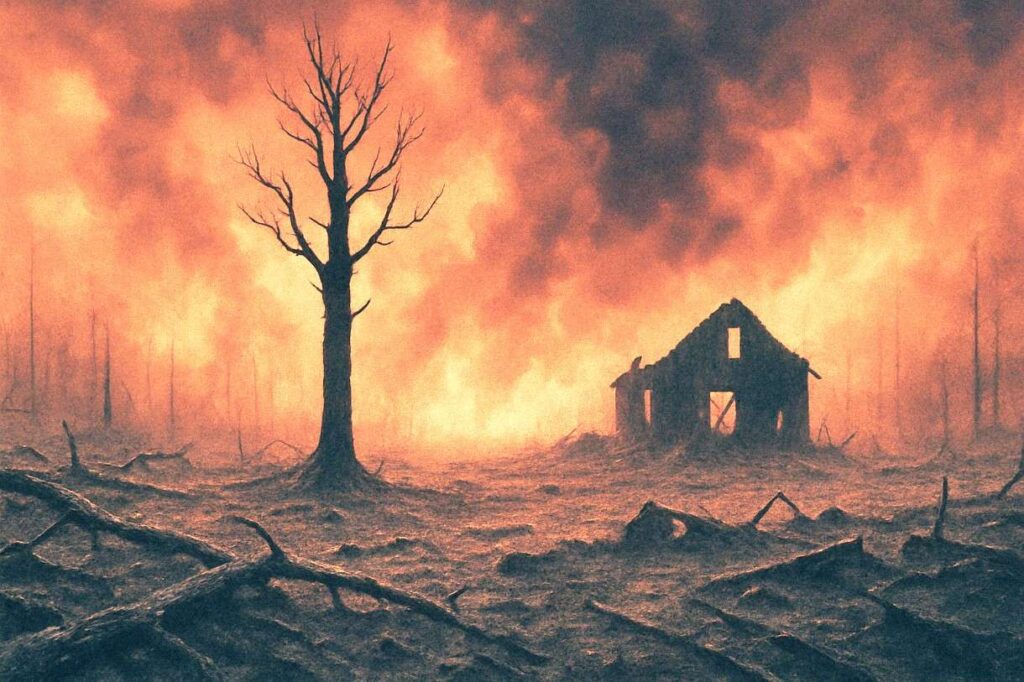
The massive wildfires in southern France have triggered a disaster in the Pyrénées-Orientales that leaves even experienced firefighters speechless. A commander describes the situation in stark terms: ‘I’ve never seen anything so apocalyptic.’ What is currently unfolding in the region, according to many helpers, surpasses everything they have encountered in their careers.
Within hours the flames devoured dry vegetation and turned vast areas into a glowing front of fire. Extreme heat, parched soils and the strong Tramontane created ideal conditions, so the fire spread with alarming speed. The wind carried embers over long distances and ignited new outbreaks. For the emergency services this became an almost hopeless race against time.
While successes in firefighting were achieved in one spot, a few minutes later meter-high flames flared up again elsewhere. Rapidly changing wind conditions repeatedly forced firefighters to withdraw to avoid putting themselves in mortal danger. Despite state-of-the-art technology and support from the air, conditions remained unpredictable in many places.
The disaster is hitting the population especially hard. Numerous towns had to be evacuated as a precaution. Thousands of people left their homes often within minutes and took only the essentials. For many this marked the beginning of a time of uncertainty. No one knows whether their own home will be spared or left as little more than charred ruins after the fires end.
Many residents describe moving scenes. Some reported that when leaving their property they already saw flames immediately behind their gardens. Others had to watch as thick smoke darkened the sky and familiar landscapes disappeared within a short time. It is no longer only about buildings or material goods, but about memories, family history and often the livelihoods of entire generations.
Several thousand firefighters are now fighting the flames. Water bombers and helicopters support the operation almost without interruption. Yet even from the air strong winds, dense smoke and extreme heat significantly hamper firefighting efforts. Several emergency personnel have already been injured, but the teams continue their fight to protect lives, residential areas and critical infrastructure.
The consequences extend far beyond the immediate damage. With every hectare burned valuable habitats for animals and plants disappear. The soils lose their protective layer, so after heavy rains the risk of landslides and erosion increases significantly. Experts believe that many forest areas will only recover after decades — if they ever fully recover at all.
The fires also highlight a trend that experts have been observing for years. Longer dry periods, more frequent heat waves and strong winds significantly increase the risk of large-scale wildfires. Events of this magnitude are no longer seen as exceptions but are occurring increasingly often.
For the people in the Pyrénées-Orientales this summer will be remembered as a time when nature displayed its full destructive power. Hope is now focused on the emergency services being able to fully contain the fire soon and on preserving at least part of the affected families’ homes.
By C. Hatty