
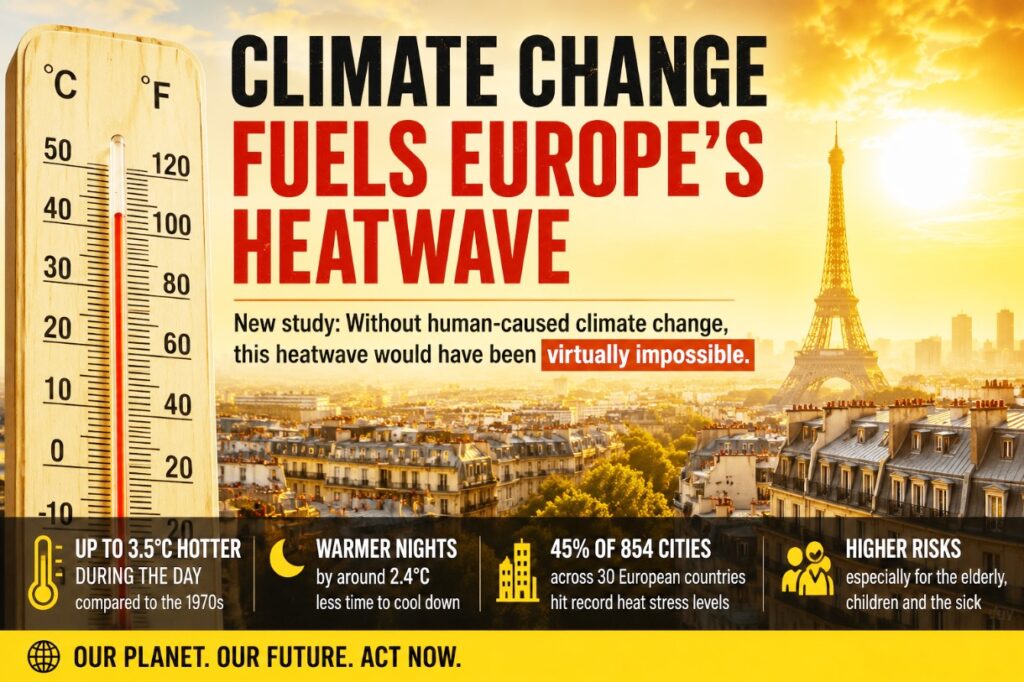
The ongoing heatwave in Europe is not only setting new temperature records but also, according to leading climate scientists, provides a clear signal of the consequences of human-caused climate change. A recent study by the international research network World Weather Attribution has reached a clear conclusion: the exceptionally high temperatures would have been practically impossible under the climatic conditions of the 1970s.
According to the scientists, the decisive difference does not lie in the weather pattern itself. High-pressure areas with hot air from North Africa existed decades ago as well. But today, a comparable weather pattern meets a significantly warmer atmosphere. As a result, temperatures increase substantially more than before and reach values that were hardly imaginable just a few decades ago.
The analysis compares the current heatwave with the exceptionally hot summer of 1976. Back then, a similar weather constellation would have resulted in average daytime temperatures about 3.5 degrees Celsius lower. Nighttime temperatures would also have been significantly lower by about 2.4 degrees. These warm nights are considered especially problematic because buildings hardly cool down and the human body recovers less effectively from the heat.
The Earth has warmed by about 1.1 degrees Celsius over the past five decades. What might sound like a comparatively small change at first glance has an enormous effect on extreme weather events. Heatwaves occur more frequently, last longer, and reach significantly higher peak temperatures than a few decades ago. This current study thus confirms a pattern that climate scientists have been observing for years.
The combination of high temperatures and high humidity is particularly burdensome. Experts refer to this as heat stress. Under such conditions, the human body loses part of its ability to cool itself sufficiently by sweating. The risk of heat strokes, circulatory problems, and other health complications increases substantially as a result.
According to the scientists’ calculations, about 45 percent of the 854 cities studied across 30 European countries already reached historical record values for heat stress or are on the verge of doing so. Particularly vulnerable groups include the elderly, chronically ill, infants, and people working outdoors.
Europe is now among the regions of the Earth that are warming particularly fast. Numerous scientific studies indicate that extreme heat events have multiplied significantly over recent decades. With each further increase in the global average temperature, the likelihood that previously exceptional heatwaves will occur more frequently rises.
Therefore, the current study not only emphasizes the importance of a consistent reduction in greenhouse gas emissions but also brings adaptation to more frequent and intense heat periods more into focus. Cities are increasingly investing in greenery, shaded areas, and heat-resistant infrastructure, while health authorities are expanding their warning systems and strengthening protective measures for particularly vulnerable populations.
The exceptional heatwave of this summer provides, in the researchers’ view, further evidence that climatic conditions in Europe have already noticeably changed. What was once considered a rare extreme event is gradually becoming a reality that society, politics, and the economy must permanently adapt to.
An article by M. Legrand