
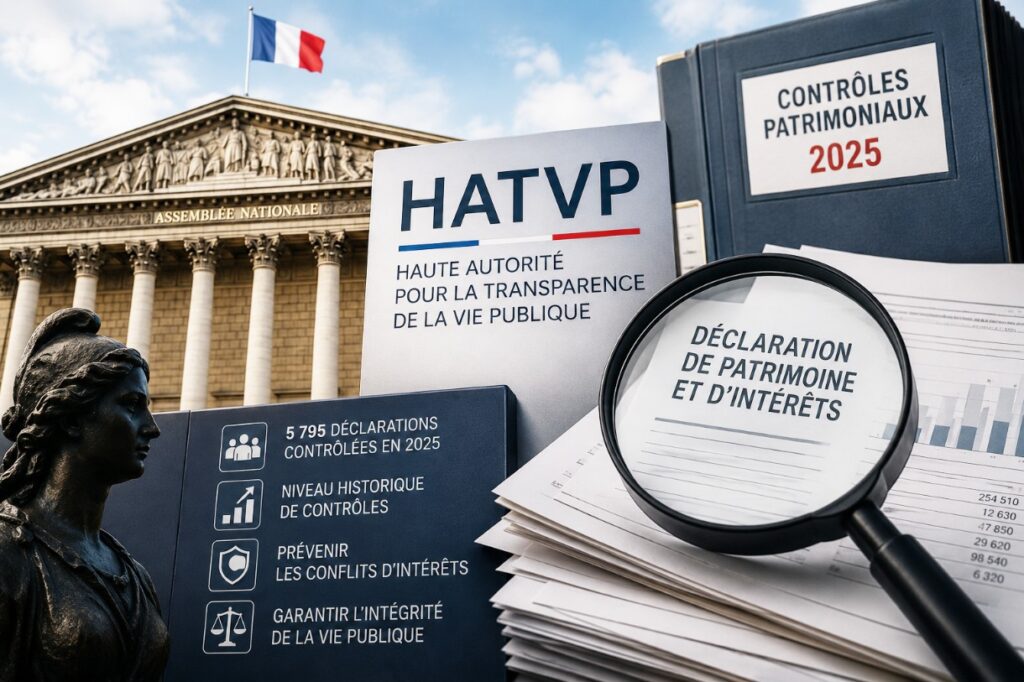
Today France controls its political class more intensely than ever. In 2025 the Haute Autorité pour la transparence de la vie publique (HATVP) verified a total of 5,795 asset declarations from politicians, senior officials, and other public office holders – a historic record since the agency’s founding in 2013. In Paris, this figure is not considered just a statistical record, but expresses a profound change in political culture.
Indeed, this development shows how much the French state has changed in a decade: transparency, oversight, and institutional monitoring of political elites have now become fixed elements of democracy. What was once often considered a private matter is today subject to systematic public scrutiny.
The Cahuzac Scandal as a Political Turning Point
The establishment of the HATVP is inextricably linked to one of the greatest political scandals of the Fifth Republic. In 2013, then Finance Minister Jérôme Cahuzac came under pressure after the media reported a secret offshore account in Switzerland. Cahuzac initially publicly denied this firmly, but later had to admit to hiding assets from the French tax authorities for years.
The scandal deeply shook Parisian politics. Particularly serious was the fact that the very minister responsible for fighting tax evasion had been guilty of fraud. President François Hollande responded with a comprehensive package of measures for transparency. In the same year, the Haute Autorité pour la transparence de la vie publique was founded.
Since then, ministers, deputies, senators, mayors of large cities, senior officials, and many other officials must provide detailed information about their assets and financial interests. Real estate, company holdings, bank accounts, secondary incomes, or consultancy roles must be declared. The goal is to make conflicts of interest visible and to detect illicit enrichment in a timely manner.
Record numbers due to political instability
The fact that the HATVP checked almost 5,800 asset declarations in 2025 is mainly linked to the extraordinary political situation in France. The last two years have been characterized by institutional instability: early parliamentary elections, several government reshuffles, changes in ministerial personnel, and increasing fragmentation of the political landscape.
Every change of office entails new declaration obligations. Those who assume or leave an office must declare their assets. As a result, the number of files submitted suddenly increased. Already in 2024, the agency had spoken of “année de tous les records” – the year of all records.
New areas of control have been added. The HATVP is no longer limited to the classic asset declarations. It now also monitors contacts with lobbies, the transitions of public officials to the private sector, and potential conflicts of interest related to international actors.
The expansion of responsibilities reflects a broader trend in Western democracies: states are increasingly seeking to make political influence transparent and to close institutional gray areas.
A control tool with legal consequences
The activity of the HATVP is by no means symbolic. The agency works closely with the French tax administration and systematically compares declarations with tax data. In case of discrepancies, it can initiate investigations or forward cases to the judiciary.
In recent years, this has repeatedly led to criminal proceedings against politicians for incomplete or false declarations. Particularly sensitive are real estate valuations or hidden participations in companies. The agency verifies whether assets have been deliberately underestimated or sources of income concealed.
Thus, the HATVP has transformed into an institution with strong political impact. Even the suspicion of an incorrect declaration can today damage careers. For French politicians, the public verification of their private assets is now part of everyday political life.
This development would have been unthinkable twenty years ago. For a long time, France was considered a state with a weak culture of transparency. Political networks between the economy, administration, and parties often operated informally. Conflicts of interest were rarely discussed publicly.
Only a series of scandals – from illegal party financing to corruption allegations against individual leaders – generated political pressure for institutional reforms.
The new role of authorities for transparency
Especially remarkable is the substantial expansion of the agency. The HATVP is increasingly evolving from a traditional oversight body to a full integrity authority.
From 2025, it will focus more on possible foreign influences on political decisions. In the background are European debates on lobbying by authoritarian states, influence networks, and the financing of political actors through external interests.
In this way, France follows an international trend. The European Union, the United States, and Canada are also continuously strengthening their transparency and compliance rules. Democracies thus respond to growing social distrust towards political elites.
Especially after the COVID-19 pandemic, the energy crisis, and many citizens’ loss of trust in state institutions, the demand for transparent power control has gained further importance. Transparency is increasingly seen as a prerequisite for democratic legitimacy.
Between democratic control and generalized suspicion
At the same time, the French model of transparency remains controversial. Critics accuse the system of placing politicians under permanent generalized suspicion and making private financial conditions excessively public. Especially local officeholders complain of a high bureaucratic burden.
Moreover, the question remains whether complete transparency automatically creates more trust. Some political science experts argue that continuous scandalization and media scrutiny can also increase political disenchantment.
Supporters counter that democracies without verifiable rules lose credibility in the long term. Especially in an era of growing populist movements and declining support for traditional parties, institutional transparency is indispensable.
Indeed, developments in France show that political culture today is much less tolerant of conflicts of interest than ten years ago. What was previously regulated discreetly is now publicly documented, verified, and legally evaluated.
The record number of 5,795 verified asset declarations therefore does not represent only an administrative burden for the authorities. It symbolizes a structural change in French democracy: the shift from a traditionally very personalized power culture to a system of institutionalized control.
It remains to be seen whether this development of state transparency will truly create trust in the long term. What is certain is that France now considers the public accountability of political elites as a permanent democratic necessity – and no longer just as a mere reaction to individual scandals.
Author: P. Tiko