
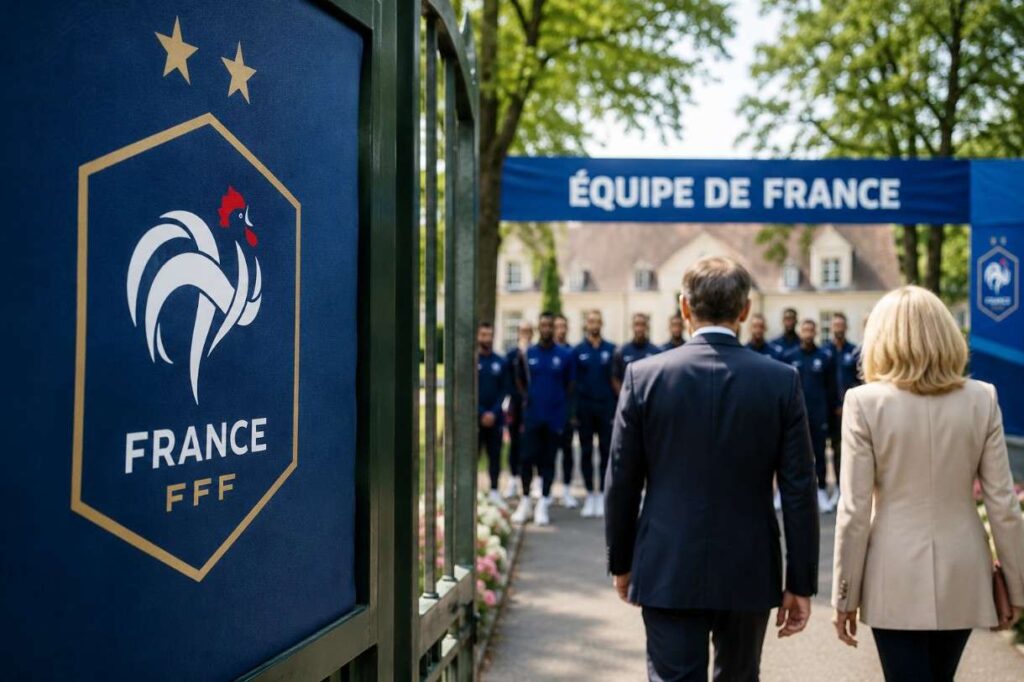
Emmanuel Macron will visit the French national team at Clairefontaine on June 2, a few days before the tricolor squad leaves for the 2026 FIFA World Cup in the USA. The President will be accompanied by his wife Brigitte Macron. For the French public this appointment is now much more than a protocol obligation: the head of state’s visit to Les Bleus before a major tournament has become an integral part of the Republic’s political and sporting ritual.
Clairefontaine, the French national football centre of excellence southwest of Paris, has for decades been regarded as a symbolic place in the French conception of sport. It was here that Zinedine Zidane’s generation prepared for the 1998 World Cup triumph, and it was here that many of the images of collective euphoria were born that still define the relationship between France and its national team today. When Presidents visit the team, it is never only about football. It is a matter of national projections, social cohesion and hope at a moment of shared enthusiasm in a country often politically polarized.
For Macron the meeting with Didier Deschamps’ players also has a communicative dimension. From the start of his presidency, the head of state has repeatedly presented himself as a supporter of the Blues — particularly visible in the 2022 World Cup final in Qatar or after the Nations League victory. Football offers the Élysée a rare stage where political tensions can temporarily take a back seat. In a period of social and economic uncertainty, the political leadership thus seeks to invoke the integrative power of sport.
Sportingly, the French national team is preparing for a special tournament. France is once again among the favorites for the title and could, with a third world victory, permanently enter the club of the major football nations. At the same time, the 2026 World Cup will likely be Didier Deschamps’ last major tournament as head coach. The 1998 world champion and 2018 winning coach has led the team for over a decade and is considered one of the most successful managers in the history of French football.
The Bleus will present themselves in North America with high expectations. Their first group match is scheduled for June 16 against Senegal. Attention in the country toward the tournament is already growing. Traditionally, France associates more than mere sporting competition with its national team: every four years hope is born in a shared national narrative — carried forward by players who for many French people embody diversity, ability, and republican pride.