
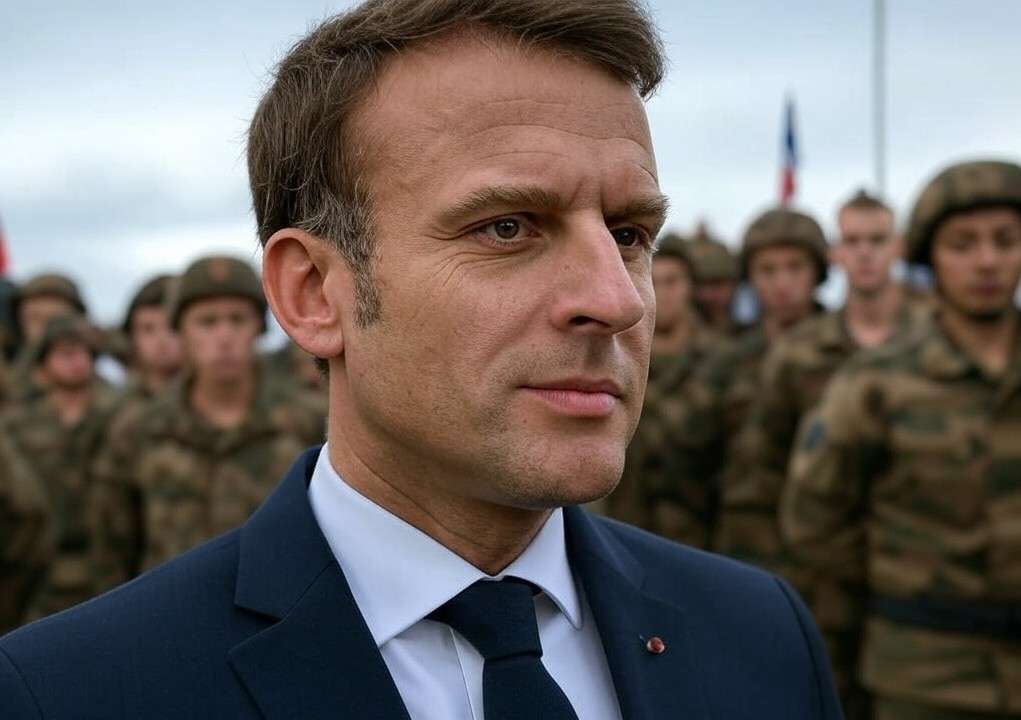
With unusually forceful wording, French President Emmanuel Macron sent a strong signal to the French armed forces, European partners and potential adversaries just hours before the military parade for the July 14 national holiday. In his traditional address to the armed forces, the head of state declared that France, together with its allies, was ready to “defend freedom and law – if necessary at the price of blood.” The words are among the most striking security-policy statements of his nearly ten-year presidency and underscore the fundamental shift in French defense doctrine since the Russian attack on Ukraine.
Europe Should Become an Independent Power
Macron placed his speech in the context of a profoundly changed international security order. The war in Ukraine, increasing geopolitical tensions and uncertainty about the long-term role of the United States had forced Europe to redefine its security responsibilities.
According to the president, Europe is increasingly developing into an independent strategic power. The message to the international community is clear: peace remains the highest goal, but freedom and the rule of law must, if necessary, also be defended militarily.
By saying that France was prepared to pay “the price of blood” for this, Macron deliberately drew on historical language reminiscent of traditional declarations of sacrifice by French presidents. At the same time, he avoided any direct threat against a specific adversary. Rather, he emphasized France’s willingness to protect its security interests and those of its European partners with military means if necessary.
Paying Tribute to the French Armed Forces
Macron linked his security-policy message with an explicit tribute to French servicewomen and servicemen. He recalled those who had fallen for France in overseas deployments or suffered lasting physical and psychological injuries.
The wording gave his speech a personal dimension. It made clear that, for the president, the willingness to undertake military service is inseparably linked to recognition of the sacrifices made by members of the armed forces over decades of deployments in Africa, the Middle East and international missions.
At the same time, Macron called on the state to ensure lasting support for soldiers and their families and not to sacrifice it to future spending cuts.
A Case for Joint European Defense
The president placed another focus on European cooperation in the defense industry. Despite numerous difficulties with joint arms projects, he once again advocated closer cooperation within Europe.
His criticism of national go-it-alone approaches was particularly noteworthy. It was an “absurdity,” he said, for every European state to try to build up all military capabilities independently. Given limited financial resources and growing security challenges, Europe can strengthen its defense capacity only through the joint development, production and procurement of modern weapons systems.
Macron thus renewed his long-standing call for greater European strategic autonomy. Although projects such as the German-French-Spanish SCAF fighter aircraft program have recently suffered significant setbacks, Paris remains committed to the idea of a capable European defense industry.
Assessment of a Security-Policy Presidency
The address also had a symbolic character. It was Macron’s final speech to the armed forces ahead of a national holiday as sitting president. Since his second term ends in spring 2027 under the French Constitution, he used the opportunity to take stock of his defense policy.
Since taking office in 2017, France has steadily increased its defense spending and accelerated the modernization of its armed forces. At the same time, Europe’s capacity for military action has become increasingly important. Russia’s war of aggression against Ukraine further accelerated this development and brought issues of deterrence, arms production and European cooperation to the center of French foreign and security policy.
Macron emphasized in his speech that during his presidency, France had not only strengthened its own military capabilities but had also made a major contribution to Europe’s strategic awakening.
A Signal to Allies and Adversaries
The speech illustrates the transformation of French security policy at a time of growing geopolitical uncertainty. While France has traditionally defined peace as its foremost foreign-policy goal, Paris now links that objective much more clearly to military deterrence and credible defense readiness.
Macron’s reference to the “price of blood” should therefore be understood less as an announcement of an impending military conflict than as an expression of a new strategic posture. France wants to make clear that freedom, territorial security and international law cannot be safeguarded by diplomatic appeals alone.
The speech thus fits into France’s long-term strategy of making Europe more independent in security matters while strengthening its deterrence capability against possible aggressors. Against the backdrop of the continuing war in Ukraine and an increasingly unstable international order, the message is intended to be: Europe seeks peace – but is prepared to defend it militarily if necessary.
Author: P. Tiko