
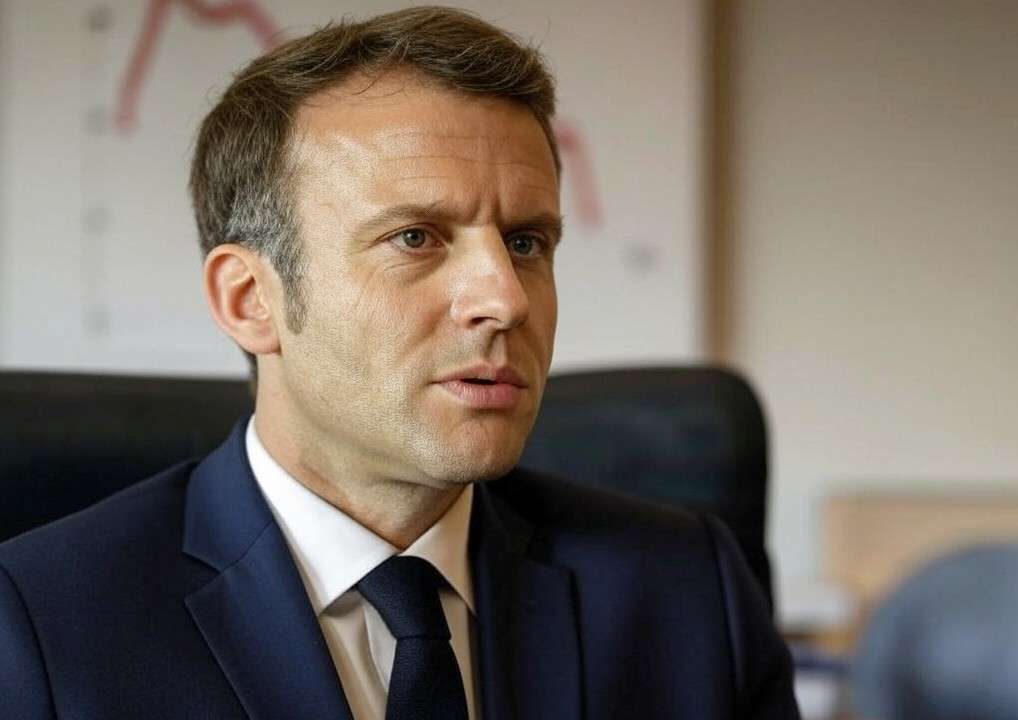
France is accelerating its path towards greater technological independence. President Emmanuel Macron has announced additional billion-euro investments in quantum computers, semiconductors, and artificial intelligence. In total, an additional 1.55 billion euros will be allocated to strategic sectors for the future – a further step in an industrial policy that Paris today openly considers a matter of national sovereignty.
Behind the offensive is much more than classic research funding. France is responding to a geopolitical reality in which technological capabilities increasingly determine economic influence, military strength, and political freedom of action. The global competition between the United States and China has deeply intensified the European debate on digital dependence. While American companies dominate the market for AI chips, cloud infrastructure, and language models, China has been aggressively investing for years in its own key technologies.
Paris wants to prevent Europe from being pushed long-term into the role of a technological consumer.
Particular attention is given to quantum technologies. Quantum computers are considered a potential game-changer in digital development. Their enormous computing power could in the future accelerate the development of new drugs, simulate complex industrial processes, or challenge current encryption systems. From a military perspective as well, quantum systems are seen as a strategic technology for the future, for example for reconnaissance, cybersecurity, or autonomous weapon systems.
Macron presents these technologies not only as economic innovation but as part of state power policy. Similar to how previous French presidents promoted nuclear energy or the aerospace industry, digital infrastructure is now declared a matter of national strength.
France follows a long-term strategy. For several years, the state has been specifically supporting research centers, universities, start-ups, and industrial partnerships. Companies in the fields of microelectronics, supercomputers, and AI receive extensive state support. At the same time, Paris seeks to strengthen European collaborations to remain competitive against American and Asian companies.
The French government openly acknowledges that Europe intervened too late in the fields of social networks, search engines, and cloud technologies. These mistakes must not be repeated with artificial intelligence and quantum technologies.
However, the project remains risky. The development of quantum computers is technically extremely complex and so far has been little profitable. Many applications are still in the experimental phase. In addition, American technology companies have capital that European states alone can hardly reach.
Nevertheless, the French offensive marks an important political change. Technology is no longer seen only as an economic factor, but as a geopolitical tool. For Macron, technological sovereignty is now part of a broader strategy of industrial relocation, military strength, and European autonomy.
The central message from Paris is therefore: states that do not control central technologies will in the long term also lose political influence.
Andreas M. Brucker