
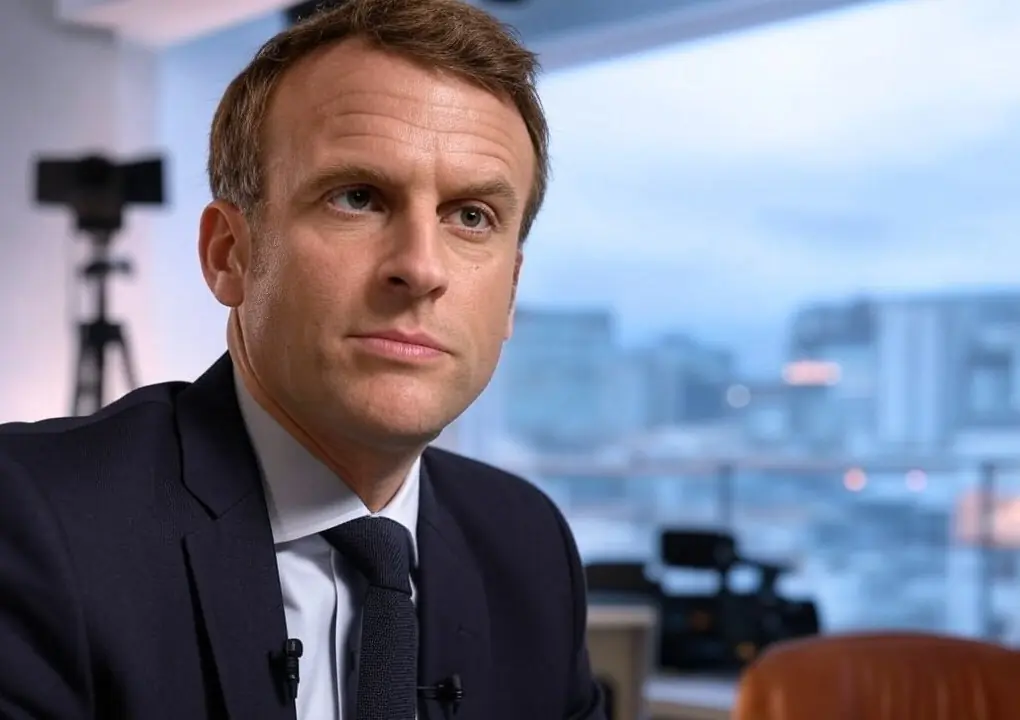
The day after the G7 summit in Évian, French President Emmanuel Macron used a much-noticed appearance on the show “L’Événement” on France 2 to outline his view on the most important international and domestic political challenges. Central to the discussion were the easing of tensions in the Middle East, the impact on energy prices and purchasing power, as well as the public debate around the death of eleven-year-old Lyhanna. The intervention also highlighted how strongly Macron emphasizes the connection between global crises and the everyday lives of the French population.
Middle East: Support for De-escalation and Criticism of Israel’s Course
Macron placed a focus on the recent détente between the United States and Iran. The agreement to end months of tensions is seen by Paris as an important step toward stabilizing the entire region. Of particular importance is the reopening of the Strait of Hormuz, one of the world’s most important maritime trade routes. A significant portion of global oil and gas exports is transported through this strait. Any disruption has immediate effects on the world economy and energy prices.
At the same time, Macron issued strong words to the Israeli government. While emphasizing Israel’s legitimate security needs in view of threats from Hezbollah, he questioned the long-term effectiveness of military expansion. Security cannot be sustainably ensured through occupation or territorial control. He indirectly described the ongoing military operations in the Gaza Strip, the West Bank, and southern Lebanon as a strategic misstep that ultimately harms Israel’s own interests.
With this, Macron continues his course aimed at diplomatic solutions and regional stabilization. Since the beginning of the recent escalations in the Middle East, France has been attempting to mediate between the various actors while maintaining its traditional relationships with both Israel and Arab states.
Hope for Falling Fuel Prices
For many French citizens, developments at the gas stations are likely of more immediate importance than diplomatic debates. Macron expressed optimism that fuel prices could gradually decrease over the coming weeks and months.
During the crisis in the Persian Gulf, oil prices had risen sharply. The fear of a blockade of the Strait of Hormuz unsettled markets and triggered speculation about supply shortages. With the easing of tensions between Washington and Tehran, this situation has now partially calmed.
The president also pointed to decisions made by the G7 countries to expand alternative energy supply routes. The goal is to reduce dependence on individual strategic bottlenecks. Experiences from recent years—from the Russian attack on Ukraine to tensions in the Middle East—have shown how vulnerable global energy supply still is.
Purchasing power remains one of the most politically sensitive issues for France. Since the Yellow Vest protests, the fuel price has especially been seen as a symbol of the burdens faced by many households. Therefore, Macron’s statements aimed not only at economic but also political calming.
The Lyhanna Case: Between Public Outrage and Institutional Responsibility
Another central part of the interview concerned the death of eleven-year-old Lyhanna, which has caused nationwide shock. The case has once again raised questions about child protection and the functioning of state institutions.
Macron showed understanding for the anger and grief of many citizens and affected organizations. At the same time, he warned against prematurely assigning responsibilities before ongoing investigations were complete. The administrative review must first clarify whether and where state authorities failed.
The president emphasized that the state has never withdrawn from the fight against violence toward children. Nonetheless, he admitted that unacceptable situations still exist. The current outrage must not remain at symbolic reactions but must lead to concrete improvements in child protection.
This stance aligns with Macron’s frequent effort to combine emotional debates with references to institutional procedures. Critics sometimes accuse him of technocratic distance, while supporters see it as an expression of lawful restraint.
Foreign Policy as a Legacy of the Second Term
Beyond individual topics, the interview also offered insight into Macron’s political priorities for the remaining time of his presidency. Domestically, his position has become considerably more difficult since losing the absolute majority in the National Assembly. Reform efforts regularly encounter resistance, and France’s political landscape is more fragmented than at the start of his term.
Against this backdrop, foreign policy is gaining increasing importance for the president. Whether at the G7 summit, in the Ukraine war, or in the crises in the Middle East—Macron is trying to position France as an influential diplomatic power. The Évian summit offered him the chance to highlight this role once again.
His central message is that international politics is no longer an abstract matter. Conflicts in Ukraine or the Persian Gulf directly affect energy prices, inflation, economic growth, and ultimately the everyday lives of citizens. With this, Macron connects foreign policy activity with domestic political legitimacy.
Whether this strategy will be enough to shape his political legacy will only become clear after the end of his term. However, it is clear that the French president intends to use his remaining years in the Élysée Palace to position France as a shaping force in an increasingly unstable world order. The interview on France 2 made clear that Macron views the major geopolitical challenges as key issues of his presidency—while also trying to place their concrete effects on the lives of the French at the center.
Author: P. Tiko