
Back

Nachrichten.fr · 06/19/2026

Macron and Meloni Seek Restart of French-Italian Relations in Antibes

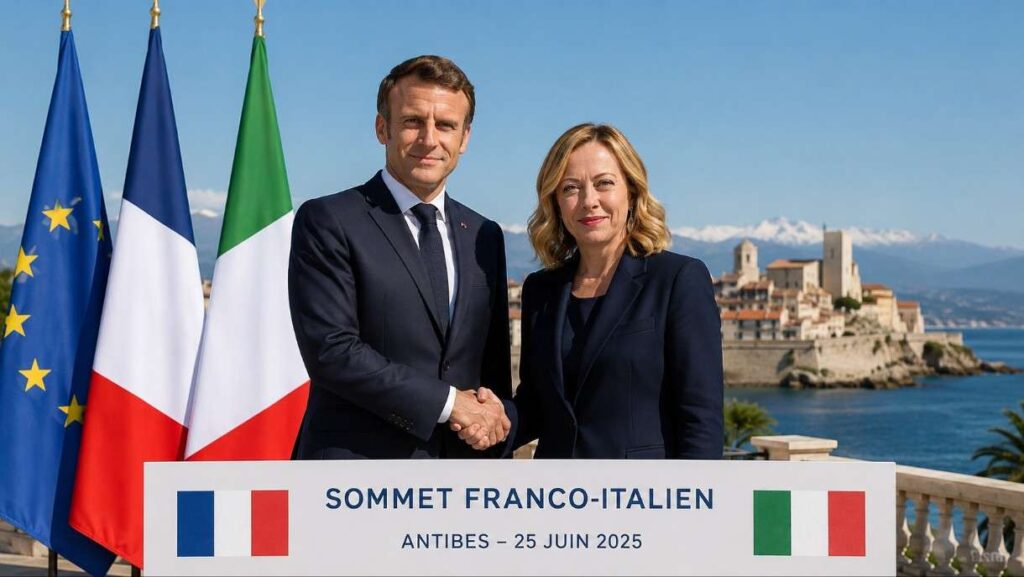
On June 25, France’s President Emmanuel Macron and Italy’s Prime Minister Giorgia Meloni will meet in Antibes for their first official bilateral summit. The meeting marks an important step in the relations between Paris and Rome, which in recent years have been characterized by tensions but also by growing strategic rapprochement. For both governments, much more is at stake than just maintaining good neighborly relations: it concerns the role of Southern Europe within the European Union and the joint response to the major challenges of our time.

From Conflict to Pragmatic Cooperation

When Giorgia Meloni took office in Rome in autumn 2022, relations with France were initially considered strained. Particularly in migration policy, divergent positions became openly apparent. Disputes over the reception of migrants in the Mediterranean, border controls, and the distribution of asylum seekers repeatedly led to diplomatic tensions.

European matters also did not always see the two governments aligned. While Macron has advocated for years for stronger European integration and the expansion of joint institutions, Meloni represents a more sovereignty-focused position. There were also disagreements on individual industrial and economic projects, for example in energy, infrastructure, and strategic corporate stakes.

Nevertheless, the relationship has significantly eased in recent months. Both sides increasingly recognize that Europe’s geopolitical challenges require closer cooperation. The wars in Europe’s neighborhood, uncertainties in global energy markets, and growing competition between the USA and China create areas of interest in which France and Italy frequently pursue the same goals.

Migration Remains the Central Issue

A focus of the summit is likely to be European migration policy. France and Italy are among the countries particularly affected by migration flows across the Mediterranean. While Italy is considered the primary arrival country, France regularly faces the consequences of secondary migration movements within Europe.

For Rome, securing the EU’s external borders is paramount. Paris, on the other hand, pushes for better European coordination and a fairer distribution of responsibility among member states. Despite different emphases, both governments now share the goal of making European asylum and migration policy more effective.

The implementation of the recently adopted European migration pact is therefore expected to be a central topic. Both countries have an interest in reducing the burden on Mediterranean border states while simultaneously ensuring political stability within the European Union.

Security and Defense Move to the Forefront

Another important topic is European security and defense policy. France has traditionally been one of the strongest proponents of a more autonomous European defense. Italy generally supports closer cooperation but places great importance on NATO’s involvement.

The Russian war of aggression against Ukraine has sustainably shifted security policy priorities in Europe. Both Paris and Rome see the need to expand European defense capabilities and deepen arms cooperation within the EU.

Additionally, security in the Mediterranean region is becoming increasingly important. Instability in North Africa, conflicts in the Middle East, and the competition of external powers in the region directly affect both countries. France and Italy have significant economic and strategic interests in the Mediterranean and thus rely on closely coordinated policies.

Economic Competitiveness as a Shared Concern

Economic policy issues are also expected to play a central role in Antibes. France and Italy rank among the largest economies in the European Union and face similar challenges: high public debt, weak productivity growth, and increasing international competitive pressure.

Especially American industrial programs and China’s massive state investments have triggered discussions in Europe about the future of its own competitiveness. Both Macron and Meloni have repeatedly spoken in favor of a more active European industrial policy.

This includes, among other things, promoting strategic technologies, securing critical supply chains, and strengthening the European production base. On these issues, the positions of Paris and Rome have recently converged significantly.

Antibes as a Symbol of European Neighborhood

The choice of location carries special symbolic weight. Antibes lies on the Côte d’Azur near the Italian border and has stood for centuries for the close cultural and economic links between the two countries. The regions along the western Mediterranean are closely intertwined through trade, tourism, infrastructure projects, and family ties.

Especially in times of growing geopolitical uncertainty, this regional cooperation gains importance. Cross-border transport projects, energy infrastructure, and economic cooperation have been among the key elements of French-Italian relations for years.

The meeting is therefore intended not only to strengthen government cooperation but also to underscore the significance of the Mediterranean partnership within Europe.

The gathering in Antibes is more than a diplomatic appointment. It signals the political will of two key EU states to leave existing differences behind and emphasize common interests more strongly. Although significant disagreements remain, particularly on migration and European policy, the strategic challenges of our time—from security through energy supply to economic competitiveness—create growing pressure for cooperation.

For Macron and Meloni, the summit offers the opportunity to place their relationship on a more stable footing. If successful, the French-Italian axis could become an important power center within the European Union and especially give new political weight to the interests of Southern Europe.

Author: Andreas M. Brucker