
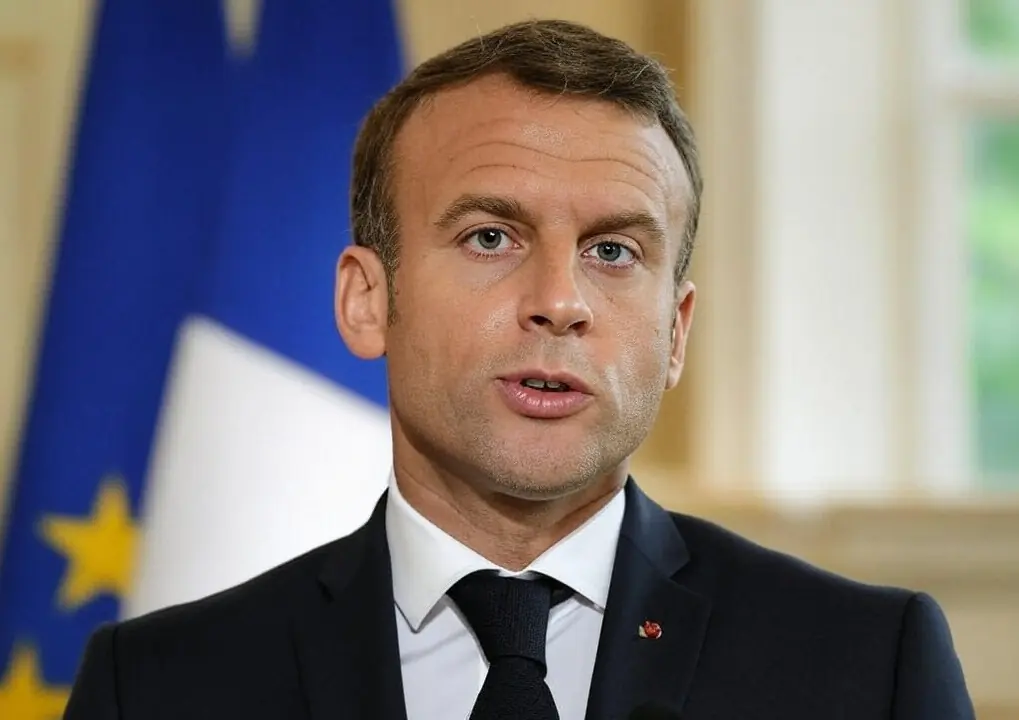
With a demonstrative gesture and geopolitical message, Emmanuel Macron tried in Nairobi to give French Africa policy a new face. The summit “Africa Forward,” held for the first time in an Anglophone country, marks far more than an ordinary economic conference. The announcement of investments totaling 23 billion euros is intended not only to generate economic momentum but above all to symbolize a political new beginning.
French Africa strategy has been in a deep crisis for years. The loss of military presence in the Sahel, the political breaks with Mali, Burkina Faso and Niger, as well as the growing anti-French sentiment in parts of West Africa have shaken Paris’ traditional influence model. In Nairobi, Macron is now trying to base the French presence on a new foundation: less military, less paternalistic rhetoric, but more investments, technology partnerships, and economic cooperation.
The symbolic break with the old “Françafrique”
The location of the summit was carefully chosen. That France is organizing its central Africa forum outside the classic Francophone sphere for the first time is no diplomatic coincidence. Nairobi represents the new Africa of geopolitical competition: economically dynamic, technologically ambitious and confident in foreign policy.
Kenya has established itself in recent years as a regional power center of East Africa. Nairobi is considered one of the most important technology and financial hubs on the continent. At the same time, the country maintains close relations with the USA, China, India, and the Gulf states. It is precisely in this environment that France is now seeking connection to an Africa that is increasingly moving away from historical loyalties.
Macron is visibly trying to leave behind the decades-long dominant model of “Françafrique” — that informal network of political connections, economic dependencies, and military influence that shaped France’s relations with many former colonies. This system secured Paris considerable influence over decades, but at the same time generated deep mistrust.
Especially in the Sahel, the French presence was increasingly perceived as a neocolonial continuation of old power structures. Military coups in Mali, Burkina Faso, and Niger ultimately accelerated France’s strategic withdrawal from a region that long functioned as the core zone of French Africa policy.
From Development Aid to Investor
Noteworthy is the change in language. Macron no longer spoke of development aid in Nairobi, but of investments. This semantic shift is politically significant. It is intended to signal that France no longer sees Africa as a recipient of Western support, but as an economic partner with its own geopolitical weight.
Indeed, the perception of Africa is fundamentally changing worldwide. While the continent was long primarily associated with crises, migration, and instability, today other factors are coming to the forefront: raw materials for the energy transition, young populations, digital growth markets, and strategic transport corridors.
Africa is increasingly becoming a central stage of global competition in the 21st century. The United Nations expects the continent’s population to nearly double by 2050. Already today, some of the world’s fastest-growing urban markets are emerging there. This opens up enormous opportunities for international investors — especially in the areas of digitalization, energy, and infrastructure.
This is exactly where the French strategy comes in. The announced investments focus on future sectors such as artificial intelligence, renewable energies, maritime infrastructure, healthcare economy, and agricultural technology. Paris is trying to position itself in those areas that are likely to be crucial for Africa’s economic transformation.
France Comes Under Geopolitical Pressure
Macron’s initiative is, however, also an expression of strategic nervousness. France faces competition in Africa that has become significantly more intense than twenty years ago.
China has long dominated the expansion of African infrastructure. Ports, railways, power plants, and telecommunications networks have been built in numerous countries with Chinese capital. Beijing skillfully combines economic investments with diplomatic influence.
At the same time, the United States is expanding its technological and security presence. Washington focuses especially on digital infrastructure, cybersecurity, and critical raw materials. Added to this are the Gulf states, which are investing heavily in agriculture, logistics centers, and port facilities. Above all, the United Arab Emirates now pursue a distinctly active Africa strategy along the trade routes of the Red Sea and the Indian Ocean.
France no longer has the structural advantages of previous decades in this competition. Historical ties alone are no longer sufficient to secure political influence. Many African governments today consciously pursue a policy of strategic diversification. They want to maintain partnerships with several actors simultaneously — without exclusive ties to former colonial powers.
This development also fundamentally changes the power relationship between Europe and Africa. African states appear more self-confident and articulate their own economic and geopolitical interests more clearly than before. The era of asymmetric relationships is visibly coming to an end.
The Limits of Macron’s New Beginning
Whether Macron’s change of course can actually be successful remains open. Because despite new rhetoric, the structural problems persist.
In many African societies, distrust towards France is deeply rooted. The memory of colonial rule, military interventions, and political influence still shapes public perception. Even where economic cooperation is welcome, many elites respond to French initiatives with considerable skepticism.
Added to this is that France is under domestic political pressure. The economic situation in the country remains tense, national debt is high, and political polarization is increasing. Large international investment commitments must therefore also be legitimized to the French public.
Furthermore, it will have to be seen whether Paris is truly willing to accept Africa as an equal partner — or whether old reflexes ultimately persist. French foreign policy in particular has traditionally been strongly characterized by strategic influence thinking. However, a genuine transition to partnership-based relations requires a profound change in mentality.
Therefore, Nairobi might be remembered less as a definitive turning point, and more as the beginning of a long adaptation process. Emmanuel Macron seems to have realized that France must redefine its role on the African continent. No longer as a dominant ordering power, but as one actor among many in an increasingly multipolar environment.
The real challenge for Paris now is to make this new attitude credible. Because Africa is long no longer a geopolitical backwater of Europe. The continent is developing into one of the decisive centers of power and growth of the 21st century — and the competition for influence is correspondingly tougher.