
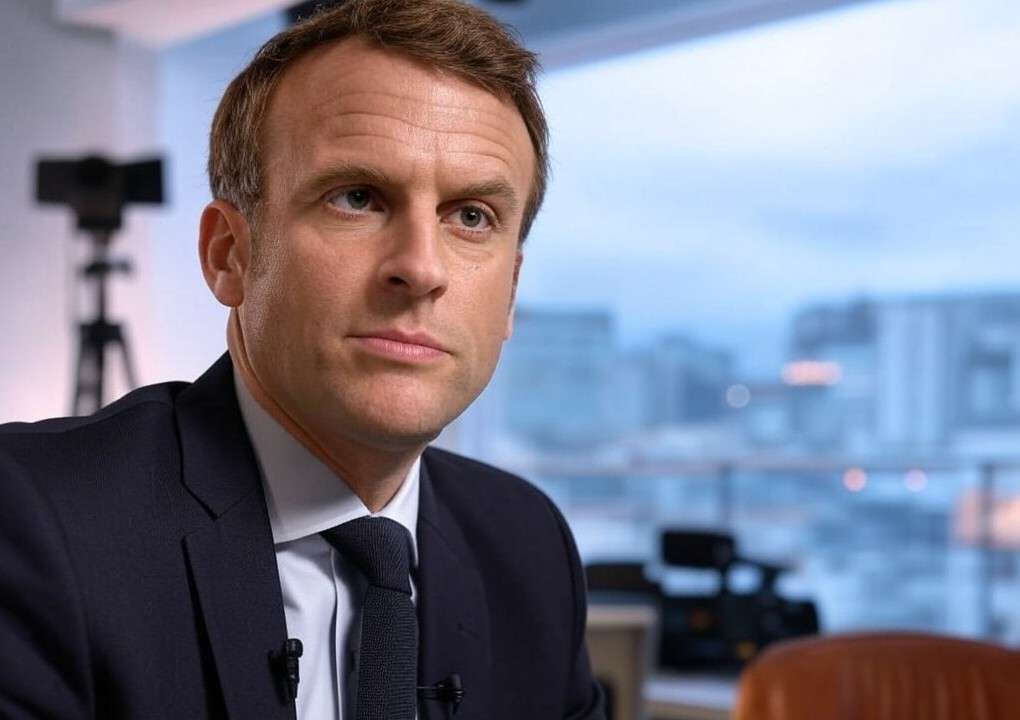
At the end of each French presidency, the same debate flares up again: Does a departing president use his remaining term to align the state apparatus for the long term? Emmanuel Macron is currently confronted with this accusation as well. Several recent appointments to high administrative positions, independent authorities, and state-owned enterprises have given the opposition reason to speak of a „permanent presidentialization“ of power.
A look at the history of the Fifth Republic, however, shows that such occurrences are by no means unusual. Constitutional lawyers and institutional researchers regularly point out that personnel decisions at the end of a term have almost become a political tradition in France. A constitutional jurist frequently quoted at present put it pointedly: „It is the rule, not the exception.“
The Logic of the Fifth Republic
The Constitution of the Fifth Republic grants the president far-reaching appointment powers. The head of state determines, among other things, prefects, ambassadors, senior officials of central ministries as well as numerous leadership positions in the state-related sector. Added to this are appointments to independent authorities and public media institutions.
These powers do not gradually end with the approaching end of a term. Constitutionally, the president remains fully capable of acting until the last day of their mandate. Unlike in some parliamentary democracies, there is no political convention in France that requires a departing head of state to withhold major decisions.
This is precisely where a structural tension of the Fifth Republic lies: the political legitimacy of a president may wane towards the end of their term, but their institutional powers remain unchanged.
Historical Continuity Instead of an Exceptional Case
Emmanuel Macron is by no means alone with this practice. Practically all presidents of the Fifth Republic consistently exercised their appointment rights until the very end.
François Mitterrand, for example, made numerous strategic decisions before the first “cohabitation” in 1986 to secure the influence of the Left within the state apparatus, even though the conservative opposition was on the verge of taking power. Jacques Chirac, in turn, deliberately focused on personnel decisions in sensitive areas like foreign policy and administration towards the end of his second term.
Nicolas Sarkozy also made several controversial appointments between 2011 and 2012 – particularly in public broadcasting, the diplomatic service, and within the top administration. Finally, François Hollande was also accused before his departure in 2017 of placing political confidants in key positions.
The current debate is therefore less an expression of a completely new development than rather part of a recurring pattern of French power politics.
The “hyper-president” Macron
So why is the criticism currently directed with particular sharpness against Emmanuel Macron?
The first reason lies in the president’s style of governance. Since taking office in 2017, Macron has concentrated power at the Élysée to an extraordinary extent. Already in his first term, he was often described as a “hyper-president” – inspired by similar accusations against Nicolas Sarkozy, but in an institutionally even more concentrated form.
Macron ruled with a distinctly vertical leadership style. Decision-making processes were centralized, ministries made politically more dependent on the Élysée, and strategic directional decisions were often prepared directly in the presidential palace.
In such a system, every personnel decision automatically acquires greater political significance. The appointment of a prefect, an ambassador, or a head of an authority no longer appears merely as an administrative process but as a direct expression of presidential power.
The political fragility of Macron’s camp
Added to this is the particular political situation before 2027. According to the constitution, Emmanuel Macron cannot run again. At the same time, his political camp appears increasingly fragmented. Several potential successors are already openly competing for influence, while the opposition on both the right and the left is strategically preparing for the next presidential election.
In this context, appointments are inevitably interpreted politically. Critics suspect behind many decisions an attempt to institutionally secure the influence of Macronism beyond the end of the term.
It is less about individual names and more about the long-term staffing of strategic control points of the state. Those who become prefect, agency head, or leader of an independent institution today could still exercise influence for years under a future government.
Precisely for this reason, public attention to appointments has increased significantly. While such decisions were often seen as technocratic in the past, they are now considered part of the political power struggle over the France after Macron.
Media Logic and Constant Politicization
Another difference from previous presidencies lies in today’s media dynamics. Social networks and constant political commentary significantly enhance the visibility of every single appointment.
Decrees that used to interest only specialists in the administrative world are now publicly discussed and politically classified within a few hours. Opposition parties, journalists, and political observers now analyze almost every personnel decision of the Élysée as a strategic signal.
This easily creates the impression of an unprecedented concentration of power – even if the actual number of appointments is not significantly higher than under previous presidents.
The perception of power thus changes not only through institutional reality but also through the changed political public sphere.
The Unresolved Ambivalence of the Fifth Republic
The current debate ultimately points to a deeper institutional ambivalence of the Fifth Republic. The French system combines strong democratic legitimacy of the president with exceptionally extensive executive powers.
As long as a president remains in office, he has almost unchanged power of action – regardless of whether his political authority is already waning or the country’s thoughts have long since focused on the succession.
It is precisely from this that the suspicion of institutional “Verrouillage,” i.e., a political locking of the state, regularly arises. Legally, however, this usually involves the normal application of constitutional competencies.
The criticism of Emmanuel Macron is therefore directed less against a completely new practice than against a style of governance that has personalized and centralized power visibly more than many of his immediate predecessors. In a phase of political uncertainty, even routine appointments quickly appear as strategic power consolidation.
Whether this will actually leave a lasting imprint on the French state apparatus, however, will only become clear after 2027 – with the first president of the post-Macron era.
P.T.