
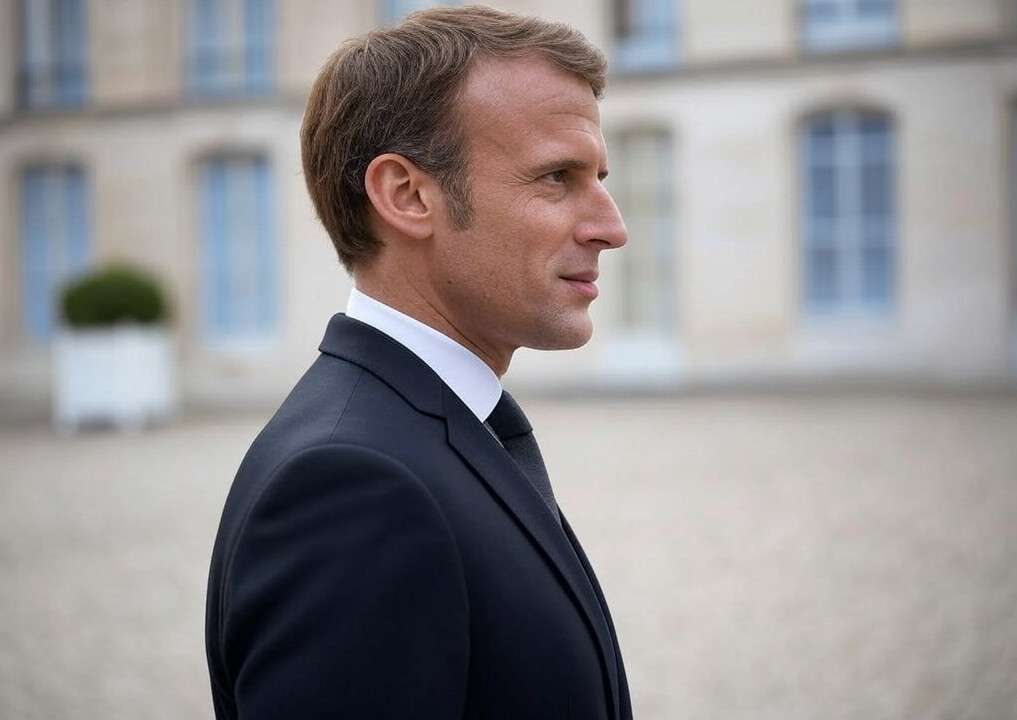
Tuesday morning in the heart of Paris. In the historic Palais de l’Élysée, top politicians, ministers, and security chiefs gather around President Emmanuel Macron. The topic concerns an issue that has occupied France for years, but has recently escalated dramatically: drug trafficking – especially in Marseille.
The images of violence, open turf wars, and dead youths in the streets have left a deep impression. Now countermeasures are to be taken. But is a meeting in the presidential palace enough to get a grip on such a deeply rooted problem?
Alert Level Marseille
Marseille symbolizes the scale of the crisis. The port city has become a hub for European drug trafficking – with its own brutal logic. Clans engage in bloody power struggles, recruits are picked up in schoolyards, money is laundered through bars, car rentals, and cryptocurrencies. And when things get tight, intimidation and murder help out.
A recent attack – the victim: the brother of a committed anti-drug activist – has apparently now been the last straw. Macron called for an extraordinary crisis meeting. A political message – but also a strategic signal: the state does not want to just stand by anymore.
Who is Sitting at the Table?
The circle of participants shows how seriously the situation is being taken: Prime Minister, Minister of the Interior, Minister of Justice, the police chief, the Marseille public prosecutor – down to the heads of local security authorities. Everyone who has a say or a role in implementation has been summoned.
A show of unity at the highest level, at least on paper. The central question remains: Will the spectacle be followed by real, effective measures?
Measures with force – and long shadows
The list of announced measures sounds powerful. On one hand, the creation of a new national special court for organized crime, which is supposed to start work at the beginning of January. Then a financial offensive against the structures of drug trafficking: freezing assets, closing suspicious businesses, preventing crypto-based financial tricks.
In addition, new legal tools: a specific criminal offense against the “Uberization” of commerce – that is, the systematic use of youths as drug couriers via social networks. And a revised whistleblower rule to encourage insiders to cooperate.
Another element: at the regional level, prefects should be able to intervene more strongly. Bans on known dealers, stricter surveillance, faster data networking. It sounds like a package with teeth.
But: it takes not only teeth – but also bite.
The decisive hurdles
No matter how strong the signal from Paris may be – the fight is decided on the ground. And there, reality often looks different: staff shortages, overburdened judiciary, lack of coordination between police and local government. Anyone working in a violence-prone neighborhood knows that more is needed than laws and decrees.
Moreover, there is no one-size-fits-all solution. What works in Marseille may fizzle out in the suburbs of Paris or in smaller towns. The drug markets are adaptable, decentralized, digital – and often one step ahead.
And one more thing: without prevention, every act of repression remains piecemeal. Anyone who only chases dealers without taking care of education, integration, and prospects is fighting symptoms, not causes.
France’s new raison d’état?
Despite all open questions, the session at the Élysée marks a change. The president himself takes up the issue – not as a marginal problem, but as a state task. This is significant not only politically at home but also a signal abroad.
Drug trafficking is no longer viewed as isolated crime, but as an attack on social peace, on institutions, on the country’s youth. France declares war on the drug market – with legal, political, and operational means.
But is that enough?
And from an international perspective?
For German-speaking observers, a complex picture emerges. France is struggling for control over urban spaces, relying on a centralized state apparatus – and faces challenges that are not unfamiliar to Berlin, Zurich, or Vienna.
The “Loi narcotrafic,” passed in the summer, appears ambitious: it ranges from repressive measures to new penal frameworks to preventive approaches. But as with many French laws, its effectiveness largely depends on how committedly it is implemented at the regional level.
Marseille remains a symbolic test case. If it is possible to create a different climate there – safer, more stable, more livable – this could serve as a blueprint. If not, the session of November 18 will above all be one thing: a political statement.
The will to act is palpable – but the path is rocky. The promises from the Élysée are now put to the practical test. The coming months will show whether the state is truly determined to break through the criminal parallel structures – or whether the drug mafia will continue to navigate almost undisturbed.
Author: C.H.