
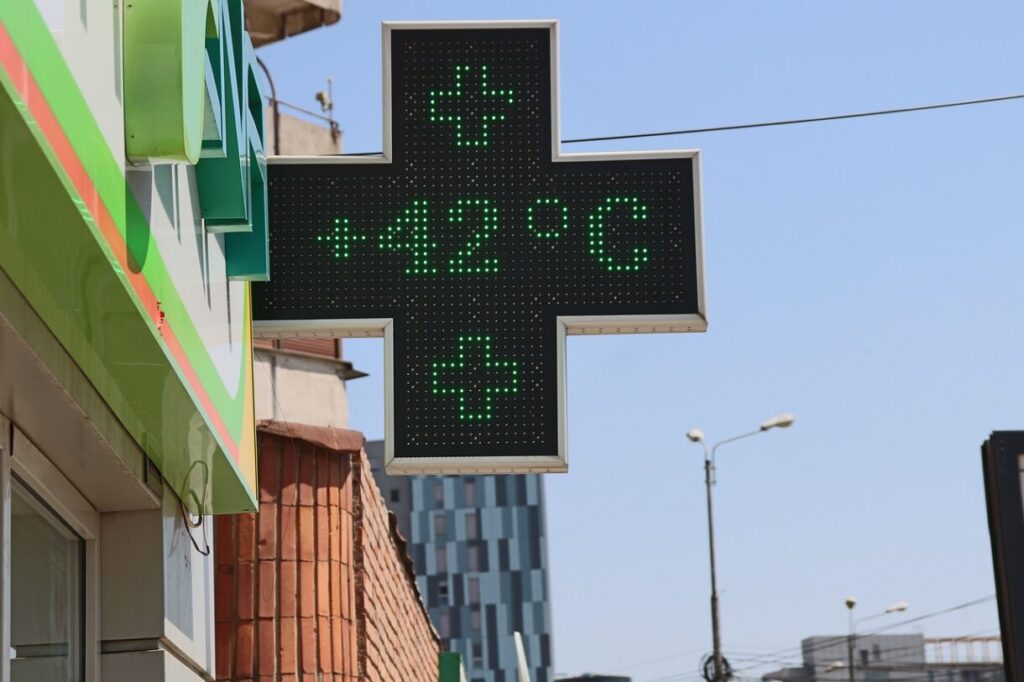
France is experiencing the next massive heatwave of the year. Within a day the number of affected regions has nearly quadrupled: on Tuesday 61 Départements are under heat warnings at the second-highest alert level. Particularly affected are the Île-de-France around Paris, large parts of the west and the country’s centre, the southwest and the Rhône Valley.
Meteorologists expect maximum temperatures of 35 to 38 degrees in many places. In the southwest the thermometer will locally climb to as high as 41 degrees. Almost more burdensome than the daytime heat are the nights. In numerous regions temperatures hardly fall below 20 degrees anymore. These so-called tropical nights rob many people of restorative sleep and subject the body to continuous stress.
The weather pattern is unusually stable. A strong high-pressure system is steering hot air masses from the Iberian Peninsula toward France and causing the heat to become entrenched over large parts of the country. A noticeable drop in temperatures is not expected before the end of the week at the earliest – initially mainly in the west.
For older people, small children and those with pre-existing conditions the health risk rises significantly. If the body lacks the necessary cooling during warm nights, recovery becomes difficult. Circulatory problems, dehydration and heatstroke occur much more frequently under such conditions. Even healthy people often feel the sustained strain sooner than expected.
It’s not only the population that is suffering from the extreme temperatures. The dried-out soils and occasionally strengthening winds are also increasing the risk of forest fires. Emergency services have already been battling major blazes in several southern French regions for several days. Under these conditions, often just a small spark is enough for a fire to spread rapidly.
Authorities are therefore urging people to drink enough water, avoid physical exertion during the hottest hours and keep their homes as cool as possible. Equally important is looking out for neighbors, relatives or elderly people living alone, who often need special support during a heatwave. Employers are asked to adapt working hours and working conditions to the extreme temperatures.
The current heatwave shows once again that exceptional summer heat in France is no longer the exception. Hot spells are starting earlier in the year, lasting longer and affecting larger parts of the country. This increases the challenges for the health system, infrastructure, agriculture and nature – a trend that has become increasingly clear in recent years.
By C. Hatty