
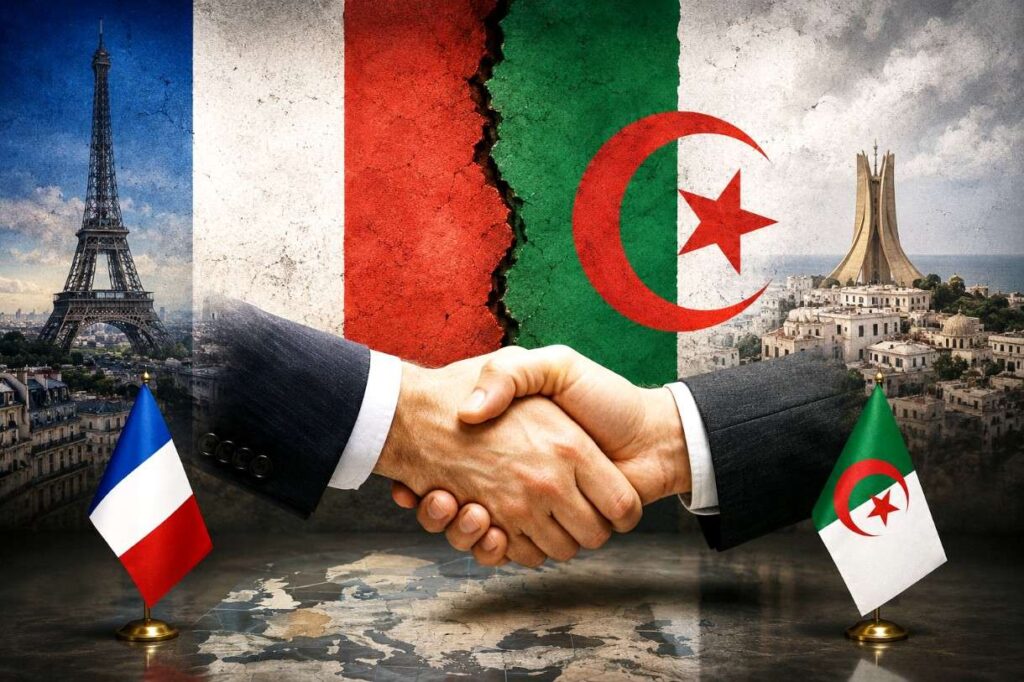
With the visit of Algerian Interior Minister Saïd Sayoud to Paris, the gradual normalization of relations between France and Algeria gains new momentum. After nearly two years of serious diplomatic tensions, the meeting with Paris Interior Minister Laurent Nuñez signals the will of both states to restore dialogue on a stable foundation.
The focus of the talks is on issues of internal security, police cooperation, intelligence exchange, and migration policy. The two countries share a long and often complicated history, but security cooperation has been considered an important pillar of bilateral relations for decades. During the diplomatic crisis of recent years, numerous joint projects were suspended or significantly limited.
The current rapprochement attempts began at the beginning of the year. An important step was Laurent Nuñez’s trip to Algiers in February, where the resumption of cooperation at the highest security level was announced. The return of the French ambassador to Algiers was also seen as a sign of détente.
For Paris, the migration issue holds particularly high priority. French authorities are pushing for more efficient cooperation in the repatriation of Algerian nationals obliged to leave France. Algeria, in turn, emphasizes a respectful and balanced dialogue that takes into account the interests of both sides and is not solely determined by French concerns.
The crisis between the two countries had multiple causes. Particularly burdensome was France’s decision to recognize Moroccan sovereignty over Western Sahara. Additionally, there were disputes over visas, mutual accusations concerning expulsions, and recurring tensions stemming from their shared colonial history. These issues have by no means disappeared but are currently taking a backseat to the effort to find practical solutions for joint challenges.
The meeting in Paris shows that both governments are increasingly relying on pragmatic cooperation. Topics such as counterterrorism, organized crime, border security, and judicial cooperation create a shared interest that can at least partially overshadow political differences. Especially in view of the security situation in the Mediterranean region and the Sahel zone, both sides are interested in strengthening existing communication channels.
Whether the diplomatic détente will last permanently remains uncertain. Structural disagreements between Paris and Algiers persist. Nevertheless, the recent developments indicate that both governments have realized how important a functioning dialogue is for their respective security and migration policy interests. Saïd Sayoud’s visit thus marks less a conclusion and more a further step toward a cautious but increasingly stable normalization of relations.
Andreas M. Brucker