
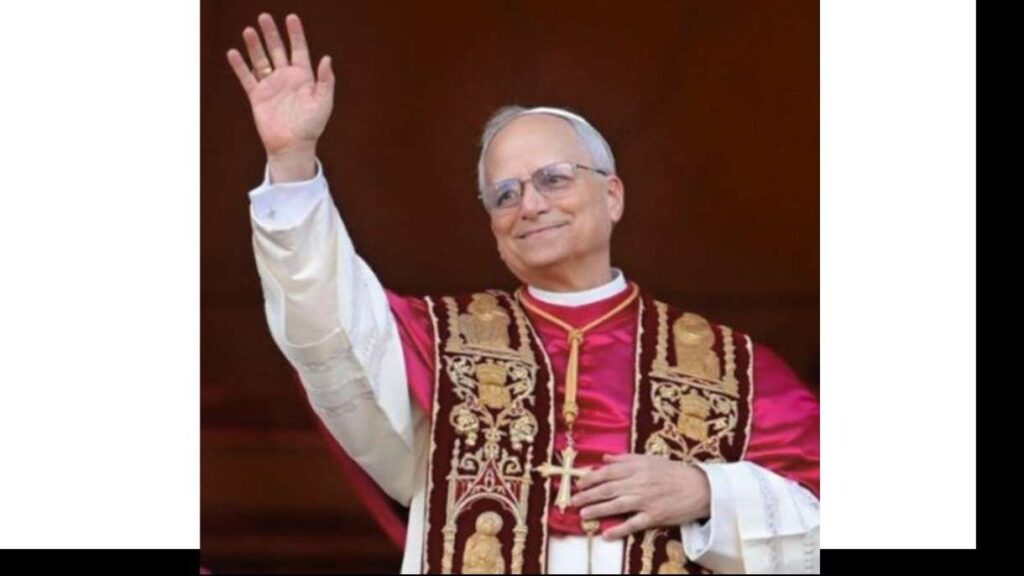
The Vatican has officially confirmed the first visit of Pope Leo XIV to France. From September 25 to 28, the new head of the Catholic Church will visit several locations in France. The announcement alone shows: This trip is far more than a purely pastoral event. It marks the beginning of a pontificate that apparently focuses more than under Pope Francis on the political and institutional centers of Europe.
The invitation was extended jointly by President Emmanuel Macron, the French Church, and UNESCO. This gives the visit a dual dimension from the start – religious and geopolitical. Especially the already confirmed stop at the UNESCO headquarters in Paris indicates that Leo XIV wants to proactively address the major societal debates of the present: education, culture, artificial intelligence, and the question of the ethical foundations of modern societies.
Paris as the stage for a new pontificate
The detailed program has not yet been published. Nevertheless, several symbolic locations are emerging. Paris is likely to play a central role. Especially a possible visit to the reopened Notre-Dame Cathedral would have enormous impact. Since the devastating fire of 2019, the reconstruction of the building is regarded worldwide as a symbol of cultural continuity and national identity.
Unlike his predecessor Francis, Leo XIV. apparently has no fear of grand state and diplomatic spectacles. Although Francis had visited France several times, including Marseille and Corsica, he deliberately avoided Paris. His travels mostly focused on the social margins of Europe, on migration, poverty and social tensions.
Leo XIV. apparently sets different accents. The choice of France as an early destination of his pontificate indicates an attempt to reorganize the dialogue with the political and cultural elites of Europe. The UNESCO visit fits into this picture: the Vatican deliberately positions itself in debates about technology, humanism and the cultural future of Western democracies.
France as a Religious Paradox
France has always held a special significance for the Vatican. Historically, the country is considered the “eldest daughter of the Church,” yet at the same time acts as a laboratory of modern secularism. Hardly any European state separates religion and the public sphere as strictly as the French Republic.
Precisely for this reason, every papal visit to France is automatically politically charged. The Catholic Church has continuously lost social influence for decades. The number of practicing Catholics is declining, many dioceses struggle with a shortage of successors, while identity-political tensions in the country are increasing.
Within these developments, the French Church has been trying for several years to reposition itself. Especially younger Catholic milieus are presenting themselves more confidently than a decade ago. Pilgrimages, traditional liturgies, and missionary movements are experiencing renewed interest in certain areas. The Vatican is closely observing this development.
The Archbishop of Marseille, Cardinal Jean-Marc Aveline, recently spoke of the “missionary dynamism” of the French Church. However, behind this diplomatic wording lie profound challenges: the crisis of religious institutions, societal polarization, debates about national identity, and the role of Islam in France.
Lourdes and the Spiritual Dimension
Besides Paris, Lourdes is also likely to be on the itinerary. The pilgrimage site in the Pyrenees is one of the most important Catholic pilgrimage destinations in the world. A visit there would emphasize the spiritual dimension of the journey while simultaneously building a bridge to traditional Catholic France.
Lourdes holds a special emotional significance in French Catholicism. While large parts of society are secularized, the site remains a symbol of religious continuity for many believers. A papal appearance there could strengthen the bond between Rome and French Catholics.
Also being discussed is a trip to Scy-Chazelles near Metz, where Robert Schuman is buried – one of the founding fathers of European integration. This possible stop would be highly symbolic. The Vatican has historically always supported European unification and views the current crisis in Europe with growing concern.
Macron Seeks Alliance
The visit also holds significant political importance for Emmanuel Macron. The French president has been striving for a closer relationship with the Vatican for years. Both sides are increasingly seeking exchange on international issues, such as conflicts in the Middle East, Africa, or Ukraine.
In addition, there is a topic that apparently concerns Leo XIV particularly: artificial intelligence and its societal consequences. The new pope has already spoken several times about the responsibility of technological elites and warned against a decoupling of technological progress and ethical principles.
France is currently attempting to position itself as a European leading power in the field of artificial intelligence. This creates a shared area of interest between the Élysée Palace and the Vatican: the question of how technological innovation can be linked with humanistic and democratic values.
Leo XIV’s visit to France will therefore extend far beyond the ecclesiastical framework. It is an expression of a pontificate that puts Europe back at the forefront – not only as a religious space, but as a political and cultural stage of global upheavals.
Author: P. Tiko